
For Canadians watching global trade and security tensions, the latest summit between Donald Trump and Chinese President Xi Jinping is about far more than diplomatic theatre. The Beijing talks have reignited discussion around the so-called ‘Thucydides Trap’ — the theory that rising powers and established superpowers often slide toward confrontation when influence shifts. With Canada deeply tied to both the United States and China economically, the outcome matters here at home in very practical ways.
The summit focused on tariffs, advanced technology restrictions, Iran, and military tensions in the Pacific. Yet behind the official statements sat a much bigger question: can Washington and Beijing avoid the kind of rivalry that has historically led to conflict between dominant powers?
The Backstory
The term ‘Thucydides Trap’ comes from the ancient Greek historian Thucydides, who wrote about the Peloponnesian War between Athens and Sparta. Modern political scientists use it to describe the danger that emerges when a rising power threatens an established one. In this case, China’s rapid economic and military growth has collided with long-standing American dominance.
For years, tensions between the two countries have built steadily. Trade wars, semiconductor restrictions, military drills around Taiwan, disputes in the South China Sea, and accusations of cyber espionage have all added fuel. During Trump’s first presidency, tariffs on Chinese goods reshaped global supply chains. Some Canadian manufacturers benefited temporarily as companies shifted sourcing away from China, but consumers also felt the sting of higher prices.
Meanwhile, Beijing has spent the last decade expanding its global influence through infrastructure investment, technological development, and stronger ties with countries frustrated by Western-led institutions. That’s the elephant in the room whenever American and Chinese leaders sit down together.
Here's What Happened
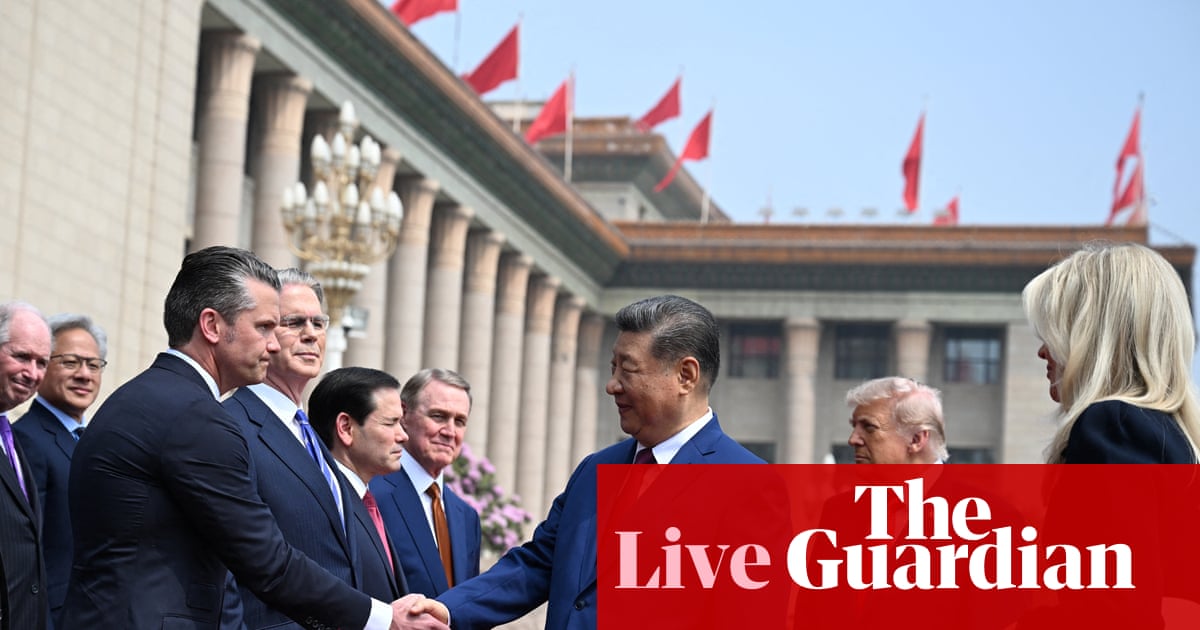
The summit in Beijing unfolded with plenty of ceremonial warmth but noticeably cautious language underneath. Trump publicly praised Xi during portions of the visit while simultaneously pressing China on trade imbalances and technology access. Xi, for his part, warned against confrontation and signalled that Beijing would resist what it sees as containment efforts from Washington.
One major topic involved tariffs that still affect billions of dollars in goods moving between the two economies. Another centered on advanced AI chips and export controls, which both governments increasingly treat as national security issues rather than simple trade policy.
Iran also emerged as a major issue during the talks. Escalating tensions in the Middle East have complicated relations between Washington and Beijing because China remains one of Iran’s largest energy customers. The conflict adds another layer of pressure to an already strained relationship.

European officials reportedly watched the summit nervously from the sidelines, concerned about being squeezed between competing economic blocs. Canada faces similar pressure. Ottawa relies heavily on US trade through the Canada-United States-Mexico Agreement while still maintaining significant commercial ties with China, particularly in agriculture and natural resources.
If you are following Canadian pension investments, manufacturing, or even grocery prices, these talks are not abstract geopolitics. A sharper US-China split could affect everything from supply chains to inflation here at home.
What People Are Saying
Several observers described the summit as symbolically important even if major breakthroughs remained unlikely. One recurring theme was that both leaders appeared eager to avoid open escalation while still defending their strategic interests.
We should choose dialogue over confrontation.
Trump, meanwhile, struck a more transactional tone during portions of the visit, emphasizing trade and economic leverage. Analysts noted that his language toward China has softened at moments compared with earlier campaign rhetoric, though tariffs and technology restrictions remain central to his broader strategy.
We can do great things together if both sides are treated fairly.
Canadian foreign policy experts have also warned that middle powers like Canada could feel squeezed if rivalry intensifies further. Here’s the thing: countries caught between two giants often face difficult choices about technology partnerships, trade dependencies, and security alliances.
The Bigger Picture
The renewed attention around the Thucydides Trap reflects a deeper fear that economic rivalry is turning into a long-term geopolitical contest. Unlike the Cold War between the United States and the Soviet Union, the US and China remain heavily economically intertwined. That creates both stability and vulnerability.
Canada is particularly exposed because China ranks among its largest trading partners while the United States remains overwhelmingly dominant in exports and investment. Canadian universities, tech companies, farmers, and energy producers all have stakes in how this relationship evolves.

There is also the technology race. AI systems, semiconductor manufacturing, quantum computing, and military applications increasingly overlap. That means trade policy is now tangled up with national security in ways that did not exist twenty years ago.
Some historians point out that not every power transition ends in war. Britain and the United States managed a relatively peaceful shift in global influence during the early twentieth century. Whether Washington and Beijing can pull off something similar is the trillion-dollar question.
The Road Ahead
Officials from both countries are expected to continue negotiations on trade and security issues in the coming months. More talks on tariffs and technology restrictions are likely before the end of the year.
For Canadians, the key issue is stability. Businesses, investors, and policymakers in Ottawa will be watching closely for any signs that rivalry between the two powers is hardening into something more dangerous. And that’s where the rubber hits the road.
FAQ
What is the Thucydides Trap?
It is a theory suggesting that conflict becomes more likely when a rising power challenges an established superpower.
Why are people connecting it to the US and China?
China’s growing economic and military influence is increasingly challenging long-standing American dominance globally.
How does this affect Canada?
Canada trades heavily with both countries, so worsening tensions could affect exports, prices, supply chains, and investment.
What did Trump and Xi discuss in Beijing?
The leaders focused on tariffs, technology restrictions, trade disputes, and international issues including Iran.
Could the US and China actually go to war?
Most experts believe both sides want to avoid direct conflict, but tensions around trade, Taiwan, and military influence remain serious concerns.