
Sirens pierced the early morning quiet across Gulf nations as anti-aircraft batteries lit up the dark sky, frantically intercepting inbound salvos. Within hours, the fragile illusion of diplomacy dissolved entirely into a heavy haze of smoke and fire rising from burning energy facilities and shattered military outposts. The United States military launched a sweeping wave of retaliatory airstrikes against Iran early Sunday, following a deadly drone and ballistic missile assault in Jordan that killed two American service members and left another missing. This rapid escalation effectively shatters a month-old preliminary truce, plunging the strategic waterway back into an active, open conflict.
How Events Unfolded
The latest phase of hostility ignited when the Islamic Revolutionary Guard Corps (IRGC) targeted a base used by American forces in Al-Azraq, Jordan. U.S. Central Command (CENTCOM) confirmed that the strikes killed 2 American service members, left 1 missing in action, and required the medical evacuation of four others to Jordanian hospitals. In immediate retaliation, U.S. fighter jets and sea-launched Tomahawk cruise missiles commenced their eighth consecutive night of bombing inside Iran, hitting key assets controlled by the IRGC.
American precision munitions struck multiple sectors, including coastal surveillance outposts, air defense facilities, and missile storage sites tucked deep within the rugged valleys of southern Iran. According to Iranian state-run media, heavy explosions tore through infrastructure on strategic Qeshm Island and near the critical port city of Bandar Abbas. Tehran responded immediately, deploying kamikaze drones to strike American military depots at Camp Udairi and Ali Al Salem Air Base in Kuwait, while claiming additional operations against regional outposts.
The crossfire quickly spilled deep into neighboring Gulf states. Kuwaiti air defenses engaged hostile targets over the desert nation, while debris and direct hits caused massive blazes at a critical water desalination plant and a prominent oil facility, forcing multiple power generation units offline. Meanwhile, air defense systems in Jordan and Iraq intercepted stray projectiles over their respective airspaces, and warning sirens blared repeatedly across Bahrain and Saudi Arabia.
Under the Surface
This rapid descent into regional warfare follows the total collapse of the Islamabad Memorandum of Understanding (MoU), a preliminary ceasefire agreement signed just a month ago in June. The fragile truce began unraveling on July 6 when the IRGC struck three commercial vessels, including a Qatari liquefied natural gas tanker, off the coast of Oman. Tehran asserted that its interpretation of the MoU granted it sole administrative authority over the Strait of Hormuz, requiring all transit vessels to pay fees to Iran. Washington flatly rejected this claim, leading President Donald Trump to officially declare the agreement over on July 8.

The core of the dispute remains the physical control of the Strait of Hormuz, a narrow marine choke point through which a fifth of the world’s crude oil and natural gas flows during peacetime. By effectively closing the strait to international commercial traffic, Tehran has attempted to establish ultimate leverage over Western economic interests. In response, the U.S. military has reimposed a strict naval blockade on Iranian ports, forcefully redirecting or disabling vessels attempting to export crude oil to global markets.
Voices & Opinions
Political leadership on both sides has signaled a hardening of positions, leaving virtually no room for immediate diplomatic intervention. Iran’s Supreme Leader Mojtaba Khamenei issued a strict written statement broadcast on state television, condemning what he termed repeated American breaches of international pacts.
The signature of the US president is utterly worthless and devoid of credibility.
Concurrently, Kazem Gharibabadi, Iran's deputy foreign minister, announced to state media that Tehran has officially suspended all commitments to the interim deal and is no longer implementing any phase of the peace framework. On the American side, administrative figures signaled an unyielding military policy. U.S. Defense Secretary Pete Hegseth stated via social media that the deaths of the American soldiers only stiffens the resolve of the armed forces. President Donald Trump addressed the fatalities during an appearance on NBC, stating that the losses were a sad thing but reiterating his position that the administration will never allow Iran to achieve nuclear weapon capabilities.
Putting It in Perspective
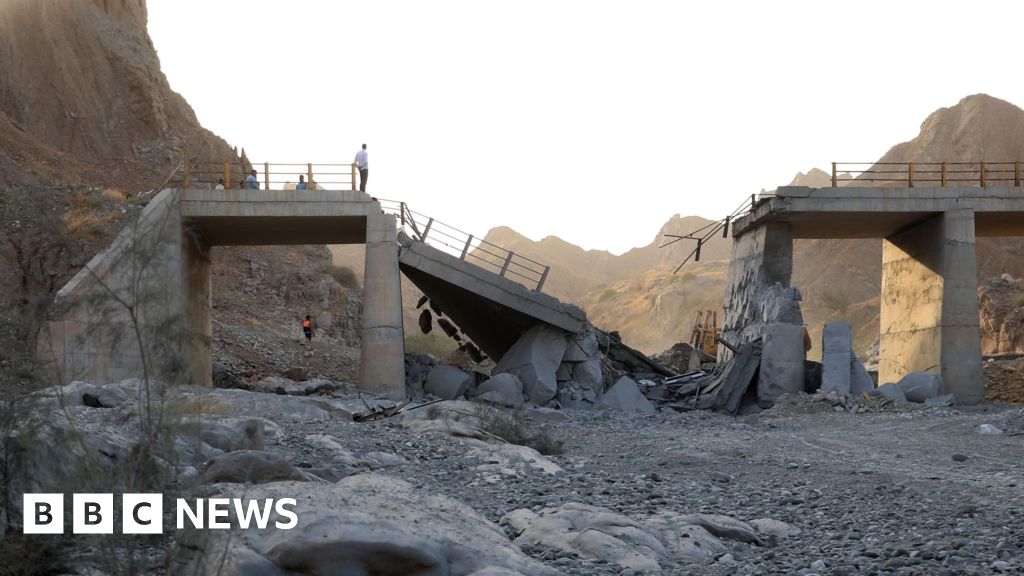
The real-world consequences of this escalating conflict are heavily impacting local civilian populations and the broader global economy. In southern Iran’s Hormozgan province, U.S. airstrikes entirely destroyed the Bonji desalination plant, completely severing clean water access for roughly 10,000 residents. Additionally, targeted strikes on infrastructure have demolished three major bridges and damaged two highway tunnels, cutting off the main logistical transport corridors leading toward the port of Bandar Abbas.
The impact is equally severe in Kuwait, where the destruction of primary utilities threatens basic survival mechanisms. The desert nation depends almost entirely on artificial desalination for 90% of its municipal drinking water supplies. With multiple facilities hit twice in a 48-hour window, local engineers are struggling to keep power grids functioning amidst extreme summer heat. For citizens across Canada and the global community, the closure of the Strait of Hormuz has placed energy markets on high alert, causing extreme volatility in worldwide oil pricing and prompting the U.S. government to issue a sweeping global travel alert.
Looking Ahead
U.S. military officials confirmed that the naval blockade of Iranian ports will remain active, with additional naval assets positioned to intercept unauthorized maritime traffic. Despite the growing threat of regional destabilization, the Trump administration has provided little clarity regarding the intended duration or ultimate endpoint of its current bombing campaign. Vice President JD Vance has publicly noted that military force alone cannot permanently dismantle automated missile networks or secure the maritime lanes, suggesting that an eventual return to structural talks will be necessary. For now, Iran's joint military command has warned of a devastating response from its regional proxy network, meaning further long-range missile exchanges remain highly probable.
Frequently Asked Questions
What triggered the latest U.S. airstrikes against Iran?
The U.S. launched retaliatory airstrikes after an Iranian missile and drone attack on a military base in Al-Azraq, Jordan, killed two American service members and left one missing.
Why did the U.S.-Iran ceasefire agreement collapse?
The preliminary ceasefire dissolved after Iran attacked three commercial vessels in the Strait of Hormuz on July 6, prompting President Donald Trump to officially terminate the agreement on July 8.
How many casualties have been recorded in the conflict?
Since the war began, 16 U.S. service members have died and over 430 have been wounded. Iranian authorities state that at least 50 people have been killed and more than 500 injured in U.S. strikes over the last three weeks.
What infrastructure has been damaged in the Gulf region?
U.S. strikes destroyed Iran's Bonji desalination plant and multiple transit bridges. Iranian retaliatory strikes damaged critical oil refineries and primary water desalination plants in Kuwait.
Is the Strait of Hormuz open to international shipping?
Iran has declared the Strait of Hormuz closed to international traffic. The U.S. military has enforced a counter-naval blockade on Iranian ports, reducing shipping transits to historic lows.