
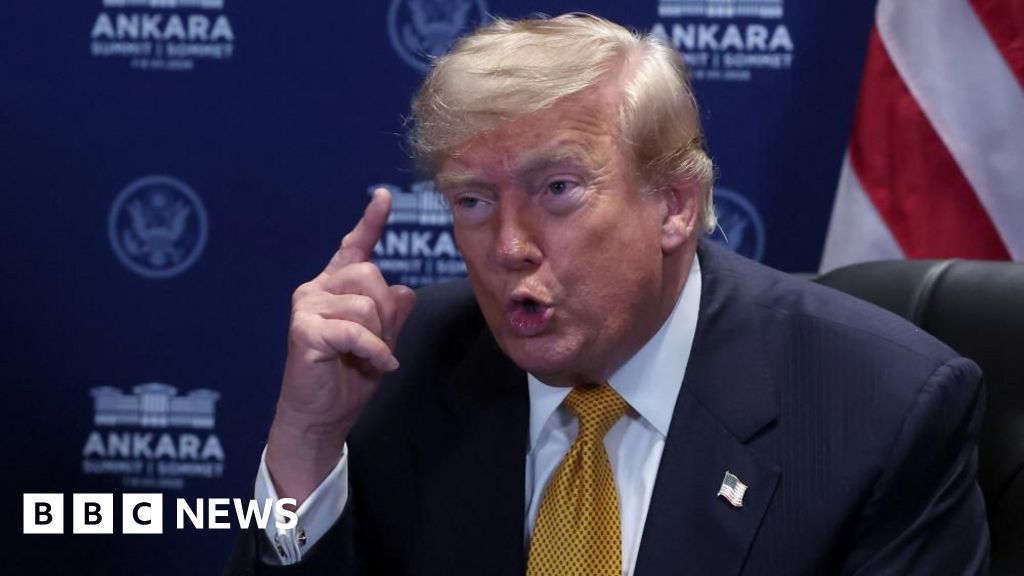
A fragile multi-week truce collapsed into fiery chaos overnight as the United States and Iran traded heavy missile, drone, and naval strikes across the Persian Gulf, prompting a furious President Donald Trump to declare the interim peace agreement officially dead. Speaking from the NATO summit in Ankara, Turkey, Trump fired a barrage of insults at Tehran's leadership, calling them scum and cuckoo while completely upending weeks of delicate diplomatic progress orchestrated by international mediators.
What We Know So Far
The latest violent escalation shattered the quiet of the 60-day Memorandum of Understanding signed at the Palace of Versailles on June 17, which had briefly paused a highly destructive war that originally erupted on February 28. The crisis ignited on Tuesday when Iran targeted three commercial oil tankers navigating the vital shipping lane of the Strait of Hormuz, claiming the vessels violated domestic transit rules by hugging the coast of Oman. In immediate retaliation, the U.S. military's Central Command ordered powerful overnight airstrikes against more than 80 targets inside southern Iran, specifically leveling air defense units, coastal radars, and over 60 tactical fast boats utilized by the Islamic Revolutionary Guard Corps.
Tehran responded with unprecedented speed. The Islamic Revolutionary Guard Corps launched a coordinated wave of ballistic missiles and explosive drones at critical installations hosting American personnel across the Gulf, explicitly striking Ali Al Salem Air Base in Kuwait and Bahrain's Fifth Naval District. Missile defense alarms shrieked through the night in both nations, forcing residents into emergency shelters. While Kuwaiti forces successfully intercepted two ballistic missiles and 13 drones, falling shrapnel severely crippled localized electricity grids, knocking multiple high-voltage transmission lines out of service.
Simultaneously, the White House abruptly stripped Tehran of its single biggest economic concession by revoking the temporary license that allowed the open sale of crude oil in global markets. The geopolitical shockwave reverberated instantly through financial sectors. Global oil prices spiked violently, with international standard Brent crude surging by more than 6% to hit $78.93 per barrel, while U.S. benchmark West Texas Intermediate rallied 6.5% to settle near $75.00. The sudden energy spike immediately reawakened deep fears of global stagflation, sending Wall Street stock futures tumbling alongside sharp declines across European and Asian equity indexes.
What People Are Saying
The war of words between the adversarial administrations escalated just as rapidly as the physical combat. Appearing alongside NATO Secretary General Mark Rutte, Trump made no effort to mask his absolute disgust with the diplomatic track.
I think it's over. I don't want to deal with them anymore they're scum ... they're led by sick people and they're vicious, violent people.
Trump openly dismissed ongoing technical discussions as an absolute waste of time, though he indicated he would technically permit his primary negotiators, including Vice President JD Vance, Middle East envoy Steve Witkoff, and Jared Kushner, to continue dialogue if they chose to do so.
From Tehran, Iranian officials remained defiantly combative. Parliament Speaker Mohammad Bagher Ghalibaf utilized social media to condemn the American strikes and the immediate re-imposition of crude oil sanctions, framing them as a severe breach of the June memorandum.
The era of bullying and extortion is over. It leads nowhere. We don't fold.
Meanwhile, Iranian President Masoud Pezeshkian chose to mock Washington's broader geopolitical behavior, comparing their international tactics to their domestic handling of the soccer World Cup, accusing the administration of cheating, bending rules, and relying heavily on a bullying playbook.
How This Affects You
For everyday communities across Canada, the abrupt collapse of the Middle East truce carries immediate pocketbook implications. The sudden 6% surge in global oil benchmarks will translate directly into higher fuel prices at local gas pumps within days, threatening to disrupt recent domestic progress against consumer inflation. Furthermore, the broad sell-off across international financial indices is actively eroding retirement savings accounts and investment portfolios.
On a logistical front, the European Union Aviation Safety Agency has taken the emergency step of directing all commercial airlines to completely avoid the airspace over Iran, Iraq, and Lebanon until at least August 31. This sweeping restriction will inevitably force major flight reroutings, triggering long transit delays and driving up international ticket costs for Canadians traveling across Europe and Asia.
Coming Up
The immediate political focus shifts to the ongoing NATO summit in Ankara, where European leaders are scrambling to manage Trump's erratic trade threats, which now include an order to cut off trade ties with Spain over defense spending disputes. In Iraq and Iran, the massive, highly charged funeral ceremonies for the late Supreme Leader Ayatollah Ali Khamenei will officially conclude on Thursday with his final burial at the Imam Reza shrine in Mashhad. With the official mourning period ending, regional military analysts are bracing for whether Iran's armed forces will follow through on threats to enforce total control over the Strait of Hormuz, a move that could completely lock down a fifth of the world's energy trade.
At a Glance
- Truce Ruptured: President Trump declared the 21-day-old interim ceasefire with Iran is officially over following intense military hostilities.
- Naval Conflict: The U.S. military hit over 80 targets in Iran after three commercial tankers were fired upon in the Strait of Hormuz.
- Base Counterattacks: Iran launched a massive barrage of missiles and drones targeting American military installations in Bahrain and Kuwait.
- Economic Retaliation: Washington revoked a critical sanctions waiver, immediately blocking Iran's ability to openly sell oil in U.S. dollars.
- Market Turmoil: Global crude prices surged by over 6%, while major international stock futures and equity indices plummeted.
- Airspace Closure: Aviation regulators ordered all commercial airlines to avoid airspace over Iran, Iraq, and Lebanon until late August.
Frequently Asked Questions
Why did the US-Iran ceasefire collapse?
The ceasefire collapsed after Iran attacked three commercial oil tankers in the Strait of Hormuz, claiming they violated local transit routes. The United States responded with heavy airstrikes on Iranian military targets, leading to Iranian missile counterattacks on U.S. bases in Kuwait and Bahrain.
How high did oil prices jump following the attacks?
International standard Brent crude surged more than 6% to reach $78.93 per barrel, while the U.S. benchmark crude price rallied roughly 6.5% to hover near $74.99 per barrel immediately following the military escalation.
What U.S. military facilities were targeted by Iran?
Iran's Revolutionary Guards launched ballistic missiles and drones directly targeting Ali Al Salem Air Base in Kuwait and the U.S. Navy's 5th Fleet naval installations located in Bahrain.
Are commercial flights to the region being canceled or altered?
Yes. The European Union Aviation Safety Agency has issued a mandatory directive advising all commercial airlines to completely avoid the airspace over Iran, Iraq, and Lebanon until at least August 31 due to the threat of further military action.