
Last updated: June 10, 2026
At election offices, the ordinary rhythm of ballot prep now comes with a sharper question: will the mail still move if states refuse to hand over voter lists? Proposed Postal Service rules tied to President Donald Trump’s March 2026 executive order would require states to submit lists of voters set to receive mail ballots, along with ballot-tracking data, or risk losing USPS delivery for mail ballots. The fight is already in court, with 23 Democratic-led states, the District of Columbia, party groups and voter advocates challenging the order. For California, where active registered voters are mailed ballots automatically, the dispute lands directly on the machinery voters use every election.
How Events Unfolded
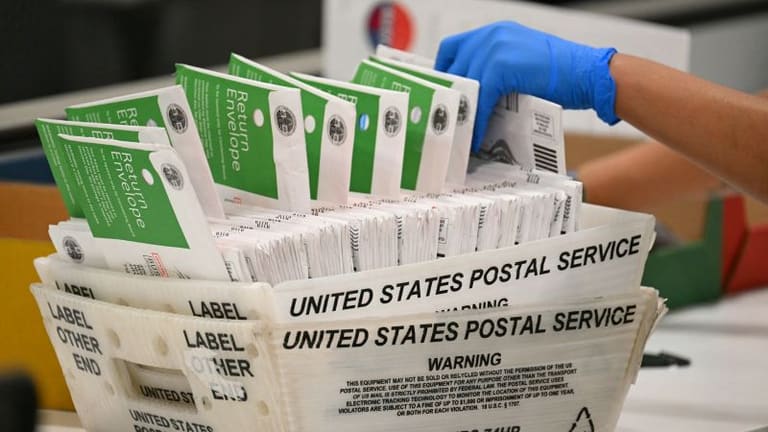
The proposed rules flow from Trump’s executive order aimed at tightening control over mail-in voting. Under the draft framework, states would have to provide the Postal Service with lists of people expected to receive mail-in or absentee ballots, plus unique barcode information tied to ballot envelopes.
The legal fight moved quickly after a federal judge in Washington, D.C., declined last month to block the executive order at an early stage. That decision allowed USPS to begin implementing the directive, while Democratic Party groups asked an appeals court to speed up review before the November midterm elections.
Separate hearings in Boston brought arguments from voting-rights groups and a coalition of roughly two dozen states. Their core claim is direct: states and Congress set election rules, not the president. U.S. District Judge Indira Talwani took requests to halt the order and motions to dismiss under advisement after raising concerns about whether the envisioned federal system could be ready in time.
The Postal Service proposal is open for public comment and includes new standards for official election mail markings, automation-compatible envelopes, serialized Intelligent Mail barcodes and a Federal Ballot Mail Portal. The portal is central to the dispute because election vendors and officials say it does not yet appear to exist in usable form.
Under the Surface
The fight is not only about envelopes. It is about who controls the path between a voter and a ballot. Trump has repeatedly attacked mail voting as vulnerable to cheating, while the sourced court coverage notes that widespread noncitizen voting is rare and that states already maintain voter-roll systems.
Supporters of the proposal describe the new requirements as security and transparency tools. The idea is to compare how many ballots were sent with how many came back, creating what backers call stronger visibility while ballots are outside election offices.
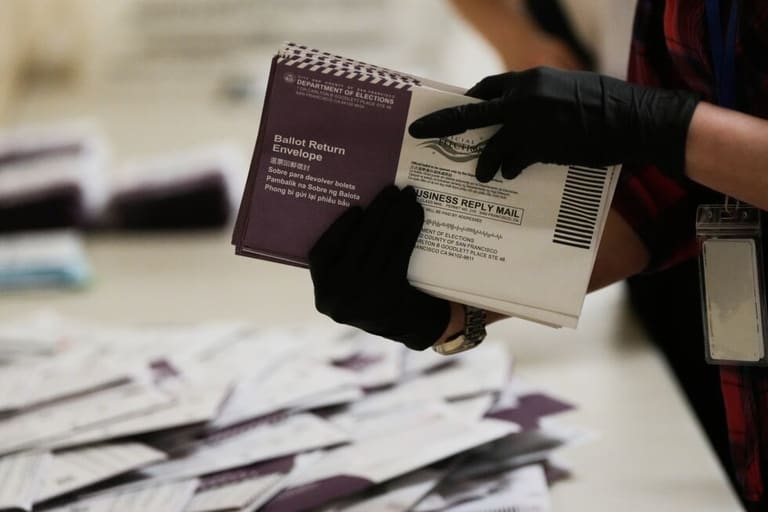
Opponents see a different chain reaction. If state voter data is routed into a federal process, they argue, mail voting could be delayed, voter privacy could be weakened and federal agencies could gain a new role in determining whether ballot mail moves. The Department of Homeland Security has also been directed to build citizenship-list information for states, intensifying fears about voter-roll purges.
California is a key example because county election officials mail vote-by-mail ballots to all active registered voters. Any federal rule that changes ballot-mail data requirements would therefore hit a large, routine system rather than a small exception used only by a few voters.
Voices & Opinions
Maine Secretary of State Shenna Bellows, whose state is part of a legal challenge in Boston, warned that a court win for the administration could severely shrink mail voting unless states comply with the data demand.
Then you will see a virtual elimination of mail-in voting, unless the states supply voter lists to the federal government.
Former USPS Board of Governors Vice Chair Anton Hajjar framed the issue around the Postal Service’s basic delivery mission.
If proper postage is paid on a mail piece, the USPS should deliver it.
The White House says the order is lawful and aimed at election security. White House spokeswoman Abigail Jackson said the administration expects implementation before November, which she said was the intent when the order was signed.
Postal workers have also objected. The American Postal Workers Union said it was deeply alarmed by the rule and rejected the idea that USPS should comply with an order it views as interfering with universal service.
Putting It in Perspective
The scale matters. Every U.S. state allows at least some form of mail or absentee voting. According to the provided voting-system breakdown, 29 states allow no-excuse absentee voting, eight states and Washington, D.C., conduct elections largely by mail, and 13 states require an approved excuse for most mail ballots.
For voters, the danger is practical before it is political. A mismatch in data, a late portal launch or a county office unable to redesign envelopes quickly could mean ballots do not arrive on time. Smaller and rural election offices may feel the pressure most because new barcode and envelope standards often require money, vendors and time.
California readers should pay attention because the state’s system depends on routine mailed ballots. The state is listed among the all-mail election states, along with Colorado, Hawaii, Nevada, Oregon, Utah, Vermont and Washington, plus Washington, D.C. A disruption to ballot delivery would not be a niche administrative problem; it could touch millions of voters who expect a ballot to arrive without a separate request.
Looking Ahead
The next confirmed steps are legal and administrative. The USPS proposal remains in its public comment period, while appeals and district court challenges continue in Washington, D.C., and Boston.
Democratic groups want a faster appeals ruling this summer, arguing that waiting too long could leave voters and election offices trapped close to the midterms. The Justice Department has argued against a compressed schedule.
Meanwhile, DHS is working on making citizenship-list information available for states to access. That connection between voter lists, citizenship data and ballot-mail delivery is why this story has moved beyond postal policy and into a broader fight over election power.
FAQ
What is the new USPS mail ballot proposal?
It is a proposed rule requiring states to submit mail-ballot voter lists and barcode data before USPS delivers certain mail or absentee ballots for federal elections.
Would the rule affect California voters?
Yes, potentially. California mails vote-by-mail ballots to all active registered voters, so new federal data and envelope requirements could affect a routine statewide voting system.
Why are states suing over Trump’s executive order?
States and voting-rights groups argue the order gives the president and federal agencies power over election administration that belongs to states and Congress.
What does DHS have to do with mail ballots?
The order directs Homeland Security to build citizenship-list information for states, and court filings describe discussions about using voter and ballot-flow data to identify possible anomalies.
Does the proposal apply to all elections?
The provided rule summary says it would not apply to primary elections or overseas ballots covered under the Uniformed and Overseas Citizens Absentee Voting Act.
What should voters do if they vote by mail?
Use official state election sources, request a ballot early when required, track it where tracking is available and return it before the state deadline.