
Last updated: July 19, 2026
The targeted assassination of Iran's long-serving Supreme Leader, Ayatollah Ali Khamenei, has plunged the Islamic Republic into its most profound political crisis since the 1979 revolution. While millions of mourners lined the streets during a week-long funeral procession that concluded with his burial on July 9, the highly orchestrated spectacle could not conceal the fractures forming within the leadership. For readers in Canada tracking Middle Eastern stability and global security, the rapid and unprecedented elevation of his son, Mojtaba Khamenei, marks a critical pivot point that could reshape international diplomacy and regional alignments for years to come.

Behind the Headlines
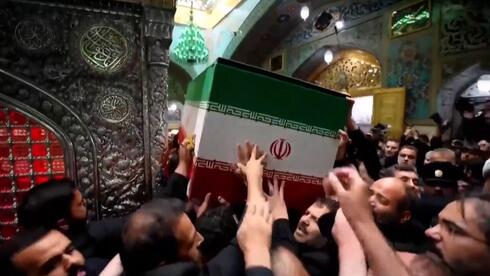
The 86-year-old supreme leader, who dictated the country's political and spiritual direction for more than three decades, was killed in a joint US-Israeli airstrike in February. The state deliberately timed the final funeral ceremonies to coincide with the holy period of Muharram, utilizing the traditional grammar of public mourning to maximize domestic mobilization. Western media networks extensively focused on counting the crowds and analyzing the optics for signs of regime vulnerability, yet the event carried deep, layered meanings for those participating, blending genuine religious faith, social obligations, and political allegiance.
However, the succession process has shattered a foundational myth of the Islamic Republic. The 1979 revolution originally succeeded by overthrowing the hereditary monarchy of the Shah. By rapidly installing the 56-year-old Mojtaba Khamenei as the new supreme leader, the ruling elite has effectively instituted a dynastic succession. This decision risks alienating a domestic population already exhausted by severe economic mismanagement, potentially sparking renewed civil unrest that would require severe state repression to contain.
Here's What Happened
The week-long funeral ceremonies across several major cities in Iran and Iraq became an active battleground for competing political factions. On the first day of the procession, hard-line organizers from the Islamic Ideology Dissemination Organisation deliberately chose controversial Quranic recitations to send sharp political warnings. When diplomatic delegations from Saudi Arabia and Qatar stood before the coffin, organizers recited Verse 13 of Surah Al Imran, which references the historic Battle of Badr where early Muslims defeated a heavily outnumbered opposing force. This aggressive gesture drew sharp criticism from reformist politicians who argued that insulting foreign dignitaries damaged crucial regional relationships.

Internal rifts widened further when Hassan Khomeini, the grandson of the republic's founder, abruptly left the ceremony early. Sources revealed he was deeply offended when organizers recited Verse 95 of Surah An-Nisa as he approached, a passage that explicitly unfavorably contrasts believers who hold back from fighting with those who actively strive in God's cause. Though Khomeini later attended subsequent events in Mashhad and Qom, the public slight highlighted intense friction between old revolutionary families and the rising new guard.
Meanwhile, the public appearances of Khamenei's other three sons—Mostafa, Masoud, and Meysam—were meticulously choreographed to dispel widespread rumors. Speculation had mounted since early March that Mojtaba had been severely wounded or killed in the same airstrikes that took his father's life. By showing the brothers in perfect health, the regime sought to project stability. A senior political source confirmed that Mojtaba suffered only minor injuries to his feet alongside minor facial scarring, and is fully capable of managing state affairs.
Voices & Opinions
The friction within the state apparatus boiled over into open hostility during the public events. Ultraconservative principlist factions actively targeted government officials who have previously advocated for diplomatic negotiations with Western powers. Parliament Speaker Mohammad Bagher Ghalibaf, Foreign Minister Abbas Araghchi, and President Masoud Pezeshkian were confronted by angry crowds, with some demonstrators throwing stones at Araghchi and shouting insults.
Prominent elites also sought to control the narrative surrounding the legality of the transition. Mohammad Reza Bahonar, a member of the influential Expediency Council, stepped forward to clarify the late leader's stance on his family entering politics.
The late Imam never held any negative view toward Mr Mojtaba, but he emphasized that, according to both law and Islamic jurisprudence, the supreme leader does not choose his own successor. This is the religious and legal responsibility of the Assembly of Experts.
Senior clerics also worked to elevate the spiritual status of the deceased leader to solidify the regime's authority. Grand Ayatollah Abdollah Javadi Amoli departed from traditional funeral prayers in Qom, using elevated language to declare that the late leader had died as a martyr in the path of Islam, an interpretation intended to intensify the religious commitment of the state's core supporters.
The Bigger Picture
The transition introduces three distinct potential paths for the future of the Iranian state. The first relies on the current strategy of deliberate ambiguity, where Mojtaba remains physically distant from public view to build an aura of sanctity as a leader standing above daily politics, leaving the technocratic government to take the blame for worsening inflation and social grievances. If this fragile strategy fails, the Islamic Revolutionary Guard Corps (IRGC), which already commands vast sectors of the national economy and technology infrastructure, could complete a full structural takeover. Under an explicit military junta, the traditional religious ideology would be replaced by aggressive nationalist survival strategies.
Alternatively, President Pezeshkian and pragmatic factions within the succession council may attempt limited tactical reforms. This path would involve reopening closed diplomatic channels with the West to ease the crushing economic sanctions while quietly reducing the strict enforcement of domestic dress codes and internet censorship. However, the conservative security establishment historically views any internal compromise as an unacceptable sign of weakness, meaning such changes could trigger violent internal power struggles.
The Road Ahead
The newly formed administration must immediately address the regional conflicts inherited from the previous leadership. The ongoing military confrontation across the Gulf continues to dictate terms, and the supreme leader's office has already signaled that major foreign policy reviews are underway. While the immediate funeral rituals have concluded, the underlying systemic instability ensures that the region remains highly volatile, with foreign policy experts anticipating further external friction as the new leadership attempts to permanently secure its grip on power.
FAQ
- When did Ayatollah Ali Khamenei's funeral take place?
- The week-long funeral procession concluded with his burial on July 9, 2026, following his assassination in February.
- Who succeeded Ayatollah Ali Khamenei as Supreme Leader?
- He was succeeded by his 56-year-old son, Mojtaba Khamenei, through an expedited selection process by the Assembly of Experts.
- Why did the funeral spark political controversy inside Iran?
- Hard-line factions used aggressive Quranic recitations to insult foreign diplomatic delegations and political rivals, revealing deep internal divisions.
- Was Mojtaba Khamenei injured in the attack that killed his father?
- Sources confirmed Mojtaba survived with minor injuries to his feet and minor facial scarring, despite widespread rumors that he was incapacitated.
- What is the current political situation in Tehran?
- The regime faces intense friction between ultraconservative principlists, who oppose Western negotiations, and pragmatists seeking tactical economic relief.