
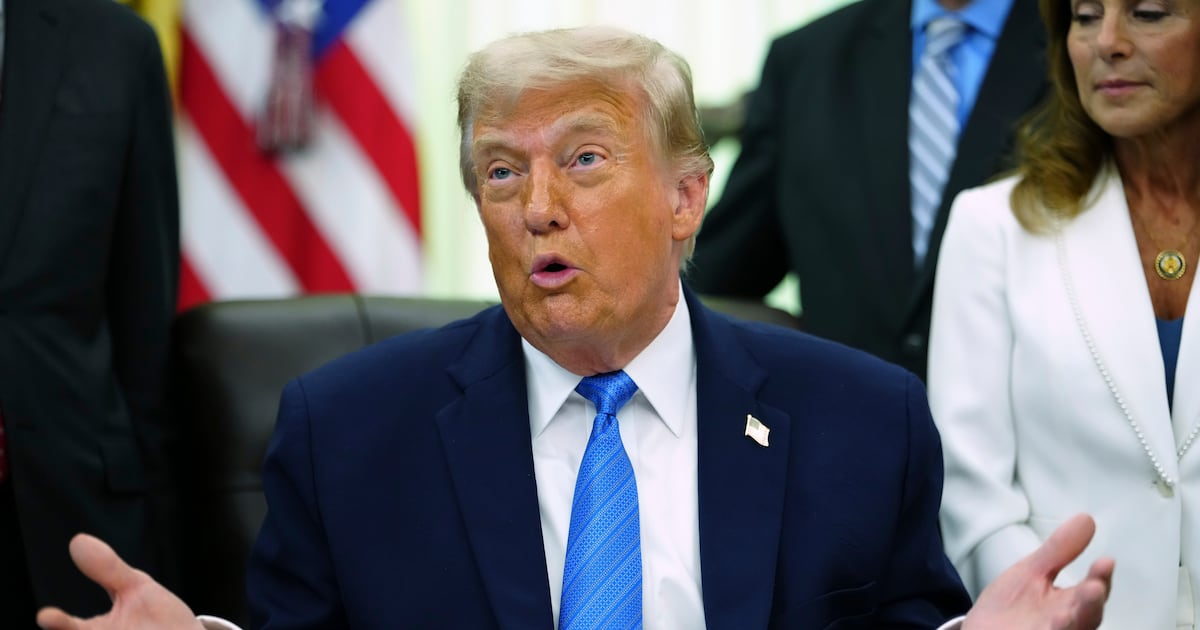
Canadians should care because the trade deal at the centre of Donald Trump's latest threat shields much of the country's export economy from U.S. tariffs. Speaking in the Oval Office on Wednesday, the U.S. president said he is not looking to renew CUSMA when the pact reaches its July 1 review point. The agreement does not expire until 2036, but the review could push Canada, the U.S. and Mexico into yearly talks instead of a clean 16-year extension.

Setting the Scene
CUSMA, called USMCA in the United States, replaced NAFTA and governs trade among Canada, the U.S. and Mexico. For Canada, its value is practical rather than abstract: CBC reported that it covers about $1.3 trillion in cross-border trade with the U.S. and shields roughly 90 per cent of Canadian exports from Trump's tariffs.
The July 1 date is a review point, not an expiry cliff. The text allows the three countries to extend the deal for another 16 years or move into annual reviews. If no extension is agreed, the pact remains in force while the countries continue negotiating changes.
- CUSMA
- The Canada-U.S.-Mexico Agreement, the trade pact that replaced NAFTA.
- Annual reviews
- A yearly process that would continue if the countries do not agree to a 16-year extension.
- Withdrawal clause
- A provision allowing any country to leave the agreement with six months' notice.
Here's What Happened
Trump told reporters Wednesday that he was not looking to renew the agreement. He said the termination feature was one of the main reasons he liked the deal he signed during his first term.
USMCA did one thing that I loved. After six years, it comes up for renewal. I don't know that I'm going to renew it.
He also repeated his view that the United States does not need Canadian or Mexican goods, naming cars, lumber and energy among the sectors he argued the U.S. could do without. That matters directly for Canadian workers and businesses because autos, steel, aluminum, lumber and other sectors are already central to tariff talks.
Canada and Mexico have formally said they want the agreement extended. U.S. Trade Representative Jamieson Greer has not made the American position public, though Washington has already begun formal negotiations with Mexico and has more talks scheduled next week and in late July, according to the reports.
Canada has had separate contact with the U.S. side. Trade Minister Dominic LeBlanc and chief negotiator Janice Charette met Greer and his team in Washington last week, with LeBlanc saying Canada put proposals on the table to address long-standing American concerns.
Reactions & Responses
There was no immediate reaction from the Carney government to Trump's Oval Office comments in the CBC report. The Globe and Mail said Prime Minister Mark Carney met virtually with premiers Wednesday to discuss trade strategy, while also pointing to Canada's electricity strategy.
Ontario Premier Doug Ford urged restraint after the premiers' meeting. Asked whether Carney had expressed concern, Ford answered: Not necessarily
, adding that Canadians had heard such comments from Trump before and needed to stay focused.
British Columbia Premier David Eby was sharper, describing the president's comments as bizarre. Saskatchewan Premier Scott Moe took a more measured view, saying there would be rhetoric during the review process and that his province's goal was a preferred-nation trade deal with the U.S. that looks much like the current CUSMA.
The Bigger Picture
The pressure point is not only whether CUSMA survives. It is what Canada may have to concede to protect tariff relief and preserve predictable access to the U.S. market. The Globe and Mail reported that the U.S. has proposed raising the North American content requirement for autos to 82 per cent from 75 per cent, plus a rule that 50 per cent of a car must be made of U.S. parts to receive preferential tariffs.

For Canadian manufacturers, those numbers are more than negotiating language. Higher content rules could reshape sourcing decisions, especially in autos, while sectoral tariffs on steel, aluminum, vehicles and lumber can raise costs and complicate cross-border contracts.
U.S. agriculture groups, meanwhile, are pushing in the opposite direction. CBC reported that speakers at a House agriculture committee hearing urged the administration to extend CUSMA, with the American Soybean Association backing a full renewal. That shows Trump is facing domestic pressure too, not only Canadian and Mexican resistance.
The Road Ahead
The next formal milestone is July 1, when the countries are meant to decide whether to extend the pact. If they do not, the agreement remains active and moves into annual reviews unless a country triggers the six-month withdrawal clause.
For Canada, the immediate goal is clear from the reporting: keep the tariff carve-outs that protect CUSMA-compliant goods, push for relief on sectoral tariffs, and avoid turning a review into a full-blown exit crisis.
FAQ
What did Trump say about CUSMA?
Trump said on Wednesday that he is not looking to renew CUSMA and said the deal's termination option was a reason he liked it.
Does CUSMA expire on July 1, 2026?
No. The agreement does not expire until 2036, but July 1 is the six-year review point when the countries can extend it for another 16 years or move to annual reviews.
How much Canadian trade does CUSMA protect?
CBC reported that CUSMA covers about $1.3 trillion in cross-border trade with the U.S. and shields roughly 90 per cent of Canadian exports from Trump's tariffs.
Can the U.S. leave CUSMA?
Yes. Any country can withdraw from the agreement by giving six months' notice, though Trump did not say Wednesday that he was triggering that clause.
What does Canada want from the talks?
Canada wants the pact renewed and is seeking relief from U.S. tariffs on steel, aluminum, automobiles, lumber and other Canadian sectors.