22 hours, 14 orbits and one extraordinary catch. SpaceX has successfully brought the upper stage of its Starship rocket back to its Texas launch tower for the first time, catching the 52-metre spacecraft with giant mechanical arms after its longest orbital mission yet. The achievement on Saturday, November 14, marks a major advance toward making the world's most powerful rocket fully reusable. But the mission delivered a mixed result: the lower booster failed its planned recovery and was destroyed over the Gulf of Mexico.

What Is Happening in Space
SpaceX's 15th full-scale Starship test flight began Friday afternoon at its launch facility in Texas, near the United States-Mexico border. The mission was designed to demonstrate something the company had never achieved: recovering both major sections of its enormous rocket at the launch site.
The rocket's two sections separated during ascent. The upper spacecraft continued into orbit while the Super Heavy booster began its return. Within minutes, however, the booster recovery was abandoned after its guidance system detected that the vehicle was outside the conditions required for a safe tower catch.
The booster was diverted toward the Gulf of Mexico, where it was destroyed. The upper spacecraft continued its mission and returned Saturday at approximately 3:20 p.m. Texas local time, several minutes behind schedule.
As the spacecraft descended vertically into the tower's mechanical arms, crowds at the launch site erupted in cheers. SpaceX commentator Dan Huot celebrated the moment as the vehicle hung above the ground, supported by the tower.
The Key Details
The flight combined an unprecedented upper-stage recovery with a substantial orbital test. According to reporting from CBC and Reuters, the spacecraft completed 14 circuits of Earth, travelling approximately 265 kilometres above the planet.
Its earlier orbital mission had completed only one to two circuits. This was Starship's second journey into Earth orbit and its 15th full-scale flight since 2023.
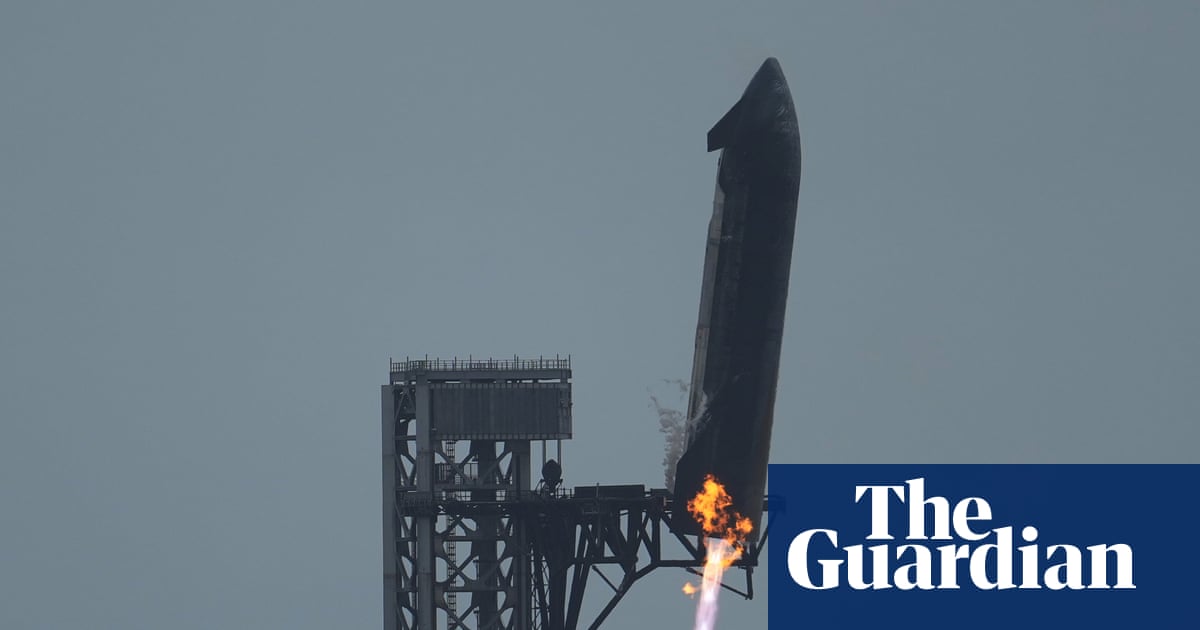
The complete Starship rocket stands approximately 124 metres tall. Its Super Heavy booster uses Raptor engines to power the initial ascent, while the upper stage continues the orbital mission.
- Super Heavy
- The lower rocket stage responsible for powering Starship's initial ascent.
- Upper stage
- The spacecraft section that separates from the booster and continues into space.
- Guidance, navigation and control
- The system that monitors a vehicle's position and movement and helps determine whether a planned manoeuvre can proceed safely.
- Heat shield
- Protective equipment designed to withstand the extreme heating experienced during atmospheric re-entry.
SpaceX reported that the upper spacecraft's systems, including its heat shield, appeared to perform well. The mission also deployed 26 Starlink V3 satellites while in orbit.
Why This Mission or Event Matters
Recovering a spacecraft from orbit is only part of SpaceX's larger ambition. The company wants Starship to operate repeatedly without requiring the construction of an entirely new vehicle for each mission.
That approach could reduce the cost and turnaround time of space launches. Catching the upper stage at its launch tower is a significant demonstration of the recovery method, although the failed booster return means the planned double catch was not completed.

The result also matters to NASA. The agency has contracted SpaceX and Blue Origin for lunar landing systems associated with its Artemis programme, which aims to return astronauts to the Moon.
NASA Administrator Jared Isaacman welcomed the flight's success. The agency is targeting a human lunar landing as soon as 2028, making continued progress on spacecraft operations and recovery especially relevant.
For Canadian readers, the mission offers a concrete example of the technological challenges facing reusable launch systems. CBC's coverage also highlighted Canadian companies seeking to develop domestic orbital launch capability, placing the American achievement alongside Canada's own launch ambitions.
What Scientists Are Learning
The mission supplied engineers with evidence about spacecraft performance across a much longer orbital flight than Starship had previously completed.
The successful return demonstrated that the upper stage could remain in orbit for 22 hours, complete multiple circuits of Earth, survive re-entry and reach the tower's recovery arms.
Engineers also have a separate failure to investigate. SpaceX's Kate Tice said the booster's engines stopped firing too early during its descent. Its guidance system detected that the vehicle was not correctly positioned and initiated the diversion rather than allowing an unsafe catch attempt.
SpaceX chief executive Elon Musk additionally described the booster as slightly low on fuel. The precise cause of the premature engine shutdown has not been established in the supplied reporting.
The flight therefore provides two distinct engineering outcomes: a successful upper-stage recovery and a booster anomaly requiring further investigation. Both will inform subsequent tests.
What Comes Next
SpaceX plans to increase Starship testing, with Musk outlining ambitions for weekly launches followed eventually by twice-weekly operations. Those are company targets rather than confirmed launch dates.
Additional flights are expected from Florida's Kennedy Space Center within the coming months. The facility is also connected to NASA's forthcoming Artemis operations.
Under the mission plans described by The Guardian, SpaceX's longer-term goals include supporting lunar exploration and eventually transporting people to Mars.
The next major engineering challenge is demonstrating that both rocket stages can return successfully during the same flight. Saturday's catch established an important capability, but the complete recovery system still needs to prove itself.
Frequently Asked Questions
Did SpaceX successfully catch Starship?
Yes. SpaceX caught Starship's upper stage with mechanical arms at its Texas launch tower on November 14, 2026. It was the company's first successful upper-stage catch.
Why did the Starship booster explode?
The booster's engines stopped firing prematurely during descent. Its guidance system detected an unsuitable recovery position and diverted it toward the Gulf of Mexico. Engineers are investigating the underlying cause.
How long was Starship in space?
The upper spacecraft spent approximately 22 hours on its mission and completed 14 orbits around Earth at an altitude of roughly 265 kilometres.
What does the Starship launch mean for NASA's Moon mission?
The successful recovery advances SpaceX's reusable spacecraft programme. NASA has contracted SpaceX and Blue Origin for lunar landing systems and is targeting a crewed Moon landing as soon as 2028.
When is the next SpaceX Starship launch?
No specific next launch date was confirmed in the supplied reports. SpaceX intends to increase testing frequency and begin launches from Kennedy Space Center within the coming months.