
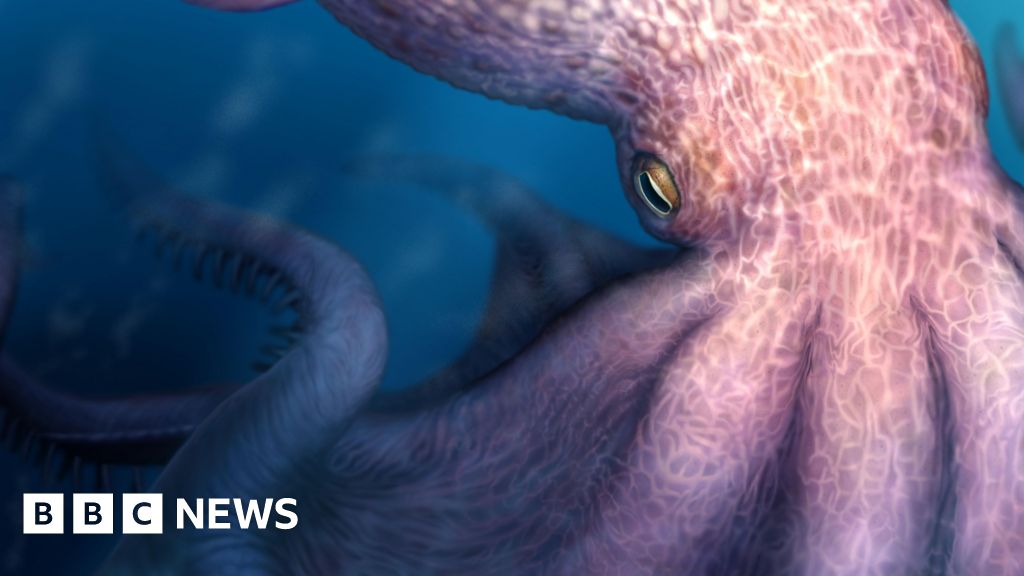
A dark, ancient ocean. Bones scattered across the seafloor like breadcrumbs. Then something massive moves through the water — silent, precise, hungry. That’s the picture scientists are painting after a new wave of studies points to a colossal octopus that once ruled seas near what is now British Columbia. The creature, dubbed Nanaimoteuthis, may have been one of the ocean’s top predators during the age of dinosaurs.

How Events Unfolded
The story begins with fossil beds on Vancouver Island. Researchers found clusters of bones — not random, but arranged in patterns that raised eyebrows. These weren’t just leftovers. They looked curated.
Then came the twist. Scientists linked the arrangement to feeding behaviour, suggesting a large, intelligent predator may have been dragging prey remains into dens — much like modern octopuses do.
That predator? A newly identified ancient octopus species, possibly stretching up to 62 feet long. For context, that’s longer than a city bus.
And here’s the kicker — this wasn’t a passive creature. Evidence suggests it may have hunted marine reptiles, cracking bones and consuming prey in a way that echoes today’s top predators.
Under the Surface
This discovery didn’t come out of nowhere. Scientists have long debated whether ancient oceans had invertebrate predators capable of rivaling sharks. This new evidence pushes that idea further.

What makes this find different is behavior. It’s not just size — it’s intelligence. The bone piles suggest deliberate action. Planning. Strategy. In short, a creature acting less like a squid and more like a calculated hunter.
For folks here in B.C., this hits close to home. These ancient waters — the same geological region — once hosted something that would make today’s orcas look almost ordinary. Talk about backyard history.
- Nanaimoteuthis
- A newly identified ancient octopus species believed to have lived during the Cretaceous period.
- Cretaceous Period
- A geological era around 145 to 66 million years ago, when dinosaurs still roamed Earth.
Voices & Opinions
We’re seeing patterns that strongly suggest deliberate accumulation of bones.
Experts say this challenges how we view ancient ecosystems. Instead of simple food chains, we’re looking at complex interactions — where intelligence played a role long before mammals dominated.
Some scientists remain cautious, though. Could other predators have caused the bone patterns? Possibly. But the octopus theory fits — and it fits well.
Putting It in Perspective
So what does this actually mean?
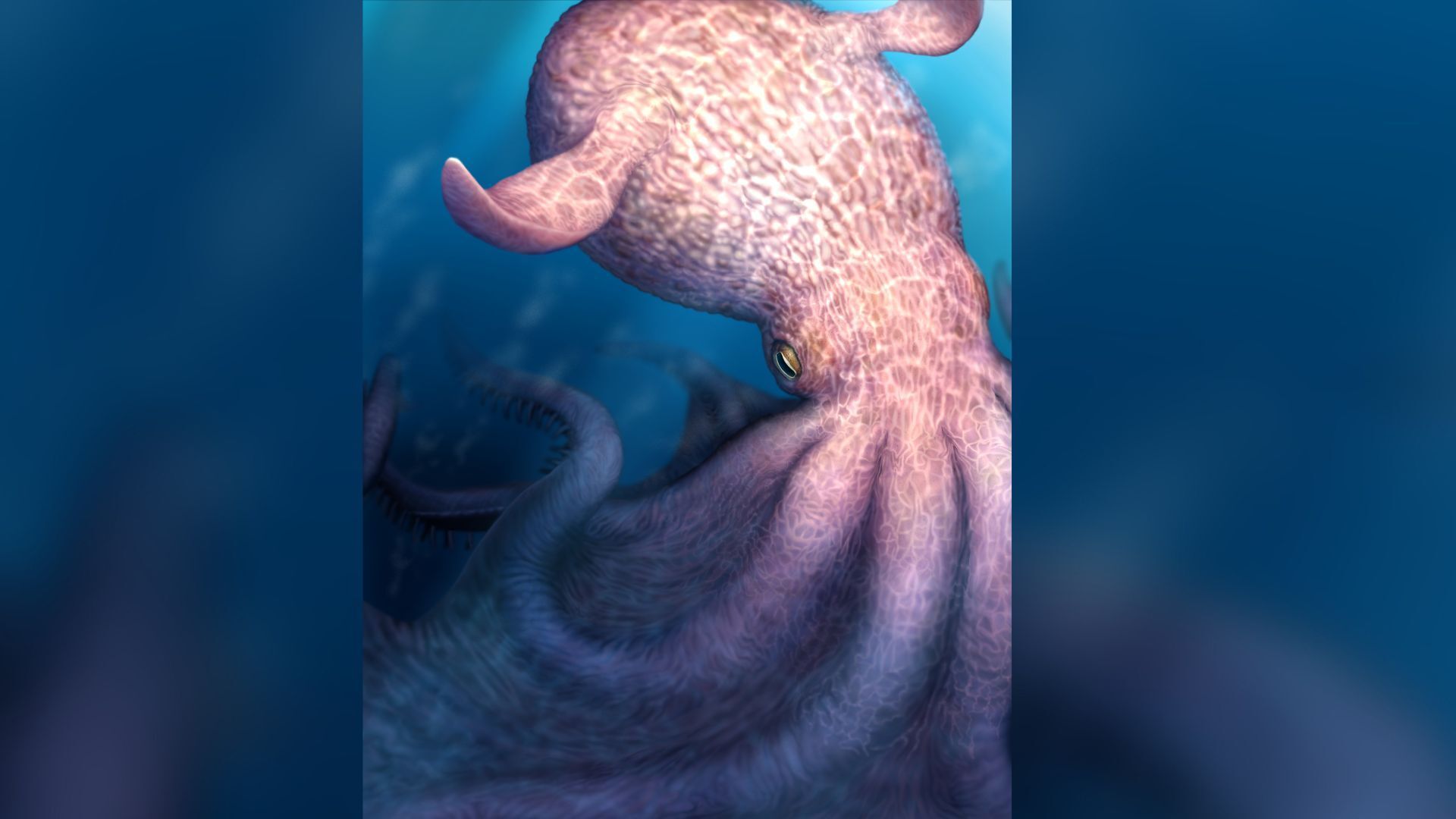
First, it reshapes our understanding of ocean predators. Sharks weren’t alone at the top. Invertebrates — soft-bodied, highly intelligent — may have shared that space.
Second, it hints at evolutionary continuity. Modern octopuses, known for problem-solving and tool use, might be inheriting traits from ancestors that were already pushing boundaries millions of years ago.
And for Canada? It’s another reminder that some of the world’s most fascinating discoveries are literally beneath our feet — or in this case, beneath our coastal waters.
Looking Ahead
Researchers are now digging deeper into similar fossil sites, searching for more evidence of these ancient hunters. Expect more studies, more debate, and possibly even clearer reconstructions of how this giant lived.
If you’re following marine science, this is one to watch. It’s early — but it’s big. And yeah, it’s a little wild to imagine.
FAQ
What is Nanaimoteuthis?
A prehistoric octopus species believed to have lived during the dinosaur era.
How big was this octopus?
Estimates suggest it could reach up to 62 feet in length.
Where was it discovered?
Evidence comes from fossil sites on Vancouver Island in British Columbia.
Did it really hunt large animals?
Scientists believe it may have preyed on marine reptiles and other large creatures.
Why is this discovery important?
It changes our understanding of ancient ocean ecosystems and predator behavior.
Is this related to the kraken myth?
Some researchers draw comparisons, but this is based on scientific fossil evidence.