
A staggering 50 million metric tons of natural raspberry sugar may have rained down on the early Earth billions of years ago, seeding our young planet with the raw chemical ingredients needed for biology to emerge. This mind-boggling estimate follows a historic breakthrough by international astronomers who have, for the very first time, directly detected a "true sugar" drifting in the freezing void of interstellar space. The discovery of erythrulose, a four-carbon sugar found in red summer fruits and sunless tanning lotions, has sent a wave of excitement through the scientific community, dramatically reshaping our understanding of how life's building blocks came to exist.
The Bottom Line
- Astronomers have detected erythrulose, a four-carbon ketose sugar, in the interstellar medium for the first time.
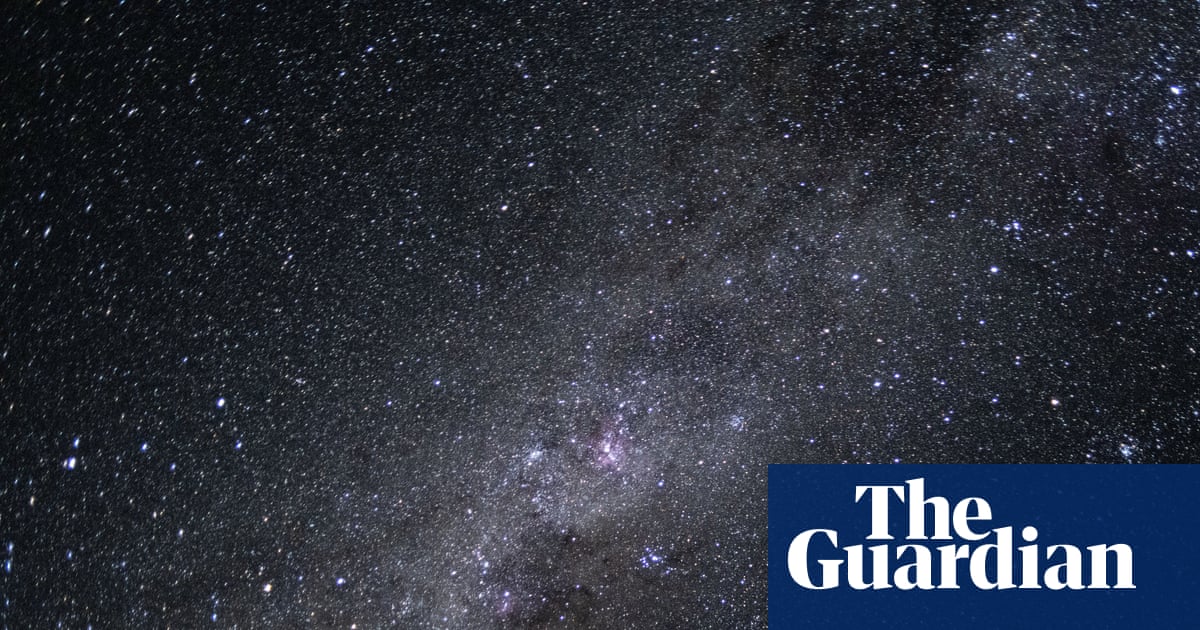
- The sugar was found inside G+0.693-0.027, a massive, chemically rich molecular cloud located about 26,700 light-years away near the center of the Milky Way.
- This is the first "true sugar" ever observed beyond our Solar System, as true sugars require a backbone of at least three carbon atoms.
- Scientists estimate that between 0.5 million and 50 million metric tons of this sugar could have bombarded Earth during the Late Heavy Bombardment roughly 4 billion years ago.
- The finding suggests that complex organic compounds necessary for the origins of life can form abiotically in the freezing, harsh environments of space before stars and planets even exist.
Breaking It Down
For decades, astrobiologists have hit a wall when trying to explain how simple sugars became abundant on early Earth. Laboratory simulations mimicking our young planet's extreme prebiotic conditions repeatedly showed that sugars do not form easily under those circumstances. While previous space missions detected sugars on asteroids like Bennu and inside ancient meteorites, showing they could survive space travel, the original source of these molecules remained a mystery. Astronomers did not know if these compounds could actually synthesize in the vast, empty expanses between the stars, known as the interstellar medium.
To solve this puzzle, a research team led by Dr. Izaskun Jiménez-Serra at Spain’s Centre for Astrobiology pointed two highly sensitive radio telescopes—the Yebes 40-meter dish and the IRAM 30-meter dish—toward the galactic center. They targeted G+0.693-0.027, a giant, icy molecular cloud of dust and gas. By parsing the faint radio waves emitted by spinning molecules knocked loose by cosmic shockwaves, the team began searching for chemical signatures. Initially, they looked for simpler three-carbon sugars and found nothing. However, when they expanded their search, they were stunned to find the unmistakable wavelength pattern of erythrulose, a more complex four-carbon sugar.
Publishing their work in Nature Astronomy, the researchers revealed that the cosmic sugar is surprisingly abundant. In fact, it is at least eight times more common in the cloud than its simpler three-carbon counterparts. This contradicts traditional astrochemistry models, which assumed interstellar molecules grew slowly, one single carbon atom at a time. Instead, the team collaborated with chemists in the Netherlands and Spain to show that erythrulose likely forms when two-carbon molecules—specifically alcohols and aldehydes like glycolaldehyde and ethylene glycol—merge together on the icy surfaces of microscopic dust grains. The reaction occurs despite ambient temperatures hovering around a freezing -250°C.
Why This Matters
This discovery provides a compelling answer to how the essential raw materials for life arrived on Earth. Simple sugars are not just sweet treats; they are the structural backbone of RNA and DNA, and they fuel the metabolic processes of every living cell. Rather than needing to form in Earth's hostile early environment, these complex molecules were likely pre-fabricated in deep space, preserved on frozen dust, and incorporated into comets and asteroids. When these celestial bodies battered the young Earth, they delivered a massive prebiotic soup directly to our planet's surface.
The cosmic presence of erythrulose also boosts hopes of finding life elsewhere in the universe. If these vital biological precursors can form naturally in molecular clouds before stars and planets are even born, the basic recipe for life might be peppered across every corner of the cosmos. For Canadians interested in space exploration and the deep questions of our existence, this discovery proves that the chemistry of life is universal, rather than unique to our small corner of the solar system.
This is the very first sugar to be detected in interstellar space and it is important because it tells us that these sugars are more common than we previously thought. It opens the possibility for life to develop on other worlds in a similar fashion to what it did in on Earth.
What Comes Next
Following this breakthrough, the research team is already planning next-stage experiments to search for even more complex sugars in the interstellar medium, including ribose, which directly forms the structure of RNA. Additionally, laboratory scientists are preparing to test how these delicate molecules react when exposed to different levels of ultraviolet radiation. This will help determine how well the sugars can survive the intense light emitted when new stars ignite within their molecular nurseries, shedding light on how much of this cosmic sugar successfully makes it onto newly forming planets.
- Interstellar Medium (ISM)
- The vast, sparsely populated regions of gas, dust, and cosmic rays that exist in the space between star systems inside a galaxy.
- Erythrulose
- A natural four-carbon ketose sugar found in small amounts in red fruits like raspberries and used commercially in sunless self-tanning lotions.
- Abiotic Synthesis
- The creation of complex organic molecules from simpler inorganic compounds without the involvement or presence of living organisms.
Frequently Asked Questions
What kind of sugar did scientists find in space?
Scientists detected erythrulose, which is a four-carbon sugar. On Earth, it is naturally found in small amounts in raspberries and is also a common ingredient in self-tanning lotions.
Where in the Milky Way was this sugar discovered?
The sugar was found inside a massive gas and dust cloud named G+0.693-0.027, located about 26,700 light-years from Earth near the center of the Milky Way galaxy.
How does sugar form in the freezing temperatures of deep space?
Astronomers believe simpler two-carbon compounds, such as glycolaldehyde and ethylene glycol, stick to the icy surfaces of interstellar dust grains and merge together to form the four-carbon sugar.
Why is finding sugar in interstellar space such a big deal?
It proves that complex organic molecules essential for life can form naturally in space before stars and planets are even created. This suggests the raw ingredients for life might be common throughout the universe.
How did this cosmic sugar end up on Earth?
Scientists estimate that millions of tons of this sugar could have been carried by comets and asteroids, raining down on Earth's surface during a period of heavy impacts about 4 billion years ago.