

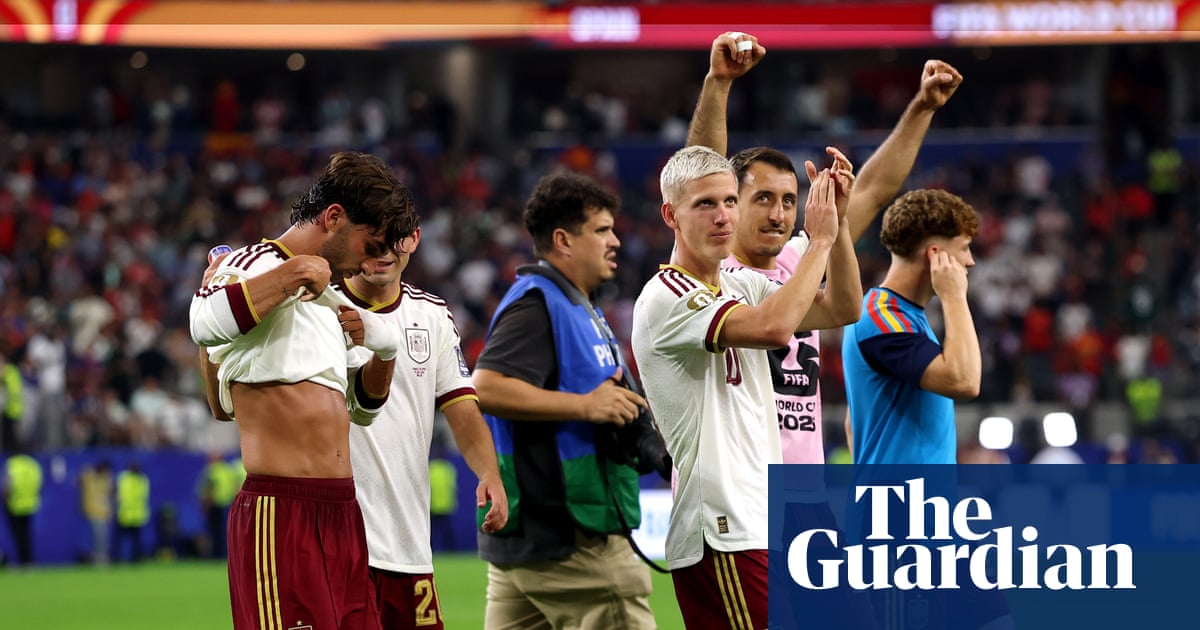
Spain advanced to the 2026 World Cup final after overpowering France in Arlington with disciplined possession, immediate pressing and a performance built around the entire team rather than one superstar. Luis de la Fuente's side held France to an expected-goals total of just 0.31, turning a matchup packed with elite attackers into a showcase of Spanish control.
The victory sends the reigning European champions to New York for only the second World Cup final in their history. For Canadian viewers following a tournament staged across North America, Spain's run offers a striking example of how a defined national playing identity can neutralize even the most expensive and celebrated attacking talent.
The Full Story
Before the semifinal, De la Fuente gathered his players and framed the challenge plainly. France possessed one of the strongest lineups in the tournament, but the Spain coach told his squad that they were the better team. That confidence was reflected in an organized performance that denied Kylian Mbappé, Ousmane Dembélé and Michael Olise the space required to dictate the match.
The opening breakthrough came through Lamine Yamal's awareness rather than a highlight-reel dribble. The newly 19-year-old attacked Lucas Digne's blind side as the French defender attempted to clear a loose ball inside the penalty area. Digne caught Yamal's leg, and Mikel Oyarzabal converted the resulting penalty into the upper-right corner.
Spain then expanded its advantage through a patient move that began deep in its own half. As France focused on Yamal on the right, Pedro Porro moved into the space Digne had vacated, received a return pass and finished. The sequence captured Spain's central strength: possession was not passive circulation, but a method of moving defenders until a useful opening appeared.

Without the ball, Spain pressed quickly while maintaining its shape. Their attackers crowded the area around each turnover, limiting France's ability to counterattack and allowing Spain to restart its possession. The approach has been consistent throughout the tournament: according to soccer analyst Taylor Twellman, Spain have recorded six shutouts and conceded only one goal.
Central Figures
Rodri was the stabilizing force in midfield. He won more duels than the entire French team combined and completed more passes than any other player, disrupting attacks before directing Spain's next phase of possession. His positioning allowed more adventurous teammates to move forward without leaving the centre exposed.
Yamal drew much of France's defensive attention, yet resisted the pressure to force an individual performance. He took fewer risks, rarely surrendered the ball and helped create the penalty that shifted the contest. Spain have won all 12 World Cup and European Championship matches that he has started.
Oyarzabal supplied the first goal and continued a tournament in which he has scored five times, matching the highest total by a Spanish player at a World Cup. Porro added the second, while Marc Cucurella, Pau Cubarsí, Aymeric Laporte and goalkeeper Unai Simón contributed to a defensive structure that gave France few clear opportunities.
The Data
France entered the semifinal averaging 2.4 expected goals per match, but Spain reduced them to 0.31. Expected goals, commonly shortened to xG, estimate the quality of scoring chances rather than simply counting shots. The steep decline shows that Spain did not merely survive French pressure; they prevented high-value chances from developing.
Spain generated 1.7 xG against a French side that had previously allowed an average of only 0.6. They have also conceded fewer than 1.5 shots on target per game, while their attacking full-backs have combined for two goals and two assists.
What This Means
Spain's success challenges the idea that international tournaments are decided mainly by whichever superstar produces the biggest moment. France had several globally recognized attackers, yet Spain's synchronized movement repeatedly isolated them from the match. The collective became the decisive star.
The system has evolved rather than remained frozen in the possession-heavy model associated with earlier Spanish teams. Wide attackers can provide direct speed, but De la Fuente has restored control as the foundation. Players are expected to interpret space, support the ball and respond immediately when possession changes.

That continuity runs through Spain's age-group teams and into the senior squad. Several members of the current group have worked with De la Fuente since winning the 2015 European Under-19 Championship. For Canadian coaches and young players watching the World Cup, the lesson is practical: technical skill becomes far harder to defend when every player understands the same plan.
What to Expect
Spain will now travel to New York for the World Cup final, seeking the country's second men's world title after the 2010 triumph. De la Fuente has called the journey a success regardless of the final result, while Rodri described the coming match as the game of their lives.
The tactical question will be whether Spain can reproduce the same emotional restraint and positional discipline after such a dominant semifinal. Their route to the final has depended on denying opponents transitions, keeping the ball under pressure and allowing different players to decide matches rather than relying solely on Yamal.
Frequently Asked Questions
How did Spain beat France in the World Cup semifinal?
Spain controlled possession, pressed immediately after losing the ball and prevented France's star attackers from receiving passes in dangerous areas. Goals from Mikel Oyarzabal and Pedro Porro completed the performance.
What did Lamine Yamal do against France?
Yamal won the penalty that produced Spain's opening goal and occupied French defenders with disciplined movement. He played a controlled team role instead of repeatedly attempting difficult individual attacks.
How strong has Spain's defence been at the 2026 World Cup?
Spain have recorded six shutouts, conceded one goal and allowed fewer than 1.5 shots on target per match, according to the supplied reports.
Why was Rodri so important in the semifinal?
Rodri controlled central midfield, won more duels than all France's players combined and completed the most passes. His defensive positioning also helped Spain recover possession quickly.
Where will Spain play the World Cup final?
Spain will play the final in New York. It will be the second World Cup final in the history of the Spanish men's national team.