British savers and pension holders face renewed market turbulence as London shares fell sharply in early trading, dragged down by an escalating global sell-off. The blue-chip index dropped 177 points, or 1.6%, to 10,608 on Friday morning, following overnight slumps across New York and Asian exchanges. While the UK benchmark holds fewer technology companies than its American counterparts, broad-based investor jitters and domestic monetary pressures have brought an abrupt end to the week's record highs.

What Changed
London's premier share index capitulated in early morning trade, erasing previous gains after Wall Street endured steep losses. The downturn followed an election outcome in the United States, where a Democratic sweep of Congress sparked investor concerns over tightening regulation and potential moratoria on new artificial intelligence data centres. That shift wiped more than $1 trillion off seven of the world's largest technology companies, sending America's tech-heavy Nasdaq index down 5.5% into correction territory.
The fallout swiftly spread across Asian bourses, where Japan's Nikkei 225 dropped 6% and South Korea's Kospi sank over 8%. European markets felt the secondary shockwaves, with the ftse 100 index dropping 1.6% alongside a 1.5% fall in Germany's Dax and an 1.1% decline in France's Cac 40.
Who Is Affected
The market retreat directly affects UK retirement savers, retail shareholders, and domestic mortgage holders. Workers with defined contribution pensions or workplace savings plans often hold broad equity exposure, meaning short-term valuations will reflect the international drop.
Individual sectors on the London Stock Exchange saw sharp divergence. Travel group International Consolidated Airlines Group declined after its third-quarter operating profit missed analyst estimates, compounded by renewed spikes in crude oil. Defence suppliers such as BAE Systems fell 79.5p to 1,995.5p and Babcock International dropped 27p to 1,020.5p on uncertainty surrounding future military spending packages.
Conversely, select banking and mining groups demonstrated resilience. Barclays rose 15.4p to 434.95p, Standard Chartered advanced 90p to 2,143p, and Fresnillo gained 124p to 2,410p as gold surpassed $4,000 an ounce.
What It Means for Your Money
For most households in Great Britain, sudden index dips do not require immediate structural portfolio changes. Workplace pension schemes and Stocks and Shares ISAs are constructed to absorb short-term equity shocks, especially following a year in which the UK benchmark gained approximately 7%.

The London market carries structural defensive features. Over 70% of corporate earnings among FTSE 100 constituents originate outside the UK, primarily in US dollars, which softens domestic balance sheets when sterling shifts. Additionally, the index offers an average dividend yield of 3.1%, attracting steady capital during periods of high valuation reassessment elsewhere.
The Wider Economic Context
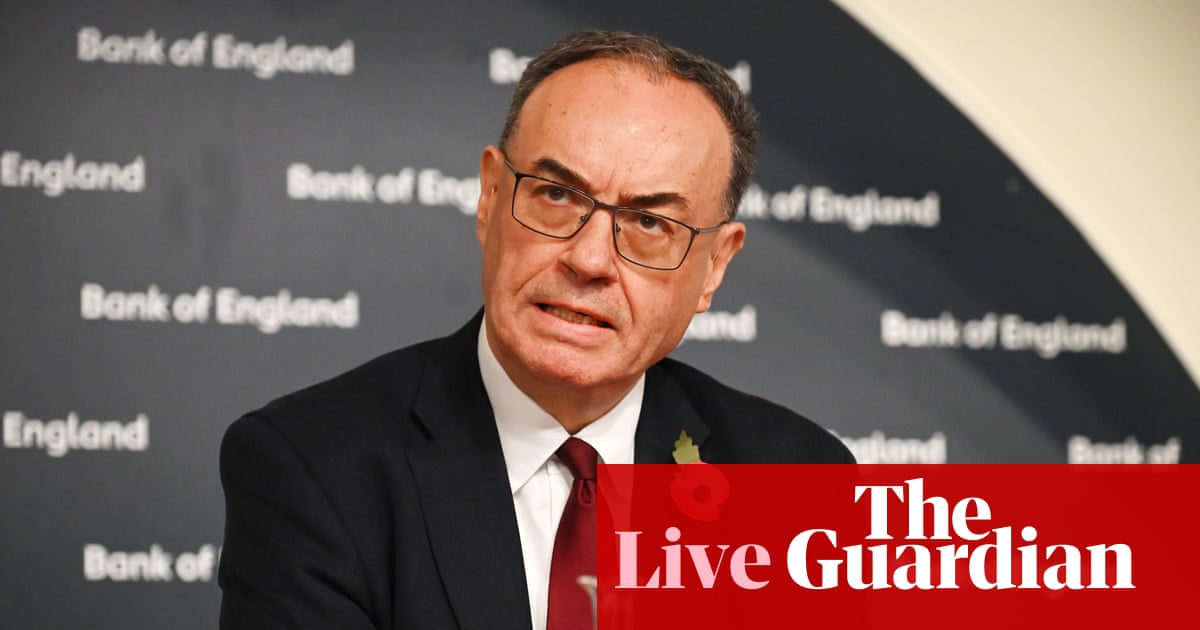
The equity market decline coincides with tightening domestic monetary conditions. The Bank of England raised the base interest rate from 3.75% to 4%, marking its first rate increase in three years. Eight members of the Monetary Policy Committee backed the quarter-point rise, while Catherine Mann voted for a larger half-point adjustment.
Rising global energy costs stemming from Middle East tensions pushed crude oil above $100 a barrel, prompting Threadneedle Street to lift its summer inflation forecast to 4.9%. Consumer price inflation stood at 3.5% in September.
Today’s increase should not be seen as the first in an inevitable long sequence of hikes. That is not inevitable. But unless the conflict in the Middle East is resolved, neither does it seem likely to be the last increase.
Concurrently, domestic retail footfall declined 5.2% in October according to the British Retail Consortium, reflecting consumer caution in the face of persistent energy overheads and borrowing costs.
Important Dates and Next Steps
Investors and mortgage borrowers should monitor several upcoming key milestones over the coming months:
- December Monetary Policy Meeting: The Bank of England convenes to decide whether an additional interest rate rise is required to curb secondary inflation effects.
- US Labour Market Data: Upcoming non-farm payroll reports, expected to reflect 65,000 added jobs, will guide global central bank expectations.
- February Rate Window: Economists view early next year as the secondary window for monetary adjustments if energy prices stay volatile.
- Retail Golden Quarter Updates: High-street trading figures through November and December will confirm whether domestic household spending stabilizes.
Frequently Asked Questions
Why did the FTSE 100 fall today?
The index dropped 1.6% due to an international equity retreat triggered by US political shifts and regulatory concerns surrounding data centre construction. The resulting decline in global technology stocks spilled over into London and European trading sessions.
How does the stock market fall affect my pension?
Workplace pension pots and managed funds that hold UK and international shares will see short-term fluctuations in their overall balance. However, retirement investments are designed as long-term instruments intended to balance out cyclical market volatility over time.
Is London as exposed to tech falls as Wall Street?
The London Stock Exchange has fewer technology companies compared with the Nasdaq, which limited the scale of the initial FTSE 100 decline. However, broad global risk aversion and oil price fluctuations continue to affect multinational firms listed in the UK.
Will Bank of England interest rates rise again soon?
The central bank increased the base rate to 4% and indicated that further adjustments remain possible if geopolitical conflicts keep energy costs high. Financial analysts currently regard the December and February MPC meetings as potential windows for further action.