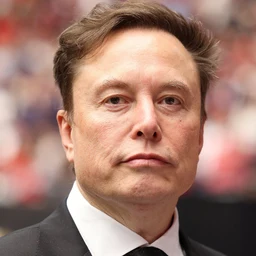
A sharp 4.9% slump knocked Tesla shares downward on Wednesday morning, decoupling the electric carmaker from a wider technology rally. The sudden decline arrived as Elon Musk's multimillion-dollar bet on Republican candidates failed to yield the anticipated sweep in the US midterm elections, exposing his core commercial interests to political friction. For British investors and transatlantic portfolios holding electric vehicle assets, this divergence demonstrates how political exposure can swiftly alter sentiment around major automotive listings.

What Moved
Tesla fell by 4.9% on Wednesday morning, while fellow Musk enterprise SpaceX dipped by 3.4%. In the derivatives realm, Tesla Tokenized Stock (TSLA) on Binance Futures slipped 0.69% across 24 hours to $379.20, dipping beneath its 200-day simple moving average of $379.29 and its 20-day average of $384.88. The move developed during a trading session with an intraday span ranging between $374.24 and $392.47, registering an overall contract volume of $257,854,256.
Why It Moved
The immediate driver stemmed from the US midterm election results, where Democratic candidates secured major victories despite heavy political expenditure by Musk. Broader technology equities marched higher on Wednesday morning, but Musk-linked enterprises dropped out of concern over prospective regulatory scrutiny. Sourced investment commentary highlighted that tech firms developing artificial intelligence could face tighter governmental oversight under Democratic power, even though federal legislation requires presidential approval.
They are going to need to plant new forests for all of the subpoenas we'll be printing.
Musk, who frequently directed hundreds of daily posts at political races during the 2025 election cycle, abruptly halted political posts on X by Wednesday, pivoting toward praising the GrokBot artificial intelligence chatbot created by xAI. A post cautioning his 241 million followers regarding Democratic victories—citing concerns around increased immigration, statehood for Puerto Rico and Washington DC, and the expansion of Supreme Court justices—was unpinned, while a message urging followers to "Vote red today!" was removed from his profile.

The Numbers That Matter
The retreat places Tesla near delicate structural thresholds. On tokenized contract markets, open interest climbed 1.42% over 24 hours to reach 141,055.87 contracts, representing a capital valuation of $54,757,616. The market's 8-hour funding rate held at 0.0152%, showing that buyers are continuing to pay short sellers to retain long exposure. Trading flows retain an active buy bias, showing a taker buy-to-sell ratio of 1.2121 with buy volume standing at 4,766 against 3,932 sells.
Technical boundaries define the current congestion zone:
- Pivot point: $381.97
- Immediate resistance: $389.70
- Strong resistance: $400.20
- Immediate support: $371.47
- Strong support: $363.74
Momentum indicators reflect this pause. Daily relative strength index (RSI) registers at 46.54, while the moving average convergence divergence (MACD) histogram sits neutral at 0.0000. Stochastic %K at 27.00 and %D at 21.60 indicate ongoing short-term consolidation. With an average true range (ATR) of $12.65, daily swings can traverse support and resistance quickly without invalidating broader multi-week trajectories.
What Analysts Are Watching
The regulatory narrative dominates institutional expectations. Sourced commentary from BBC reporting emphasized how the outcome introduces fresh operational ambiguity:
period of uncertainty for investors as they assess whether tech companies are set to face greater regulation.
Beyond domestic policy, fundamental equity valuations continue to hinge on international operational assets. In an equity research report published on 30 October 2026, Bank of America retained a Buy rating and a $460 price objective on Tesla, Inc. common stock. Bank of America identified China as the principal regulatory risk, pointing out that a prospective transaction would place Tesla's Shanghai manufacturing facility—responsible for approximately half of the company's total worldwide vehicle output—under a prominent US defense contractor.
What Happens Next
Traders face defined technical markers over forthcoming sessions. A clear advance back over the pivot of $381.97 opens a path toward $389.70 and the upper boundary at $400.20, supported by a baseline at the 50-day moving average of $376.59. Conversely, dropping beneath $371.47 exposes strong support at $363.74, bringing the lower Bollinger band mark of $353.02 into scope as the next technical backstop. Market participants are monitoring whether congressional committees formalize the subpoenas referenced by legislative leaders, and how management navigates regulatory oversight across its overseas manufacturing facilities.
Frequently Asked Questions
Why did Tesla shares fall after the US midterm elections?
Tesla fell by 4.9% after Democratic victories raised expectations of tighter regulatory scrutiny and potential congressional inquiries into tech executives, following substantial campaign spending by Elon Musk.
What is Bank of America's price target for Tesla?
Bank of America maintained a Buy rating on Tesla common stock with a target of $460 in an equity report published on 30 October 2026, while highlighting China as a primary regulatory risk.
What are the critical price support levels for Tesla contracts?
Immediate support sits at $371.47, followed by stronger chart support at $363.74 and the lower Bollinger band marker at $353.02.
How did Musk respond to the election outcome?
Musk unpinned previous political commentary from his profile on X, removed a post calling on his 241 million followers to vote for Republican candidates, and shifted his posts toward the GrokBot AI tool.