
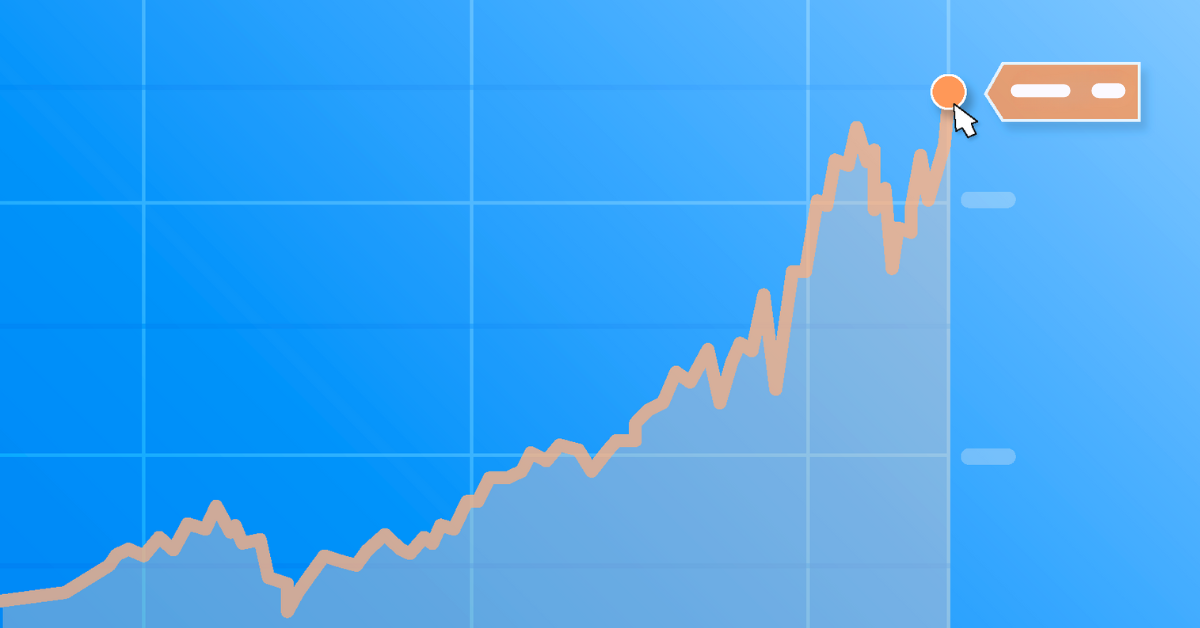
306% — that is the Vanguard S&P 500 ETF’s total return over the decade to 23 July, turning $10,000 into about $40,600. The number explains why “should I buy now?” has become such a persistent question as US shares hover near record levels. History rewards patience, but the same evidence also shows why age, income needs and concentration matter.

Why This Is Trending
The debate has intensified because the S&P 500 spent the first half of 2026 setting 24 new all-time highs. According to YCharts market research, the bull market had lasted more than 3.7 years and gained over 104% from October 2022.
That strength sits beside clear reasons for caution. Technology represented more than 37% of the index by weight in the YCharts data, while inflation, higher interest rates and geopolitical tensions remained part of the backdrop. Investors are therefore facing two competing fears: buying at an expensive level, or waiting in cash while the market keeps rising.
What Happened
Recent coverage has revived Vanguard’s own finding that investing a lump sum immediately beat spreading the same money over time in 68% of cases. The argument is simple: markets rise more often than they fall, so delaying carries an opportunity cost.
The same historical record shows why the choice is uncomfortable. An investor who put $100,000 into the S&P 500 on 19 February 2020 saw a 33.9% decline within 33 days, yet both that lump-sum approach and a 12-month averaging strategy were up more than 80% five years later. The lump-sum result finished only 6.3% behind.
What We Know So Far
The case for staying invested is supported by several long-run figures. The Vanguard S&P 500 ETF returned 306% over the past decade, equal to roughly 15% a year. Over any 10-year stretch, the S&P 500 generated a positive return 94% of the time, according to The Motley Fool’s review of the ETF.
Volatility is normal rather than exceptional. From 1980 to mid-2026, the index suffered an average intra-year fall of 14.2%, yet still ended higher in 35 of those 46 years. Missing the strongest sessions can be costly because the best days often arrive close to the worst ones.

Valuation remains the counterweight. The index was trading near 20.4 times expected earnings, above its 30-year average of 17.2. A separate assessment of elevated US markets argued that expensive starting valuations may reduce long-term returns even when they say little about the next few months.
Why It Matters
For British readers considering exposure to large US companies, the central issue is not whether the S&P 500 has worked historically. It has. The harder question is whether one index fits the investor’s stage of life and need for income.
The simple strategy has famous backing. Kiplinger’s retirement review cited Warren Buffett’s 2013 instruction for a trustee to place 90% in a low-cost S&P 500 index fund and 10% in short-term government bonds.
Retirees still face a different calculation from workers who are contributing. The S&P 500’s dividend yield was described as roughly 1% to 2%, while the 10 largest companies accounted for around 35% to 40% of the index. That means a portfolio can own hundreds of companies and still depend heavily on a small group of mega-cap technology names.
This is why the fund may be a strong building block without being a complete retirement plan. Our earlier look at Vanguard ETFs for UK investors explored the same tension between low-cost access and the need for broader diversification.
What Happens Next
No source can identify the next market peak or correction. Investors are instead likely to choose between three practical responses: invest immediately, spread purchases through dollar-cost averaging (fixed purchases at regular intervals), or rebalance across other assets rather than relying on one US equity index.
The historical evidence favours remaining invested over trying to jump in and out. Yet the retirement evidence points in the opposite direction on concentration: withdrawals during a sharp fall can lock in losses, especially when there is no cash or bond allocation to cover spending.
FAQ
Is the Vanguard S&P 500 ETF safe right now?
It has a strong long-term record, including a 306% total return over the decade to 23 July, but it can still suffer large short-term falls.
Should I invest a lump sum or use dollar-cost averaging?
Vanguard research cited in the sources found lump-sum investing won 68% of the time, while averaging can reduce the stress of investing near highs.
How concentrated is the S&P 500?
The 10 largest companies represented about 35% to 40% of the index, and technology made up more than a third.
Why can the S&P 500 be risky in retirement?
Retirees may need to sell shares during downturns, creating sequence-of-returns risk when withdrawals lock in losses before markets recover.