
Prince William visited Anmer Social Club in Norfolk on Thursday to hear how a rural mental health pilot is supporting people living and working around the Sandringham estate. The Prince of Wales also met volunteers from Norfolk Blood Bikes in Norwich, where a newly funded emergency vehicle named in his honour joined the charity’s fleet.
The visit put two community services in the spotlight: one tackling isolation before people reach crisis point, and another moving blood and medical supplies for the NHS and air ambulances. For rural communities across Britain, the question now is whether the Norfolk model can be copied elsewhere without losing the trust built in familiar local spaces.
The Full Story
The Prince of Wales sat down with service users and staff at Anmer Social Club, near his family’s Anmer Hall home, during a visit focused on Norfolk and Waveney Mind’s rural outreach work. The two-year pilot began last year and is co-funded by William and the Princess of Wales alongside the charity.
The programme was set up to offer proactive and preventative support across the local community, including but not limited to those living and working on the King’s Sandringham estate. Sessions include men’s groups, parent-and-toddler groups, menopause support, counselling and links into wider services.
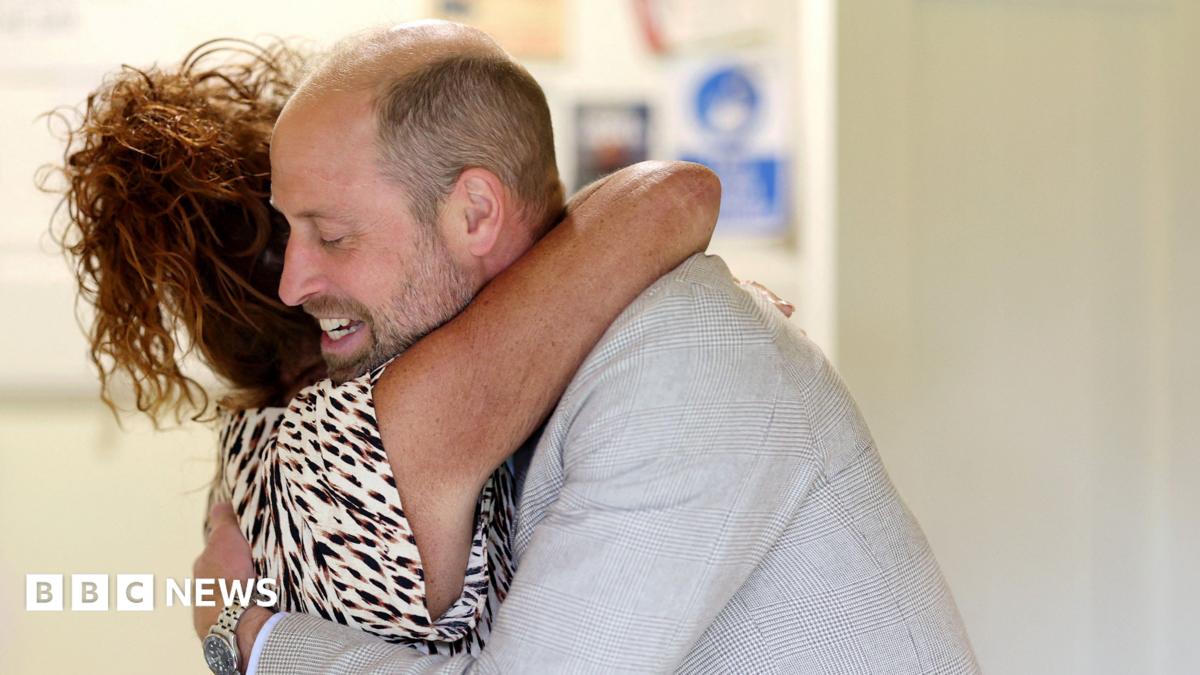
One of the most emotional moments came when businessman Paul Gannon, 71, spoke about the support he had received after struggling with PTSD. William touched his arm as he became emotional, giving him time to continue.
Don’t worry, take your time on it. I’ll talk until you’re ready to say anything.
Gannon said Mind had become “a sort of family” because he was isolated in the area while his own family lived elsewhere. He told the prince he had needed trusted people to speak to rather than only relying on medication.

Later, William travelled to Norwich to meet Norfolk Blood Bikes, a volunteer charity delivering blood, plasma, breast milk, samples, vaccines and other urgent medical items. He unveiled a Ford Kuga emergency vehicle named Prince William and joined a genuine run from Norfolk and Norwich University Hospital to East Anglia Air Ambulance HQ at Norwich Airport.
Central Figures
Prince William is not simply lending his name to the Norfolk and Waveney Mind project; the sources say he and the Princess of Wales have helped fund it. He told the group the idea came from hearing people talk to him about isolation in the area.
What I noticed was there was a lot of isolation going on. People were stopping me and talking to me about it, and I felt that was a bit of a nod to say ‘well, can you do something about it?’
Paul Gannon’s voice mattered because he was describing the service from the inside, after around four years of support from Mind. His account showed why rural mental health work is not only about clinical appointments; it is also about trust, routine and a room where people feel able to speak.
Kayleigh Armiger, the rural mental health coordinator, said access can be harder in rural areas and that stigma can stop people opening up. Mark Back, a Mind recovery worker who runs a men’s group, added that once men make it through the door and see how the group works, they often return and form relationships.
At Norfolk Blood Bikes, chairman Sandy Gurley said the new car would allow multiple box runs to Addenbrooke’s Hospital in Cambridge. William also met Lennon Hayes, 22, from Norwich, who received blood from the charity after a serious accident in December 2023 and spent more than a month in a coma.
The Data
The mental health pilot is a two-year programme launched last year, and one source said it has already supported around 800 people. That figure matters because the service is not framed as a symbolic royal visit; it is already handling real demand in a rural area where people may be spread across villages, farms and estates.
The Blood Bikes operation is also substantial. The fleet is described as 25 strong, with 18 bikes and seven cars. The newly named Prince William vehicle joined that network to help deliver supplies when bikes are less practical, including during poor winter weather.
The Norwich delivery route mentioned in the visit covered about seven miles from Norfolk and Norwich University Hospital to East Anglia Air Ambulance HQ. In emergency medicine, that kind of link can decide how quickly blood or equipment reaches a patient at the right place.
What This Means
For rural communities in Britain, the Norfolk pilot speaks to a familiar problem: services can exist on paper but still feel out of reach when transport, stigma or loneliness get in the way. Holding sessions in social clubs and village halls changes the feel of support; it makes help part of community life rather than something hidden behind a formal appointment system.
That is why William’s comments about a possible blueprint matter. If estates and rural communities elsewhere copy the model, the useful part will not just be funding. It will be the combination of local coordinators, trusted venues and groups shaped around how people actually live.
The Blood Bikes visit gave the day a second community angle. Volunteers moving medical supplies overnight and at weekends may not be visible to most patients, but their work helps keep emergency care moving when minutes count.
What to Expect
The Norfolk and Waveney Mind pilot is expected to continue through its two-year period while staff, service users and funders assess whether it can be sustained and replicated. The stated hope is that it could become a model for other rural estates and communities across the UK.
Norfolk Blood Bikes will continue using the new Ford Kuga as part of its emergency delivery fleet. The vehicle is intended to support multiple box runs and give volunteers another option when cars are safer or more practical than bikes.
FAQ
Why did Prince William visit Norfolk and Waveney Mind?
He visited Anmer Social Club to hear how a two-year rural mental health pilot is helping people living and working around the Sandringham estate and nearby communities.
Who funds the Norfolk rural mental health pilot?
The pilot is co-funded by Prince William and the Princess of Wales alongside Norfolk and Waveney Mind, which operates the service locally.
How many people has the mental health scheme supported?
One source said the scheme has supported around 800 people since it began, with sessions held in familiar community venues.
What does Norfolk Blood Bikes do?
Norfolk Blood Bikes is a volunteer charity that delivers blood, plasma, breast milk, samples, vaccines and other urgent medical items for NHS services and air ambulances.
Could the Norfolk project be used elsewhere in the UK?
That is the aim discussed during the visit. Prince William said the pilot was designed to understand rural need and how a similar model could be replicated across the UK.