
Last updated: 7 June 2026
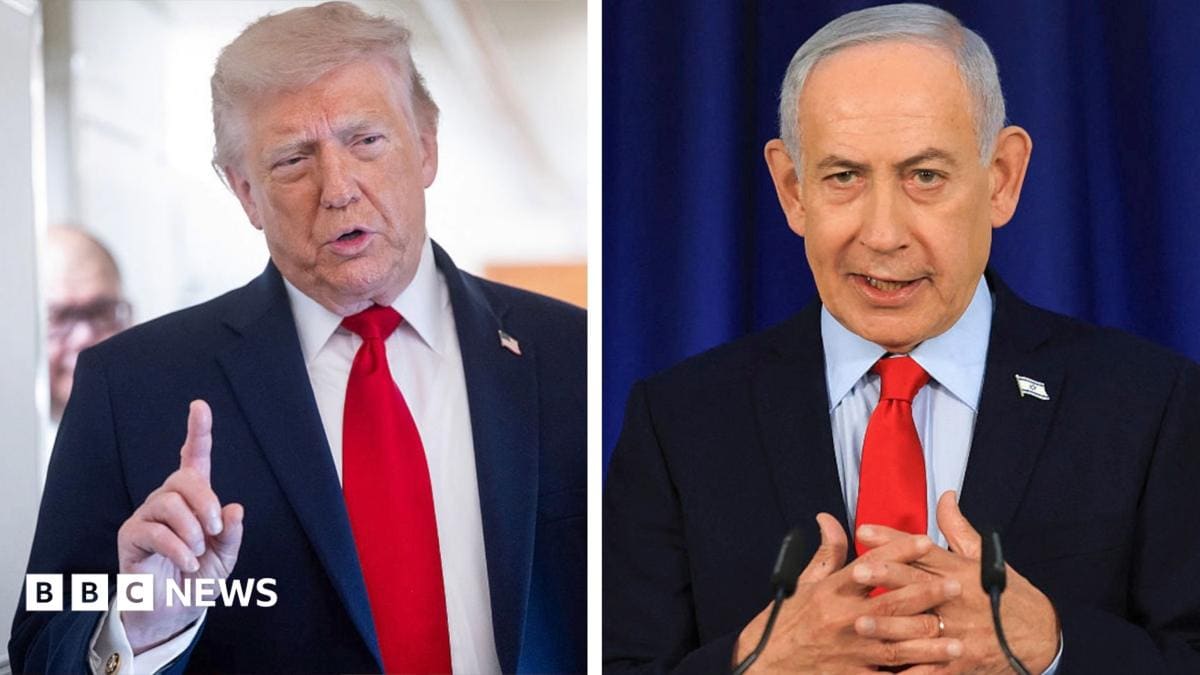
100 days after the United States and Israel went to war with Iran, the promised quick remaking of the Middle East has turned into something more grinding and dangerous. Donald Trump and Benjamin Netanyahu expected force to crack Tehran's regime and push the region towards a new order. Instead, the Strait of Hormuz has become the pressure point, diplomacy is slow, and Iran has shown it can still impose costs.
The latest sign came with Iran's downing of a US Apache helicopter, whose crew survived. That detail matters: had the crew been killed, the response from Washington would likely have been harsher, while survival gives the White House more room to calibrate its next move.

The Bottom Line
- The United States and Israel began the war with Iran on 28 February, expecting a rapid strategic victory.
- Iran has not been defeated, and the Strait of Hormuz remains closed in the accounts provided.
- The Apache crew survived after Iran downed the helicopter, lowering the immediate pressure for a maximal US response.
- US public support has weakened, with May polling averages cited at 58% disapproval and 38% support.
- For Britain, the practical concern is energy and shipping disruption, because Hormuz affects oil, gas and fertiliser flows.
Breaking It Down
The war began with maximal language. In a video statement at Mar-a-Lago, Trump told Iranians that “the hour of your freedom is at hand” and urged them to take over their government after the bombing. Netanyahu, speaking from Israel's defence ministry in Tel Aviv, framed the moment as the fulfilment of a decades-long aim to strike Iran's ruling system.
Those early assumptions now look badly strained. One account says the Iranian regime proved more resilient, ruthless and prepared than Washington and Jerusalem expected, while another argues the war has badly damaged Iran's military, navy, nuclear sites and command structure. The disagreement goes to the heart of whether this war has weakened Tehran decisively or given it a new kind of leverage.
The Strait of Hormuz is the hinge. Iran wants acknowledgement of its control over one of the world's most strategic waterways, while Washington wants it reopened as part of a wider settlement covering enriched uranium and Iran's nuclear plans. One view frames the closure as a nuisance that costs Tehran $500m a day; another says it has forced countries dependent on Gulf oil and gas to negotiate with Iran over safe passage.
Lebanon has also become tied to the Gulf. Iran has linked progress on the Gulf war to Israel's campaign against Hezbollah in Lebanon. Trump pushed Netanyahu to cancel a planned attack on Beirut, saying a deal with Iran was close, but Israel continued heavy strikes in southern Lebanon.
Why This Matters
This story matters because it challenges a familiar belief: that overwhelming military power can set political outcomes on demand. The sources describe two competing realities. Iran has suffered severe damage, including claims of devastation at Fordow, Natanz and Isfahan, but it has also retained enough capacity to close Hormuz, strike back and complicate US and Israeli choices.
For readers in Britain, the most direct impact is economic rather than military. The supplied reporting links Hormuz disruption to oil, gas and fertilisers, and describes warnings that global consequences would be severe if the waterway stayed closed by June. Higher energy and shipping costs can feed into transport, food production and business costs across import-dependent economies.
There is also a political lesson. Vietnam, Iraq and Afghanistan are cited as examples of wars whose costs outlasted the leaders who authorised them. The Iran conflict, as described here, began without strong US public backing and has grown more unpopular as costs have become clearer.
What Comes Next
The confirmed next step is not a single summit or deadline but a struggle over terms. Trump is seeking a deal that can reopen the Strait of Hormuz and create longer-term talks over Iran's enriched uranium and wider nuclear plans. Iran is demanding recognition of its leverage over Hormuz, compensation, frozen assets and an end to Israel's Lebanon campaign before it gives ground.
That leaves the conflict balanced between negotiation and renewed strikes. The Apache incident shows how quickly the war can lurch into a new escalation, while the survival of the crew gives Washington space to avoid the harshest response. Readers can follow the original account of the widening crisis, the domestic political fallout, and the argument about Iran's strategy for the fuller picture.
FAQ
What happened to the US Apache helicopter?
Iran downed a US Apache helicopter, but the crew survived. The sources say that survival made a much harsher US response less likely than if the crew had been killed.
Why is the Strait of Hormuz so important?
The Strait of Hormuz is described as one of the world's most strategic waterways. Its closure affects oil, gas, fertilisers and shipping, giving Iran leverage far beyond the battlefield.
When did the US and Israel go to war with Iran?
The supplied accounts say the United States and Israel went to war with Iran on 28 February, with the conflict passing the 100-day mark in June 2026.
What does Iran want from negotiations?
Iran is described as seeking recognition of its control over the Strait of Hormuz, compensation for wartime damage, unfrozen assets and an end to Israel's war in Lebanon.
How could this affect people in the UK?
Britain could feel the effects through higher energy, shipping and food-production costs if disruption around Hormuz continues to affect oil, gas and fertiliser flows.