Israel's Kibbutz communities today: Resilience amid new 'war order'
For many in the UK with family ties to Israel, the latest strategic shift from the IDF marks a sobering turning point in the regional conflict. As the military formalises its 'Operation Roaring Lion', the historic kibbutz communities—once symbols of socialist idealism—now find themselves on the front line of a long-term national security overhaul. It is a period of profound uncertainty, but also one of significant international mobilisation.
Context & Background
The kibbutz movement has long been the backbone of Israel's rural identity, but recent events have transformed these agricultural hubs into symbols of vulnerability and strength. What we are seeing now is not just a temporary skirmish; it is the implementation of a deliberate, long-term strategy to reshape the regional balance of power. For those of us watching from Britain, the scale of the upheaval is hard to overstate.
Historically, these communities were built on collective living and farming. Today, they are the focus of a massive humanitarian and security effort. This isn't just about troop movements; it's about the survival of a way of life that has defined the region for over a century. The stiff upper lip of the residents is being tested like never before as the military prepares for what it calls a 'long-term change' in the threat landscape.
Here's What Happened
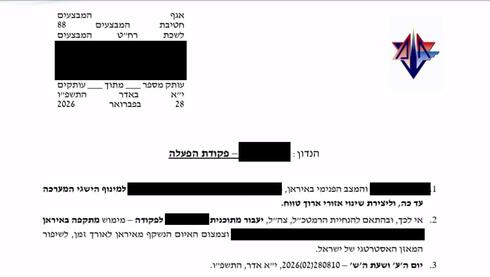
The Israel Defense Forces (IDF) have officially revealed a new war order aimed at 'reducing the Iranian threat over time'. This directive, part of the broader Operation Roaring Lion, signals that the military is moving away from short-term containment and toward a permanent shift in how it handles regional proxies. The focus is clearly on creating a 'long-term regional change' that secures the borders where many kibbutzim are located.
Meanwhile, the financial response from the global Jewish community has been swift. Jewish Federations have already mobilised over $30 million to support the immediate needs of those affected. This funding is critical for the rehabilitation of communities that have borne the brunt of recent hostilities. It is a massive undertaking that highlights the global stakes of this local conflict.
What is interesting is the shift in language from military officials. They are no longer talking about 'restoring the status quo'. Instead, the emphasis is on a total degradation of enemy capabilities. For the residents of the kibbutzim, this means a prolonged period of living under military governance and reconstruction, a bitter pill to swallow for those hoping for a quick return to normalcy.
The Response
The global reaction has focused heavily on the humanitarian cost and the necessity of long-term stability. The $30 million raised is just the tip of the iceberg in what is expected to be a multi-billion dollar recovery effort. Leaders within the federation movement see this as a moral imperative to ensure the survival of the northern and southern border towns.
The focus is on reducing the Iranian threat over time and creating long-term regional change.
Military analysts suggest that this 'war order' is a recognition that the old 'mowing the grass' strategy is dead. The goal now is to ensure that the kibbutzim can eventually thrive without the constant shadow of cross-border incursions. However, the path to that stability is paved with high-intensity operations and significant regional friction.
The Bigger Picture
For people in the UK, this conflict impacts everything from international aid budgets to local community safety. The ripples of the 'Iranian threat' are felt in London as much as in Tel Aviv, influencing diplomatic relations and trade security. The survival of the kibbutz movement is seen by many as a bellwether for the stability of the entire region.
The sheer volume of resources being poured into the region—$30,000,000 in a single mobilisation phase—shows that the world is bracing for a long-haul recovery. This isn't just a news story; it's a fundamental restructuring of Middle Eastern geopolitics that will affect global energy prices and migration patterns for years to come.
The Road Ahead
The IDF has made it clear: there is no quick fix. We should expect continued military operations under the 'Roaring Lion' banner as the military seeks to cement its gains. For the kibbutzim, the proof of the pudding will be in whether families feel safe enough to return to their homes in the coming months.
- Kibbutz
- A collective community in Israel that was traditionally based on agriculture but now encompasses various industries.
- Operation Roaring Lion
- The official military designation for the current IDF strategic offensive and defensive operations.
FAQ
What is a kibbutz and why are they targets?
A kibbutz is a unique communal settlement in Israel, often located near border regions. Because of their proximity to the frontiers, they are frequently the first communities affected during regional escalations.
How much money has been raised for the victims?
The Jewish Federations of North America have already mobilised over $30 million to assist with immediate humanitarian needs and community reconstruction through Operation Roaring Lion.
What does the IDF's new 'war order' actually mean?
It represents a shift toward long-term strategic goals, specifically focusing on the gradual reduction of the Iranian threat and ensuring permanent security changes rather than temporary ceasefires.
Is it safe for residents to return to the kibbutzim?
Currently, many border communities remain evacuated or under heavy military presence. The new war order aims to create the conditions necessary for a safe, permanent return of civilians.

Resources
Sources and references cited in this article.