
Last updated: 3 July 2026, 06:50
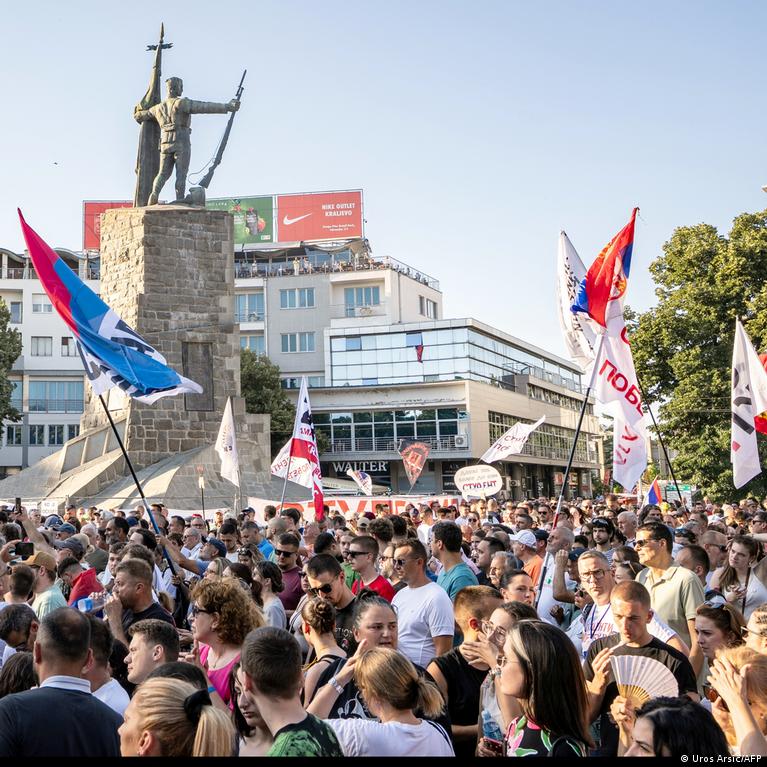
Thousands filled Kraljevo's main square a day after Aleksandar Vučić said he would leave Serbia's presidency within weeks. The announcement sounded like the climax of more than a year of protest, but the crowd did not treat it that way. Demonstrators are still demanding political change, while the timing of his resignation and the elections that may follow has not been fixed. The central question is whether Vučić is leaving power or preparing to return through another office.

How Events Unfolded
Vučić used a pro-government rally in Belgrade on 27 June to say he would be president for only “a couple more weeks” and then resign. He gave no resignation date and no firm election timetable. He also said his Serbian Progressive Party, or SNS, would win the next elections “more convincingly than ever before”, according to reporting from the Kraljevo protest.
The following day, thousands rallied in Kraljevo, about 170 kilometres south of Belgrade. “The students are winning,” Belgrade professor Nemanja Karovic told the crowd. The movement kept going because many participants do not see a formal exit from the presidency as proof that Vučić is surrendering political control.
That suspicion gained weight after SNS president Miloš Vučević invited Vučić to lead the party's parliamentary list and become its candidate for prime minister. Vučević called him the party's “natural choice” if SNS wins. Vučić has not formally accepted the candidacy in the material provided.
Under Serbian election law, Vučić cannot seek another presidential term. A return to the premiership, an office he held from 2014 to 2017, could allow him to keep major executive influence while leaving the presidency.
The Fine Print
The protests began after the external canopy at the renovated railway station in Novi Sad collapsed in November 2024, killing 16 people. The disaster became a symbol for protesters who blame corruption, negligence and poor management of state construction projects. Vučić denies corruption and has described protesters as “foreign agents” seeking to overthrow the government.
The movement has become Serbia's largest wave of protests since the overthrow of Slobodan Milosevic in 2000. Police have detained hundreds, while the European Union has accused officers of brutality and of holding demonstrators without proper grounds. That helps explain why the resignation promise has not ended the campaign.
- Presidential term limit
- Vučić is serving his second presidential term and cannot run again for the office.
- Prime minister route
- SNS leaders want Vučić to head their electoral list and return as prime minister after a party victory.
For British readers, the wider significance lies in Serbia's relationship with Europe. Euronews said the political shift could reshape the country's future and its relationship with the European Union.
The Response
Supporters of the student-led movement say the resignation announcement shows their pressure is working. Karovic's declaration captured that mood, but protesters kept marching because they doubt a change of president would change how power is exercised.
The students are winning.
The ruling party is signalling continuity. Vučević said SNS wants Vučić on its candidate list and would prefer him to lead it. Opposition MP Stefan Janjić attacked the idea as evidence that political power has become too concentrated in one person.
Before the announcement, SNS was already answering the protest movement in the streets. Its Belgrade rally drew supporters from across the country, while some public-sector workers complained of pressure to attend, according to Balkan Insight's reporting.
Putting It in Perspective
The immediate consequence is uncertainty, not closure. Serbia may be heading towards early parliamentary and presidential elections, but none of the provided sources gives a confirmed date. One source says votes are widely anticipated within three to four months.
A resignation could satisfy the narrow demand that Vučić leave the presidency, while a premiership bid could reinforce protesters' claim that the power structure has not changed. The election question is therefore sharper: are voters choosing a new direction, or deciding whether Vučić should continue from another office?
SNS has governed since 2012 and now faces its greatest political challenge from student-led demonstrations. Protesters, meanwhile, must turn street mobilisation into electoral influence if early votes are called.
Looking Ahead
Three decisions are still pending: Vučić's formal resignation date, the election timetable and his response to SNS's invitation to lead its parliamentary campaign and seek the premiership. Until those are announced, protesters are likely to judge the process by concrete changes rather than by the promise of resignation alone.
The next stage will test whether more than a year of demonstrations can become electoral power, and whether SNS can keep Vučić at the centre of its campaign.
FAQ
Why are people protesting in Serbia?
The protests began after the Novi Sad railway station canopy collapsed in November 2024 and killed 16 people. Demonstrators blame corruption, negligence and poor management of state construction projects.
Has Aleksandar Vučić resigned as president?
No resignation date is confirmed in the provided sources. Vučić said on 27 June that he would resign within weeks.
Can Vučić run for president again?
No. He is serving his second term and cannot seek another presidential term under Serbia's election law.
Could Vučić become Serbia's prime minister again?
Yes, that is the possibility now being openly discussed by his ruling party. SNS president Miloš Vučević has invited him to lead the electoral list and called him the natural choice for prime minister after a party victory.
When will Serbia hold early elections?
No exact date has been confirmed in the provided sources. Early elections are expected, but the timing of presidential and parliamentary votes has not been formally set.