
Last updated: June 28, 2026
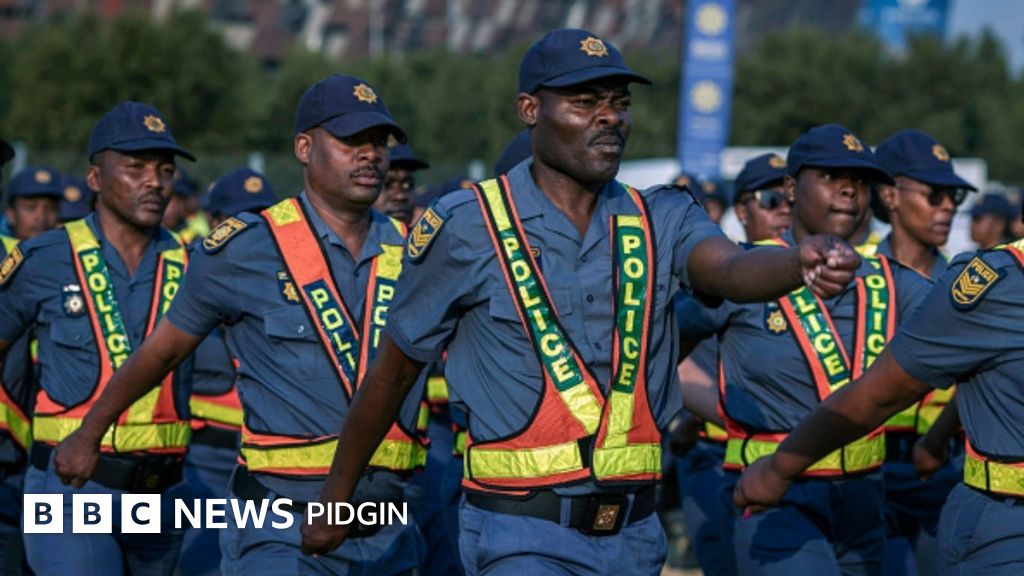
Coils of razor wire glint in the winter sun outside Durban’s Sherwood Hall, where thousands of people sleep rough among mountains of luggage in a crowded, stinking park. Armed young men have been moving door-to-door through local neighborhoods, issuing a chilling ultimatum to foreign nationals: get out by the end of the month or face the consequences. With a self-imposed 30 June deadline looming, South Africa has deployed thousands of police officers to prevent a fresh outbreak of deadly xenophobic violence.
How Events Unfolded
The current wave of panic stems from a nationwide campaign led by an anti-immigrant protest group called March and March, which has ordered all undocumented migrants to leave the country by 30 June. In response, a massive security operation has been launched across South Africa's nine provinces. Acting Police Minister Firoz Cachalia announced a R600-million emergency law enforcement deployment, putting the country on high alert to secure critical infrastructure, borders, and main transport routes.
The scale of the exodus is growing by the hour. Fearing a repeat of previous fatal riots, thousands of migrants have fled their homes to seek safety in makeshift displacement camps or outside foreign consulates. Governments across the continent are moving swiftly; Nigeria, Ghana, Malawi, Mozambique, and Zimbabwe have already begun evacuating citizens in organized batches. Uganda became the latest nation to activate emergency repatriation plans after 746 of its nationals registered to flee the country due to safety fears.
In Johannesburg, authorities have braced for major disruption as three legally approved marches are scheduled to take place simultaneously across the inner city, Hillbrow, and Midrand. Organizers expect at least 5,000 people to gather at Beyers Naudé Square before marching to Constitution Hill. Meanwhile, separate processions by the Labour and Civic Organisation (LACO) and the Mayibuye Youth Activism Movement plan to target the Department of Home Affairs and corporate offices to demand stricter immigration policies and localized hiring protocols.
Under the Surface
The geopolitical and economic drivers behind this crisis are deeply entrenched. As Africa’s economic powerhouse, South Africa has historically been a magnet for workers escaping poverty or political instability in neighboring countries like Lesotho, Malawi, Mozambique, and Zimbabwe. While official census figures estimate the migrant population at roughly 2.4 million, various local campaign groups claim the actual number is significantly higher, leading to severe friction in working-class communities.
/file/attachments/orphans/ED_585337_388838.jpg)
Poor South Africans have increasingly blamed immigration for the country's severe domestic struggles. The national unemployment rate currently sits at a staggering 33%, while youth unemployment has soared past 60%. Immigrants are frequently scapegoated for these economic failures, alongside rising crime rates and collapsing public service infrastructure, though independent analysts point to years of institutional mismanagement and economic stagnation as the primary causes.
The issue has also become heavily politicized. The ruling African National Congress (ANC) is fighting to reverse a severe decline in support after losing its absolute parliamentary majority in 2024, with local municipal elections scheduled for later this year. Recent polling data from South Africa's Human Sciences Research Council reveals that public hostility toward foreign nationals is now at its highest level since tracking began in 2003, with more than 75% of respondents stating they believe immigrants drive up local crime rates.
Voices & Opinions
The rhetoric from anti-immigration leaders has intensified as the deadline nears. Jacinta Ngobese-Zuma, a prominent media figure and founder of the March and March movement, has continually used public platforms to rally support for the expulsions.
South Africa will be great again. It just needs all of us to rise and defeat our enemy. We can’t have South Africa being turned into a refugee site for all failed African states.
In response, government officials have issued strict warnings against vigilantism, confirming that ordinary citizens have no legal authority to inspect immigration documents or perform arrests. Law enforcement heads have emphasized that their role is entirely neutral.
Our message is clear: Everyone has the constitutional right to protest peacefully and within the confines of the law. However, criminality, intimidation, violence, the destruction of property and any attempt to undermine public safety will not be tolerated. The full might of the law will be brought to deal decisively with anyone who seeks to undermine the safety, security and constitutional order of our republic.
For those trapped in the camps and volatile townships, the environment feels entirely hostile. Pregnant mothers, asylum seekers, and long-term workers describe a climate of fear where access to basic healthcare is blocked by protesters, and local police allegedly demand heavy bribes.
We're all scared. I've got quite a lot of friends who've been affected. Their homes have been destroyed, their businesses, so we don't know what tomorrow brings to us. Remember that when there's war, they don't choose who you are. War is war, so you have to just be careful no matter what.
Putting It in Perspective
The human cost of the panic is rising daily. The World Health Organization reported that up to 10 Ethiopian and Mozambican nationals may have already been killed in targeted attacks over recent weeks, though South African authorities claim several of these deaths are linked to organized crime rather than politics. Just days ago, a 29-year-old Malawian man was killed by a vigilante group in Pietermaritzburg, while two Mozambican nationals lost their lives during xenophobic rioting in Mossel Bay.
The diplomatic fallout is already affecting South Africa’s international standing. The tension has spilled over into major sporting events, with continental soccer fans actively cheering against the South African national team. The Confederation of African Football noted a distinct backlash, warning that mistreatment of fellow African nationals would directly harm South Africa’s influence on the world stage. Furthermore, the Justice Minister acknowledged that retaliatory cancellations of events and concerts overseas are beginning to hurt local artists and corporate interests.
Looking Ahead
With the 30 June ultimatum expiring this week, the immediate focus remains on preventing a humanitarian disaster. In Durban, city officials are racing to set up overflow facilities to manage the thousands of displaced families currently sleeping in the open. Home Affairs officials have confirmed that everyone inside the makeshift camps must undergo formal identity checks and be processed through local courts before being loaded onto repatriation buses bound for their home countries.
To prevent localized clashes from spiraling out of control, Defence Minister Angie Motshekga confirmed that the South African National Defence Force (SANDF) has been placed on high alert as a contingency measure. Should the 10,000 community volunteers and thousands of active police officers fail to maintain order during the marches, the military is prepared to deploy to the streets as soon as formal presidential authorization is granted.
Frequently Asked Questions
What is happening in South Africa on 30 June?
An anti-immigration campaign group named March and March has set an unconfirmed deadline of 30 June for all undocumented foreign nationals to leave South Africa, prompting widespread fear of localized violence and a mass exodus of migrant workers.
Why are there protests against immigrants in South Africa?
Protesters and civic groups blame foreign nationals for the country's high unemployment rate of 33%, rising crime levels, and struggling public services, though data shows these issues stem largely from long-term economic stagnation.
Which countries are evacuating their citizens from South Africa?
Nigeria, Ghana, Malawi, Mozambique, Zimbabwe, and Uganda have all initiated emergency repatriation plans, successfully removing hundreds of their citizens in protective transport batches due to safety concerns.
What security measures has the South African government taken?
The South African Police Service has launched a R600-million operation, deploying thousands of officers and mobilizing 10,000 community volunteers. The national military has also been put on standby as an emergency backup measure.
Have there been casualties reported ahead of the deadline?
Yes. Recent localized violence has resulted in the confirmed deaths of a 29-year-old Malawian man in Pietermaritzburg and two Mozambican nationals in Mossel Bay, alongside unconfirmed international reports of further casualties.