
A dangerous escalation in the Gulf has thrust global energy corridors into chaos, directly threatening the stability of fuel prices and supply lines that consumers in GB rely upon. The United States has executed a third consecutive night of intense military strikes against Iranian coastal defense systems, missile bases, and drone infrastructure. In severe retaliation, Iranian forces launched cruise missiles at commercial tankers and struck at regional US allies, shattering the fragile ceasefire brokered just last month.

Setting the Scene
The current violence marks the complete unravelling of the preliminary peace agreement signed by Washington and Tehran on 17 June. That interim memorandum of understanding was intended to halt hostilities for 60 days, lift the initial American blockade imposed in mid-April, and reopen the strategic Strait of Hormuz. Instead, renewed friction over territorial control and unauthorized routing through Omani waters sparked fresh maritime skirmishes, prompting US President Donald Trump to formally notify Congress under the War Powers Act that he was resuming direct military actions.
The underlying conflict erupted earlier this year on 28 February, when initial military operations plunged the region into crisis. At the height of the hostilities, global energy markets were severely disrupted, with oil prices rocketing to nearly $120 a barrel. While the June ceasefire briefly eased economic pressures, the breakdown of negotiations has renewed fears of a prolonged war that could choke off a waterway responsible for a fifth of the world's global oil and gas shipments.
Here's What Happened
According to US Central Command, a comprehensive five-hour operation conducted early on Tuesday systematically targeted military installations across Iran. Fighter jets, naval vessels, and uncrewed aerial and sea drones focused on disabling coastal radar networks and missile launch sites to degrade Iran's ability to attack commercial shipping. The bombardment resulted in reported explosions across several strategic maritime locations, including the port cities of Bushehr, Bandar Abbas, and Choghadak, as well as Kish, Qeshm, and Abu Musa islands.
Tehran immediately retaliated with coordinated strikes against Gulf nations hosting American military assets. Iranian projectiles targeted the Prince Hassan air base in Jordan, a missile base in Kuwait, and vital radar systems in Oman and Bahrain, the latter of which serves as the home base for the US Navy's Fifth Fleet. Simultaneously, Islamic Revolutionary Guard Corps (IRGC) naval forces targeted commercial vessels transiting Omani territorial waters in the southern lane of the Strait of Hormuz.
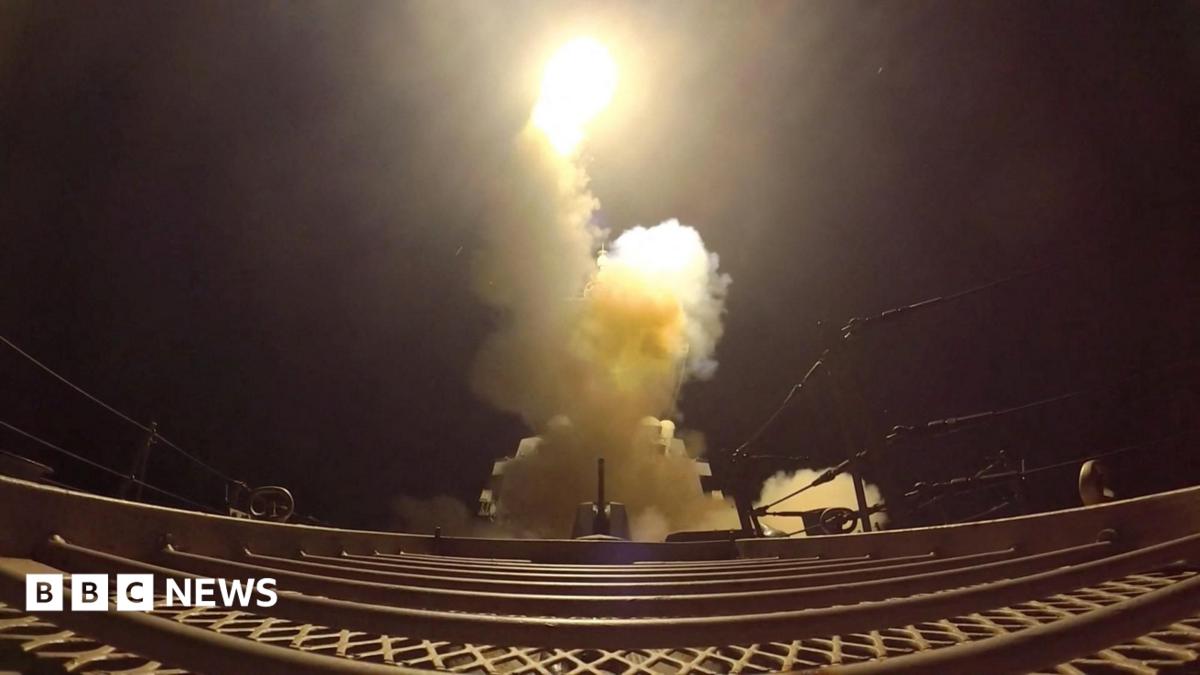
The maritime attacks turned deadly when Iranian cruise missiles struck two United Arab Emirates-associated tankers, the MT Mombasa and the MT Al Bahiyah. The strike on the Mombasa sparked a severe engine room fire, killing 1 Indian crew member and injuring 8 others. Separately, a Dutch-operated tanker, the Stolt Magnesium, suffered an explosion from an unidentified external device 40 nautical miles northeast of Qalhat, Oman, triggering a secondary engine room fire, though its crew survived uninjured.
Reactions & Responses
The deadly attack on commercial mariners provoked immediate international outrage. The Indian foreign ministry summoned the deputy chief of mission of the Iranian embassy in New Delhi to lodge a strong protest over the loss of life, emphasizing that Indian sailors comprise a significant share of the global commercial workforce. Meanwhile, Jordan's armed forces confirmed they had intercepted four missiles violating their airspace, and Bahrain's military accused Iran of directly targeting civilian areas after explosions rattled Manama.
In Washington, President Trump announced that the US military would officially reinstate its total naval blockade on Iranian ports. Writing on social media, he declared that the US would assume full management of the waterway, introducing a highly controversial policy shift to charge foreign vessels for transit protection.
The U.S.A. will be, from this point forward, known as 'THE GUARDIAN OF THE HORMUZ STRAIT,' but as such, and as a matter of FAIRNESS, will be reimbursed, at the rate of 20% on all cargo shipped, for any and all costs necessary to do the job.
Iran's foreign ministry fiercely rejected the American declarations, stating that Washington's open interference was rendering all diplomatic efforts futile. An IRGC spokesman insisted that Iran would continue to exercise sovereignty and management over the strait, accusing the US of seriously endangering global energy security.
The Bigger Picture
The immediate fallout has reverberated through global commodity markets, directly impacting financial metrics. Brent crude futures surged by 4.55% to reach $87.08 a barrel, marking their highest level in four weeks, while US West Texas Intermediate rose to $80. This sudden spike follows an extraordinary 9.6% surge in the previous session, representing the largest single-day gain since May 2020.

The escalating danger has forced a dramatic shift in global logistics. Shipping data reveals that confirmed crossings through the Strait of Hormuz plummeted by 52% week on week. Shipowners and charterers have entirely paused transit decisions, as war risk premiums are projected to rise sharply. Vessels that still risk the passage are shunning internationally authorized corridors in favour of defensive, dark routing patterns to avoid missile strikes.
The Road Ahead
The US naval blockade is scheduled to officially come into effect, leaving commercial fleets scrambling to reroute or anchor in safe waters. Analysts warn that if Trump enforces the proposed 20% cargo toll, it will fundamentally violate long-standing global norms regarding the freedom of navigation, likely driving up the cost of imported goods, gas, and electricity for households across GB.
While Pakistan continues its efforts to act as a primary mediator between Washington and Tehran, diplomatic progress remains completely stalled. Attention is also shifting to Rome, where Lebanese and Israeli delegations are scheduled to meet for US-mediated talks regarding troop withdrawals from southern Lebanon, an unrelated but parallel effort to stabilize the broader Middle East.
Frequently Asked Questions
Why is the Strait of Hormuz so important?
The strait is the world's most critical energy transit route. Approximately 20% of global oil and gas shipments must pass through this narrow waterway, making it vital to international energy supplies and fuel pricing.
What is the new US policy regarding shipping tolls?
President Donald Trump has announced that the US will act as the guardian of the strait and levy a 20% fee on all commercial cargo shipped through the waterway to reimburse the United States for providing maritime security.
How many casualties have been confirmed in the latest strikes?
Initial reports indicate at least four people were killed inside Iran during the Sunday night strikes, three people died in Hormozgan province overnight, and one Indian seafarer was killed aboard an Emirati tanker on Tuesday morning.
Which commercial ships were hit by missiles?
Two UAE-associated tankers, the MT Mombasa and the MT Al Bahiyah, were struck by Iranian cruise missiles in Omani waters. Additionally, a Dutch-operated tanker named the Stolt Magnesium suffered an explosion off the coast of Oman.