
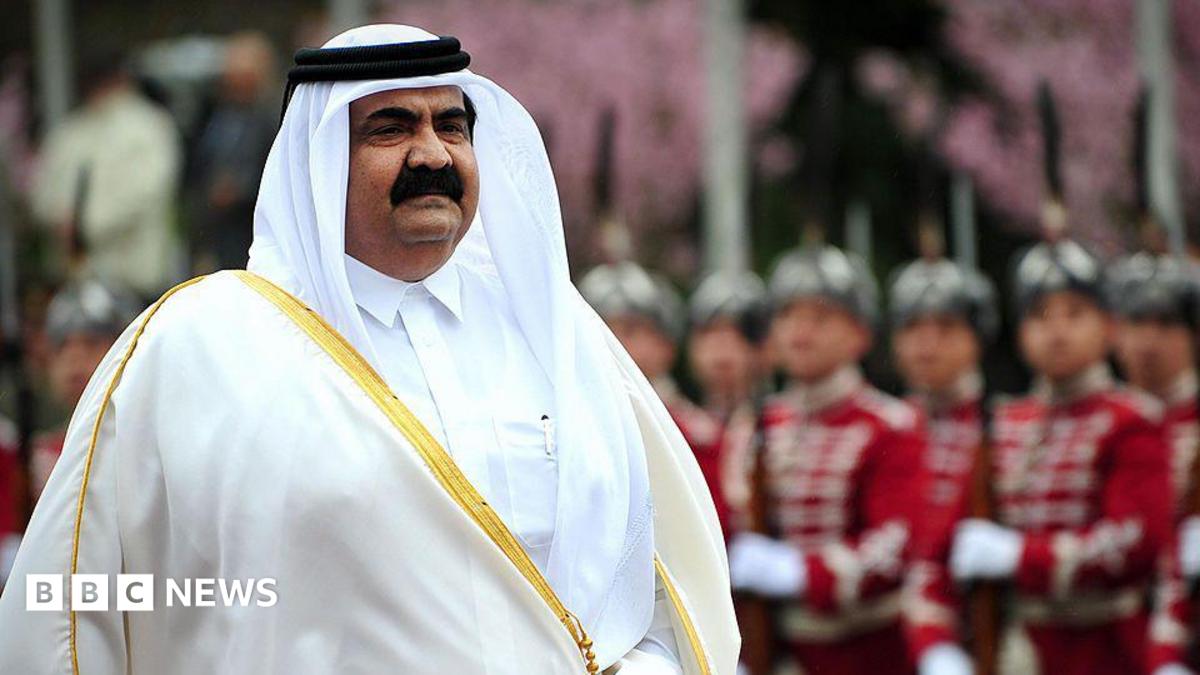
Mourners clad in traditional Qatari dress stood shoulder-to-shoulder in the evening heat, their hands clasped in silent prayer facing a simple, shrouded body beneath the grand arches of Doha's Imam Muhammad ibn Abd al-Wahhab Mosque. The Father Emir of Qatar, Sheikh Hamad bin Khalifa Al Thani, who radically reshaped his nation from a struggling desert state into an ultra-wealthy global powerhouse, has died at the age of 74. His death, announced on Sunday morning, has triggered a wave of high-level international tributes and several days of official public mourning across the Gulf nation.
How Events Unfolded
Following the formal announcement of his passing, a meticulously planned yet humble funeral sequence commenced in the Qatari capital. The simple Islamic ceremony was staged on Sunday evening immediately after the daily sunset prayer, drawing close family members, state dignitaries, and citizens. Following the communal prayers, the late leader's body was carried out of the mosque by a group that included his son and successor, the current Emir Sheikh Tamim bin Hamad Al Thani.
Sheikh Hamad was subsequently laid to rest in a simple grave at the Lusail Cemetery, located just north of Doha. Observers noted that the modest nature of the burial stood in stark contrast to the immense sovereign wealth the man commanded in life, a choice described by local commentators as deeply emblematic of his personal focus on public welfare over the trappings of luxury. In response to the loss, Qatar has ordered government offices and public institutions to close temporarily, while national flags have been lowered to half-mast.
Critical Details
To understand the profound impact of Sheikh Hamad’s death, one must look back 31 years to 1995, when he took power through a bloodless coup staged while his father, Sheikh Khalifa, was abroad. At that moment, Qatar was financially crippled, its economy small, and its traditional oil reserves rapidly dwindling. Sheikh Hamad recognized that the nation's future lay beneath the waves of the Persian Gulf in the North Field—the world’s largest natural gas field—which was then entirely underdeveloped.
By aggressively pursuing international partnerships and expanding gas liquefaction infrastructure, he initiated a staggering economic transformation. Between 1995 and 2013, Qatar's gross domestic product skyrocketed more than twentyfold, expanding from roughly $8bn to nearly $199bn. By 2006, the country had secured its position as the world's largest exporter of liquefied natural gas (LNG), eventually reaching a production capacity of 77 million tons per year by 2010. This economic engine drove the domestic hydrocarbons sector's added value from 11 billion Qatari riyals (about $3bn) to a staggering 403 billion riyals (about $110.4bn) during his eighteen years of rule.

The financial surpluses generated by this gas boom were redirected into long-term global assets. In 2005, Sheikh Hamad established the Qatar Investment Authority (QIA), a sovereign wealth fund tasked with diversifying the country's income streams away from fossil fuels. QIA systematically acquired premium global real estate and corporate stakes, including London's Shard skyscraper, a substantial share in Barclays bank, the automotive giant Volkswagen, and the iconic United Kingdom department store Harrods, purchased in 2010. Today, the fund’s total assets are estimated to exceed $500bn.
Reactions & Responses
The news has provoked significant reactions from global leaders, reflecting Qatar's modern diplomatic reach. King Charles and Queen Camilla issued a joint tribute, stating that Sheikh Hamad had dedicated many years of distinguished service to Qatar. They noted that his leadership, vision, and commitment to the welfare of the Qatari people were widely admired both within his home country and around the world.
Further afield, India declared an official day of national mourning, cancelling all public entertainment events as a mark of respect. The Indian Prime Minister, Narendra Modi, described the late emir as a visionary leader who steered his country to exceptional levels of development and prosperity, recalling him fondly as a true friend. Within the media landscape, the director general of Al Jazeera Media Network, Sheikh Nasser bin Faisal Al Thani, expressed profound grief, crediting the late ruler as the visionary who planted the first seed of the international broadcasting network, which was launched under his auspices in 1996.
Putting It in Perspective
Beyond Western financial markets, Sheikh Hamad’s legacy is deeply intertwined with Arab nationalism and the Palestinian cause. He frequently broke regional diplomatic consensus, most notably in October 2012 when he and his wife, Sheikha Moza bint Nasser, became the first royal and Arab leadership delegation to physically bypass the international blockade on the Gaza Strip. During that visit, he increased Qatar's reconstruction grant from $254m to $400m, financing critical infrastructure such as the $58m Hamad City housing development in Khan Younis and the specialized Sheikh Hamad Hospital for Rehabilitation and Prosthetics.
For everyday citizens in Britain, the late Emir's decisions have long-standing domestic relevance. Qatar's heavy investments in British corporate institutions, infrastructure, and luxury retail mean that the economic stability of the Gulf state remains directly tied to financial interests in the UK. Furthermore, the infrastructure built during his reign laid the groundwork for Doha to secure and host the 2022 FIFA World Cup, an ambition his close associates reveal he first floated over dinner to FIFA officials back in 2006.
Looking Ahead
Following a rare voluntary abdication in 2013, when Sheikh Hamad handed the reins of power to his then 33-year-old son, Sheikh Tamim, the country has operated smoothly under the second generation of leadership. Qatari officials have confirmed that the nation will proceed strictly under the guidelines of the Qatar National Vision 2030, a long-term economic blueprint enacted by the late elder statesman in 2008 to transition the country fully into a knowledge-based society. The multi-day public mourning period will conclude later this week, after which government offices are scheduled to resume normal operations.
- Liquefied Natural Gas (LNG)
- Natural gas that has been cooled down to a liquid state at approximately -162°C, reducing its volume for safer and easier non-pressurized storage or transport across oceans.
- Sovereign Wealth Fund
- A state-owned investment fund composed of financial assets such as stocks, bonds, property, or other financial instruments, typically funded by central bank reserves or export revenues.
Frequently Asked Questions
When did Sheikh Hamad bin Khalifa Al Thani rule Qatar?
He ruled the country for 18 years, assuming power in 1995 before voluntarily abdicating in favour of his son in 2013.
Where was the former Emir buried?
Following sunset funeral prayers at the Imam Muhammad ibn Abd al-Wahhab Mosque, his body was interred in a simple grave at the Lusail Cemetery north of Doha.
What UK assets does the Qatar Investment Authority own?
Under his foundational strategies, the fund acquired prominent British assets including the Harrods department store, London's Shard skyscraper, and significant stakes in Barclays bank.