
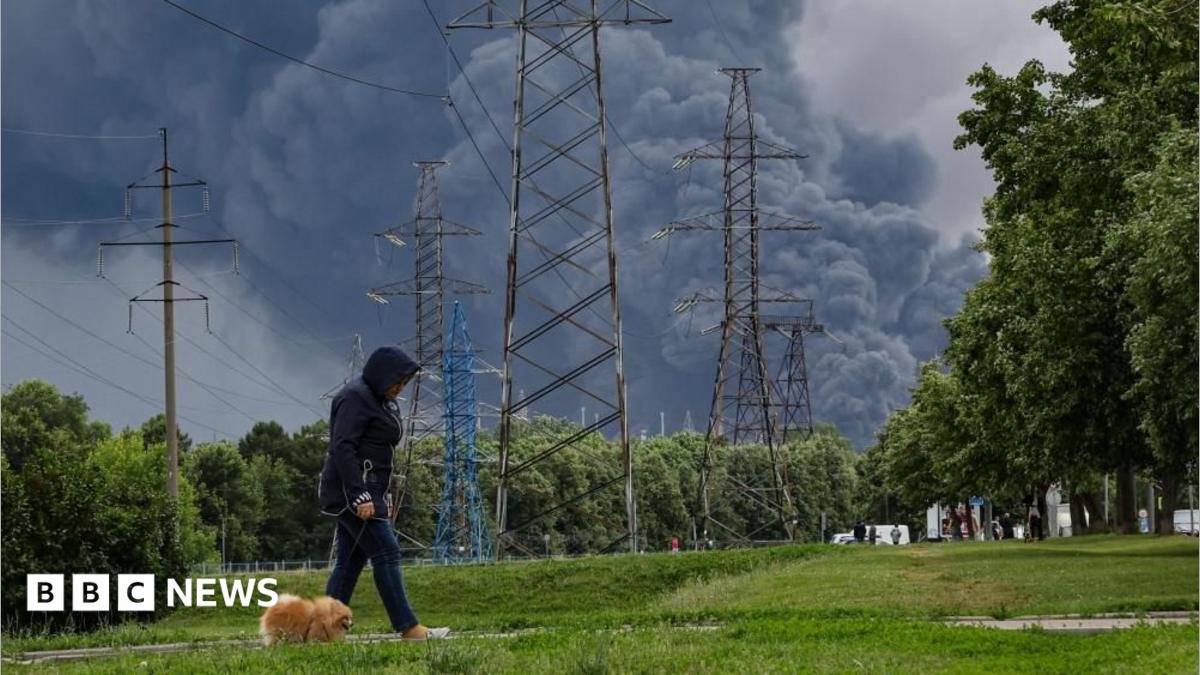
An extraordinary grey haze descended upon the south-east of the Russian capital on Thursday morning. While thick black smoke billowed from the Kapotnya oil refinery, a nearby angler sat undisturbed by a pond, staring across the water as if it were any other weekday. In a nearby playground, children laughed on the swings while shoppers hauled bags from the supermarket underneath a sky choked by a giant black shroud. This surreal scene captured the reality of Moscow's updated normal after Ukraine launched its largest-ever aerial assault on the capital since Russia's full-scale invasion began, firing close to 200 drones directly at the heart of the city.
How Events Unfolded
The massive multi-wave drone barrage commenced in the early hours of Thursday, triggering widespread disruption and panic across the metropolitan area. By 3 a.m., Moscow Mayor Sergei Sobyanin began issuing urgent alerts on Telegram as waves of uncrewed aerial vehicles (UAVs) targeted critical infrastructure. Aviation authorities were forced into a total lockdown, temporarily suspending operations at all four major airports—Sheremetyevo, Vnukovo, Domodedovo, and Zhukovsky—resulting in the cancellation or delay of more than 500 flights as air raid sirens echoed.
By 10 a.m., air defences had reportedly intercepted 80 drones around the capital, though the sheer volume of the swarm overwhelmed local defensive nets. A dramatic explosion ripped through the Gazprom Neft Moscow oil refinery in Kapotnya, a critical facility located just 10 miles from the Kremlin. Verified video footage captured the precise moment the top of a massive fuel silo was blown off like a frisbee, sending the roof flying dozens of metres into the air before a fierce blaze erupted, halting production.
The fallout quickly spread into residential zones. Debris from intercepted drones sparked fires across shopping centres and residential blocks, causing at least 17 recorded injuries in the Moscow region. Tragically, an eight-year-old girl was killed in a domestic fire caused by one of the drone strikes. Meanwhile, residents in the south-east complained of a fine, chemical drizzle leaving unpleasant black oil specks on clothes and a thick, dark sheen coating local car parks.
Critical Details
The severe breach at the Kapotnya refinery has exposed structural vulnerabilities in Russia's defensive umbrella. The facility is a vital economic organ, producing 40 per cent of Moscow’s entire fuel supply. To understand why this occurred, aviation experts point to the design limits of Russia's network; conventional systems were built to track highly radar-reflective metal aircraft and cruise missiles, leaving them effectively blind to modern swarm tactics utilizing small, composite drones made of plastic or plywood.
- Pantsir-S1
- A mobile, short-range surface-to-air missile and anti-aircraft gun system designed to protect military and industrial targets from low-flying aerial threats.
- S-300
- A family of long-range, mobile surface-to-air missile systems intended to intercept aircraft and large ballistic missiles over wide areas.
In response to the humiliation, military movements confirm that Russia has pulled a new Pantsir anti-aircraft missile and gun system directly from the traditional Ukraine combat zone to defend the capital. Installed on a tower just a few hundred metres from the damaged refinery, online images showed the relocated launcher protected by a metal cage—a distinct feature of systems deployed on the front line to safeguard against short-range strike drones. Furthermore, photos revealed the system held only two of its standard six missiles, suggesting an acute shortage of interceptors due to over-extended military hardware.

Reactions & Responses
While President Vladimir Putin offered no public comment during an ongoing southeast Asian summit in Kazan, his administration scrambled to control the narrative. State TV channels and newspapers downplayed the strike, pushing a heavily coordinated message to domestic audiences. Russian Foreign Minister Sergei Lavrov threatened severe retaliation, promising to deliver regular, massive group strikes on Ukrainian defence infrastructure.
Our strikes on Ukrainian infrastructure linked to the military-industrial complex are far more effective and produce more results.
From Kyiv, Ukrainian President Volodymyr Zelenskyy cast the operations as a direct, justified reprisal for a Russian attack earlier in the week that set fire to a historic monastery complex in the Ukrainian capital, reinforcing his strategy to bring the physical realities of the war home to ordinary Russians.
Putting It in Perspective
The economic ripple effects of Ukraine’s multi-tiered drone campaign are mounting rapidly. Beyond the chaos in Moscow, Kyiv has systematically choked Russian supply lines, using newly deployed domestically produced mid-range drones like the FP-2 and the Behemoth, which carries a 70 kilogram warhead. These operations have resulted in a total logistical lockdown across southern routes, forcing authorities in occupied Crimea to completely suspend fuel sales to the public due to critical civilian shortages.

For readers in GB, these developments point to an unpredictable broadening of the European conflict. The systematic destruction of Russian oil infrastructure and refining capacity has the potential to alter global energy supply lines and fuel prices, while the severe security breakdown further diminishes Putin's domestic political standing ahead of the State Duma elections this September.
Looking Ahead
What is confirmed next is a further escalation of the aerial war. Ukrainian forces have demonstrated an astonishing leap in capability, with Zelenskyy confirming that specialized operations using new long-range drones have successfully hit a western Siberian refining facility in Tyumen, more than 2,000km from the Ukrainian state border. As Kyiv continues to exploit gaps in Russia's patchwork air shield, further extensive drone campaigns against major industrial centres remain inevitable.
Frequently Asked Questions
How many drones were used in the Moscow attack?
The overall raid across Russia involved 301 drones intercepted by the Defence Ministry, with approximately 200 directed toward the capital region. Moscow officials confirmed that 80 specific UAVs were downed in the city's immediate airspace.
What specific damage occurred at the Moscow oil refinery?
The Kapotnya refinery, which supplies 40% of Moscow's fuel, suffered a major strike that blew the lid off an oil storage silo, resulting in a large fire and the temporary suspension of production.
Has anyone died or been injured in these raids?
Local governor Andrei Vorobyov confirmed that 17 people were wounded in the Moscow region, and an eight-year-old girl tragically died in a domestic fire caused by a drone strike.