
A dramatic total solar eclipse will sweep across Europe on 12 August 2026, triggering an unprecedented rush for last-minute travel bookings to prime viewing spots in Iceland and Spain. Skywatchers across the UK will also witness a spectacular 91 per cent partial eclipse, turning the late afternoon sky into an eerie twilight. This rare cosmic event is already driving heavy demand for ferry crossings, cruise cabins, and specialized rooftop hotel packages along the path of totality.
The Full Story
The highly anticipated celestial event on 12 August 2026 marks the first total solar eclipse visible from continental Europe in the 21st century. The narrow path of totality—the corridor directly within the Moon's deepest shadow—stretches 183 miles wide and 5,200 miles long. The shadow will first touch down at sunrise in the Russian Arctic before racing across Greenland, Iceland, northern Spain, and the outermost tip of Portugal, finally skipping off the planet in the western Mediterranean Sea.
For British observers, mainland Europe offers the most accessible path to full darkness. Travel operators are reporting a surge in final availability bookings. Brittany Ferries has confirmed standard boarding passes remain open for routes from Portsmouth and Plymouth to Santander and Bilbao, landing travelers directly inside the path of totality just ahead of the event. Meanwhile, New Scientist Discovery Tours has opened up extra cabins for a 13-day polar cruise departing Iceland on 7 August to watch the eclipse from the Scoresby Sund fjords in Greenland under the guidance of expert Jamie Carter.

Further south, the eclipse will coincide uniquely with the evening sunset across eastern Spain and the Balearic Islands. In Mallorca's northwest coast, the Sun will be completely obscured for 1 minute and 36 seconds while sitting just 2.7 degrees above the west-northwestern horizon. Luxury hotels like the Iberostar Selection Es Trenc and Hotel de Mar Gran Meliá are capitalizing on this rarity, offering private riverboat viewings and dedicated rooftop 'Eclipse Suites' to handle the influx of international tourists fleeing cities like Madrid and Barcelona where totality will narrowly miss.
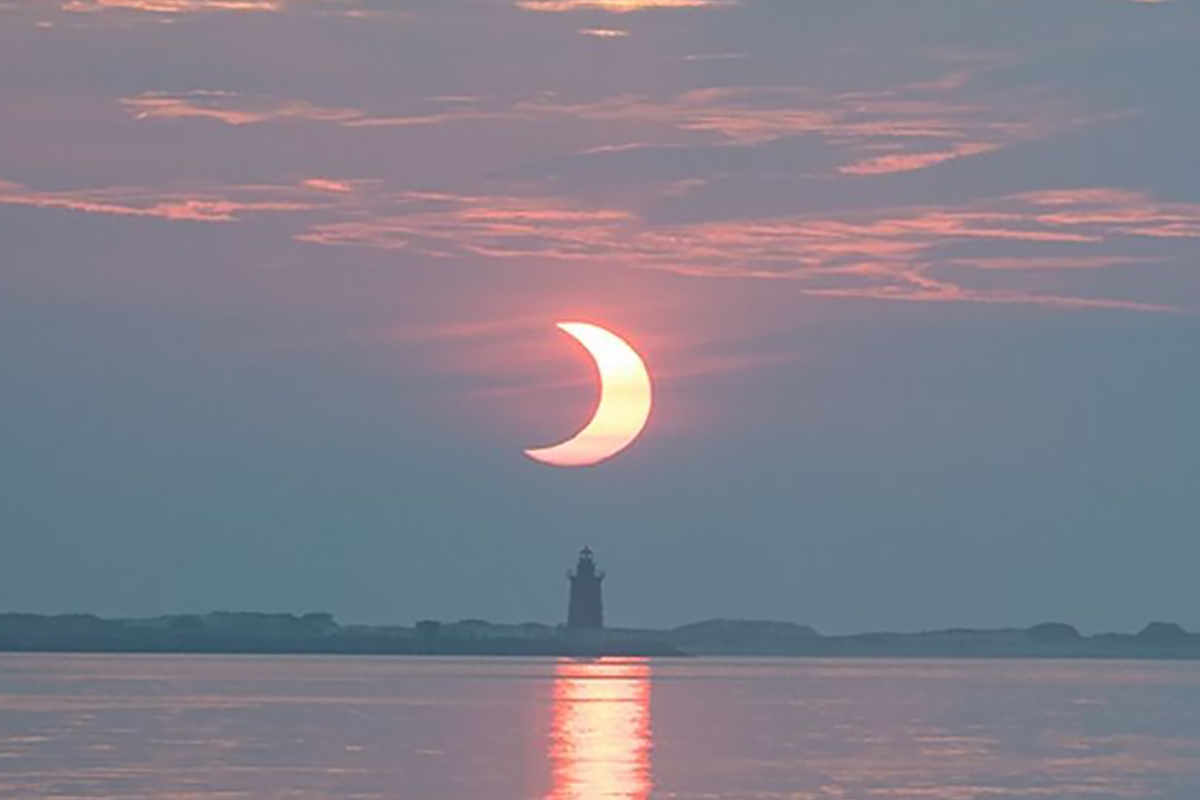
Those staying in the UK will still experience a highly profound partial eclipse during the early evening. First contact begins just before 6pm BST, with the Moon tracking steadily across the solar disc from right to left. By the time the eclipse reaches its peak between 7:05pm and 7:13pm BST, major cities like London, Manchester, and Glasgow will see over 91% of the sun covered, leaving a dramatic downward-pointing crescent hanging low in the western sky.
Who's Involved
Several notable experts, organizations, and figures are coordinating activities around the 2026 eclipse:
- Dr. Tyler Nordgren: Renowned astronomer and author of Sun Moon Earth, who is advising eclipse chasers to observe the Moon's departing shadow immediately after totality ends.
- Jamie Carter: Leading eclipse expert and editor of WhenIsTheNextEclipse.com, who will guide the New Scientist polar expedition cruise through Greenland.
- Colin Stuart: Astronomer accompanying the science-led small group overland tour from Madrid to Valladolid.
- Björk: The Icelandic musical artist hosting the Echolalia festival in Hafnarfjörður, where fans can experience one minute and four seconds of total eclipse during her DJ set.
- NASA and the Dynamic Eclipse Broadcast (DEB) Initiative: Coordinating citizen science groups across Spain and North America to log solar data.
By the Numbers
The global scale and local impact of the astronomical alignment can be measured through specific geometric data:
- 96.5%: The maximum area of the Sun's disc covered within the UK, visible from the Bishop Rock Lighthouse in the Isles of Scilly.
- 91.4%: The exact percentage of solar obscuration over London and London during peak coverage at 7:13pm BST.
- 1 minute, 48 seconds: The duration of complete darkness in the Spanish city of Burgos, where the sun sits 8.3 degrees above the horizon.
- 2 minutes, 18 seconds: The absolute maximum duration of totality for this eclipse, achievable in parts of the Arctic Ocean and Greenland.
- 99.96%: The partial obscuration in Madrid, a near-miss that is prompting a mass exodus of locals to the northern suburb of San Sebastián de los Reyes to reach true totality.
What This Means
This event carries profound scientific and local significance, especially given that an area can typically wait up to 400 years between consecutive total eclipses. For researchers, the brief window allows critical observations of the solar corona (the sun's outermost atmosphere) and the tracking of sun-grazing comets via projects like Sungrazer. It also offers a massive boost to the European astrotourism sector, filling coastal resorts and northern ferries during a competitive summer season.
For people in Britain, it represents the deepest partial solar eclipse visible from home soil since March 2015. What makes it exceptionally rare is the low-altitude geometry; because the peak occurs less than an hour before sunset, it will overlap with natural twilight to create an unusual, metallic sky quality. However, this introduces a distinct local challenge: to view the event at all, observers must secure an elevated or coastal viewpoint with a completely clear, unobstructed horizon facing west-northwest, as distant clouds hundreds of miles away could obscure the low-lying crescent.
What's interesting is the added bonus waiting for stargazers after nightfall. Because a solar eclipse always happens during a new moon, the subsequent night sky will be completely dark and free of lunar glare. This creates perfect conditions for witnessing the peak of the annual Perseid meteor shower, allowing observers to watch fireballs and shooting stars at a rate of 20 to 40 per hour across rural parts of the UK without any specialized equipment.
What to Expect
With only weeks remaining until the big day, the timeline for the celestial double-header is locked in for 12 August 2026:
- 18:00 BST: First contact begins across the UK as the Moon starts to bite into the right side of the Sun.
- 19:05–19:13 BST: Maximum partial eclipse peaks across major UK cities, with the deepest coverage occurring in the southwest.
- 20:31 CEST (19:31 BST): Totality reaches its absolute end point in the Balearic Islands, where the shadow will skip off the planet entirely.
- Midnight onwards: The Perseid meteor shower enters its peak activity window, visible to the naked eye under dark, moonless skies until dawn on 13 August.
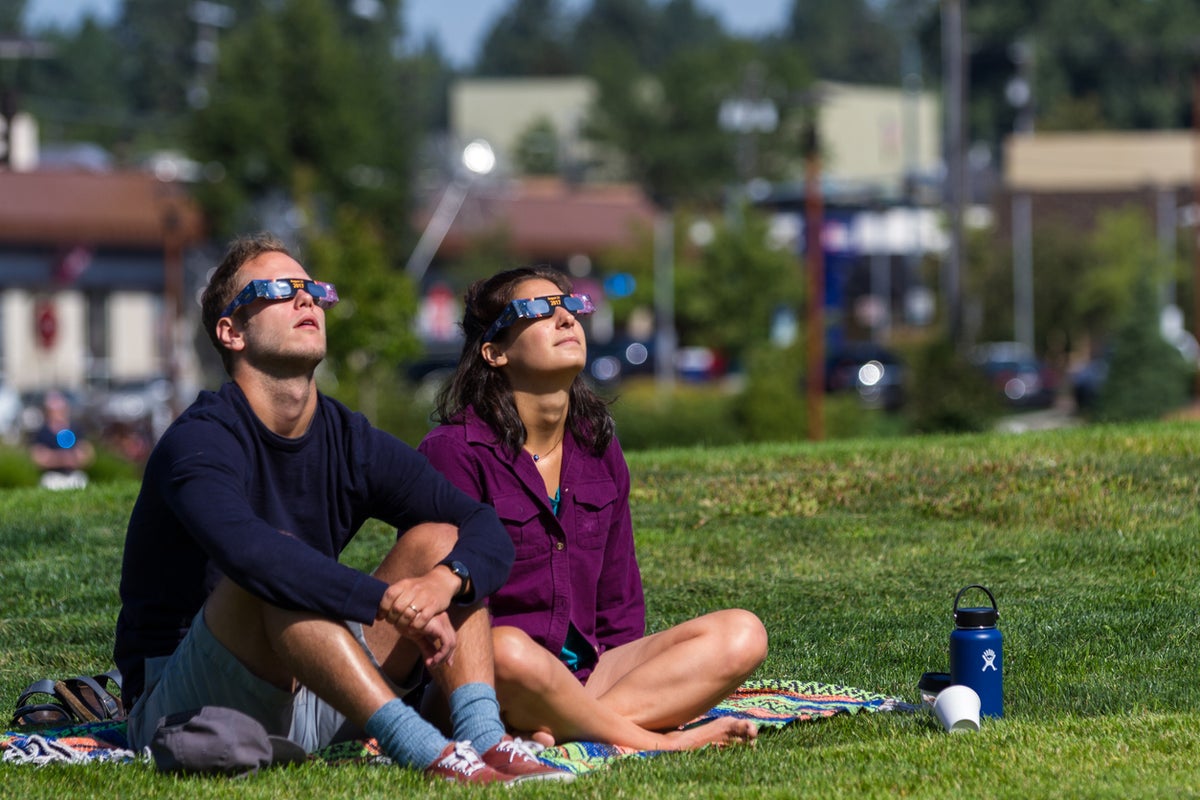
Safety remains paramount throughout the day. Experts warn that looking directly at the sun without specialized protection will cause permanent eye damage, as the eyes lack pain receptors to signal injury. Observers must ensure they wear certified eclipse glasses meeting the ISO 12312-2:2015 standard during all partial phases, even when the sun appears heavily dimmed near the horizon.
Frequently Asked Questions
Can I see the 2026 total solar eclipse from the UK?
No, the path of complete totality misses the British Isles by a few hundred miles, passing southwest over the Atlantic. However, the UK will experience a very deep partial solar eclipse, with up to 91 to 96 per cent of the sun covered depending on your exact location.
What time does the solar eclipse peak in the UK?
The maximum partial eclipse will occur in the early evening of 12 August 2026, peaking between 7:05pm BST in Edinburgh and 7:13pm BST in London and Cardiff. Because the sun will be low in the sky, you will need a clear view of the west-northwest horizon.
Is it safe to watch the sunset eclipse without glasses?
Absolutely not. Even if the sun is 99 per cent covered or sitting very low near the horizon at sunset, its rays remain highly dangerous. You must wear certified eclipse glasses meeting the ISO 12312-2:2015 standard at all times to prevent permanent eye damage.
When is the next total solar eclipse visible from the UK?
Following the 2026 event, UK skywatchers will have to wait a very long time for a total eclipse at home. The next total solar eclipse visible from British soil will not occur until 23 September 2090, when the path of totality crosses the south and southwest coast of England.
Why is the 2026 Perseid meteor shower expected to be so good?
The 2026 Perseid meteor shower peaks on the exact same night as the solar eclipse. Because an eclipse only happens during a new moon, the night sky will be completely dark and free of lunar glare, creating the perfect backdrop to see faint shooting stars.