
Scientists have confirmed that a black-furred monkey with pinkish-orange lips living in the Democratic Republic of Congo's Lomami National Park is a species previously unknown to science. Named Colobus congoensis and known locally as Likweli, it is only the fifth African monkey species formally described in the past 75 years.
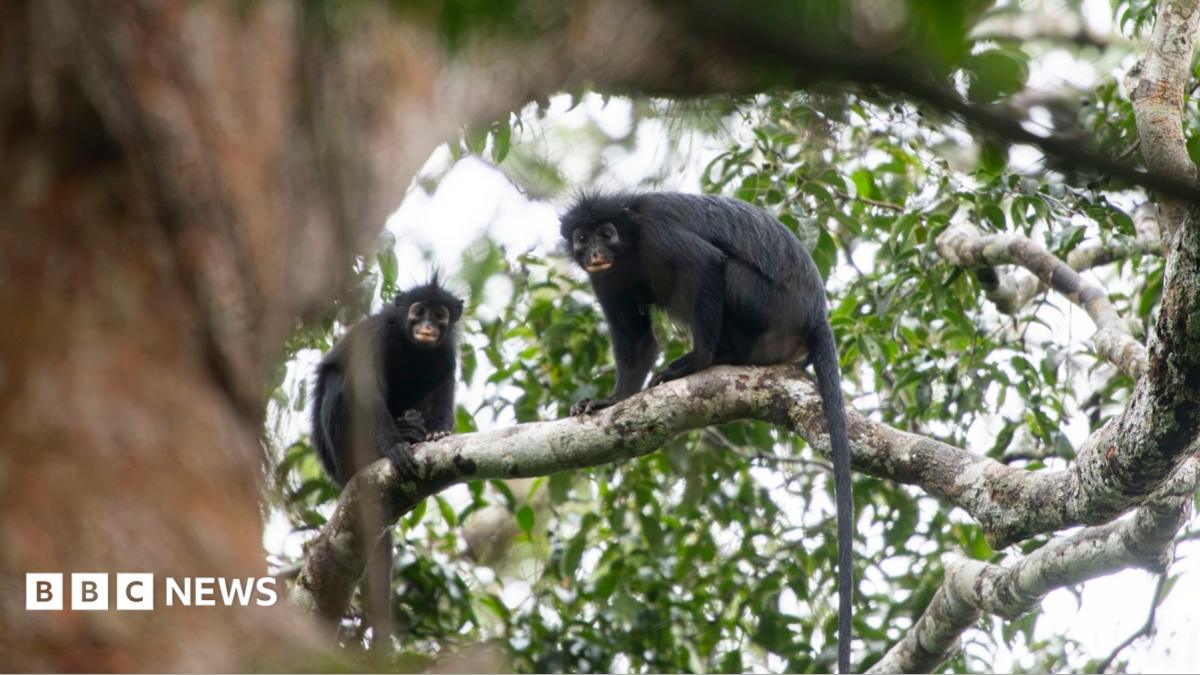
The Full Story
The scientific trail began in 2008, when conservationists photographed an unidentified monkey high in the forest canopy. The image was blurry, but the animal's unusual face suggested it might not match any recognised species. Researchers did not obtain another clear sighting until 2018, a decade later.
That second encounter prompted a wider investigation involving field observations, photographs, recordings of the monkey's deep roaring calls and genetic testing. Junior Amboko, a PhD student at Florida Atlantic University, launched the first formal study in 2020 with colleagues from the DRC, the United States and Germany. Tissue samples obtained in 2021 from animals confiscated from hunters gave the team stronger genetic evidence than the faecal samples previously available.

The results, published in PLOS One, showed that the animal is genetically, anatomically and acoustically distinct from other colobus monkeys. Researchers named it Colobus congoensis in recognition of the Democratic Republic of Congo's natural heritage. The discovery is explained in further detail by the BBC's account of the fieldwork.
Local communities already knew the animal. People west of the Lomami River call it Likweli, while some communities in its eastern range use a name translated as “the branch shaker”. Of 52 villages interviewed, residents in only eight recognised or could accurately describe the monkey, reflecting how restricted and elusive it appears to be.
Central Figures
Amboko played a leading role in locating and documenting the species. He described the experience of seeing an animal known to so few people as an “amazing feeling”. His work combined local ecological knowledge with genetic evidence, photography and acoustic recordings.
Professor Kate Detwiler of Florida Atlantic University served as a senior researcher on the project. She explained that colobus monkeys are canopy-dwelling herbivores without thumbs and may help forests by processing seeds and supporting germination. John A. Hart of the Lukuru Wildlife Research Foundation and specialists from Yale University, the City University of New York, Lomami National Park and the Frankfurt Zoological Society also contributed to the research.
The Data
Researchers recorded 114 sightings between 2018 and 2022 across an estimated range of just 1,700 square kilometres between the Lomami and Lilo rivers. The monkeys were commonly seen in small groups of about six and sometimes mixed with other primate species.
Adults weigh roughly 7 kilograms, making them smaller than several related colobus monkeys. Genetic evidence indicates that their lineage split from its closest known relative, the black colobus, around 4 to 5 million years ago, despite the species now living more than 1,200 kilometres apart.
What This Means
Formal recognition gives conservationists a clearer basis for seeking legal protection. The monkey occupies an unusually small known range, appears to live at low densities and faces pressure from hunting, habitat loss and human expansion. Researchers have therefore proposed that it should be classified as Endangered on the IUCN Red List.

For readers in Britain, the discovery offers a rare glimpse of how much large-animal diversity remains undocumented, even after decades of biological research. It also shows why protected tropical forests matter beyond national borders: losing a small patch of habitat could erase an entire evolutionary lineage before scientists fully understand its behaviour or population.
The findings also strengthen Lomami National Park's scientific importance. The region produced another major primate discovery in 2012, when researchers formally described the Lesula monkey.
What to Expect
The research team plans a more detailed population survey, further study of the monkey's behaviour and investigation of which parts of the forest canopy it uses most. Researchers also want to examine its reproductive biology and define its full geographic range.
Conservation work will focus on protecting Lomami National Park, reducing hunting and engaging nearby communities. National protection would make hunting the species illegal, including in the park's surrounding buffer zone.
Frequently Asked Questions
What is the new monkey species called?
Its scientific name is Colobus congoensis. Local communities call it Likweli, while another regional name translates as “the branch shaker”.
Where was Colobus congoensis discovered?
It was found in and around Lomami National Park in the east-central Democratic Republic of Congo, mainly between the Lomami and Lilo rivers.
How did scientists prove it was a new species?
They combined DNA testing with comparisons of anatomy, fur, skulls, teeth, behaviour and the structure of its distinctive roaring calls.
Why could the Likweli monkey be endangered?
Its known habitat covers only about 1,700 square kilometres, and researchers say hunting, habitat loss and human expansion threaten its small population.
What happens next for the new monkey?
Scientists will estimate its population, study its behaviour and seek stronger national and international protection for the species and its habitat.