Why Wimbledon Looks Half-Empty While Thousands Queue Outside
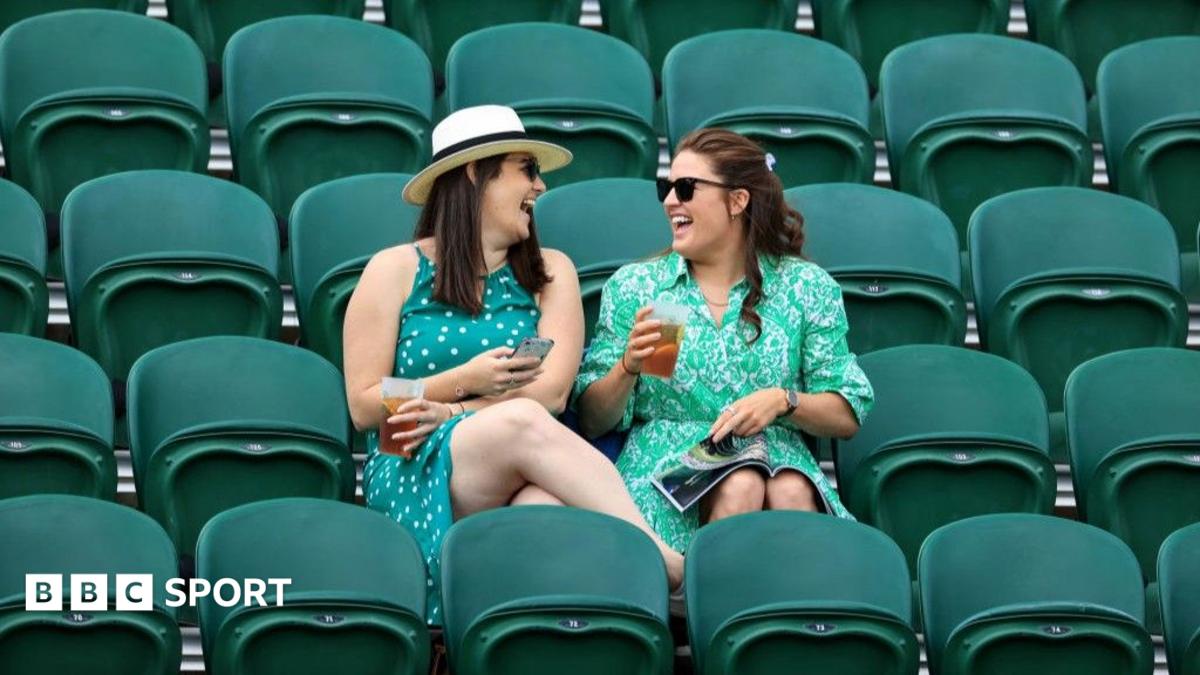
Wimbledon's most famous courts can show rows of empty green seats while thousands of people are still queueing for a way into the grounds. The contradiction is real, but it does not mean tickets have gone unsold. A mix of strict re-entry rules, long days, heat, roaming spectators and the tournament's unusual ticket system explains why packed demand does not always produce packed stands.
What We Know So Far
The most immediate reason is surprisingly simple: spectators cannot freely return to their seats during play. According to BBC Sport's explanation, fans may leave or re-enter only when players change ends every two games. A trip for food, drink or the toilet can therefore turn into a long absence once walking, queueing and waiting for the next permitted entrance are added together.
Centre Court and Court One ticket holders can also watch matches on outside courts. That encourages people to move around SW19 rather than remain in their allocated seat all day. High temperatures have added another reason to step away, with some spectators seeking shaded areas during hot spells.

The timetable stretches the effect across an unusually long sporting day. Outside-court play begins at 11:00 BST and can continue until 21:00 BST, while show-court action may run as late as 23:00 BST. Court One starts at 13:00 and Centre Court at 13:30, partly giving spectators more time to arrive, but late finishes can also produce early departures from people facing journeys home.
Meanwhile, overcrowding elsewhere can make the empty-seat images feel even stranger. One tour of the grounds counted 92 separate queues in an hour, including 30 for food and drink, 10 for outside courts and nine at perimeter gates. Roughly 43,000 supporters had attended each day at that stage of the Championships.
Demand for entry can be extreme. The same report said more than 9,000 people were in the main Queue by 5am on one Saturday. Yet once inside, ticket holders may be eating, shopping, watching another court or waiting to re-enter their assigned arena. The result is a tournament that can be simultaneously overcrowded and visibly under-occupied.
Reactions & Responses
Fans have described dramatically different experiences depending on arrival time and crowd levels. One couple interviewed after entering the grounds had joined the Queue at 4am and reached Wimbledon at 12.30pm, only to discover another wait for Court 12.
“So you’re saying after the queue, there’s another queue? It’s crazy.”
Another visitor provided a striking contrast. Christian, a travel and running creator, arrived at 1:47pm, received Queue Card number 1489 and entered at 4:57pm after waiting three hours and 10 minutes. He later watched matches on Courts 15 and 12 before finishing his visit on Henman Hill.
“No tent. No 4am alarm. Showed up at 1:47pm, got Queue Card #1489 (RESERVE), waited 3h10.”
His experience cost £33 for a ground pass, but other supporters reported much longer waits and, in some cases, giving up before entering. That variation helps explain why the visible crowd picture changes sharply throughout a single day.
On the Ground
For spectators in Britain considering a Wimbledon visit, empty seats should not be read as evidence that admission is easy. The practical reality can involve one queue to enter, more queues for courts or food, and further waiting to return to a show-court seat after leaving it.

There is, however, a route by which genuinely unused seats can return to circulation. Spectators leaving early may hand show-court tickets back to the All England Lawn Tennis Club. Those seats are then resold to ground-pass visitors for £15 on Centre Court and £10 on Court One or Court Two.
That system turns some apparent vacancies into opportunities later in the day. A separate account described a visitor using a virtual queue in the Wimbledon app to secure a £15 Centre Court resale seat, though the source explicitly said its broader cost breakdown came from user-generated content that had not been independently verified.
Coming Up
The pressure on space is expected to remain a major part of the Wimbledon experience. An expansion plan cited by The i Paper would add 38 tennis courts and an 8,000-seat stadium, with the wider site expected to triple in size by the early 2030s.
Until then, television viewers are likely to keep seeing the same apparent contradiction: spare seats on the show courts and dense crowds elsewhere. The seats are often not available at all; their owners are simply somewhere else inside one of Britain's busiest sporting venues.
At a Glance
- Show-court spectators may re-enter only at changes of ends every two games.
- Centre Court and Court One ticket holders can visit outside courts.
- Play can last from 11:00 BST until as late as 23:00 BST.
- One reporter counted 92 queues around the Wimbledon grounds in an hour.
- Returned seats are resold for £15 on Centre Court and £10 on Courts One and Two.
- Expansion plans include 38 new courts and an 8,000-seat stadium.
FAQ
Why are there empty seats at Wimbledon when tickets are sold out?
Ticket holders may be waiting to re-enter, watching outside courts, buying food, seeking shade or leaving before late matches finish.
Can Wimbledon spectators return to their seats at any time?
No. Spectators are allowed to leave or return during changes of ends every two games.
Can you buy returned Centre Court tickets at Wimbledon?
Yes. Returned Centre Court seats are resold to ground-pass visitors for £15.
How late can play continue at Wimbledon?
Outside courts can continue until 21:00 BST and show courts until 23:00 BST.
Why are there so many queues inside Wimbledon?
Visitors queue for outside courts, food, drinks, shops, facilities, ticket resale and re-entry to show courts.

Resources
Sources and references cited in this article.