
56 is the number at the centre of the Corfu cruise incident: the passenger who fell into the harbour was 56, and the ship’s Italian captain was also reported to be 56. Greek maritime authorities said strong winds caused mooring lines to part while passengers were returning to the vessel, turning a routine reboarding into an emergency. Norwegian Cruise Line has since challenged reports that its captain was arrested, saying he provided a statement, cooperated with local authorities and returned to duty.
The Bottom Line
- A 56-year-old woman from New Zealand fell into the water after a ship’s gangway shifted away from the pier in Corfu.
- Greek authorities said strong winds broke the mooring lines holding a Bahamas-flagged cruise ship alongside the quay.
- The passenger was rescued by crew and port workers, then taken by ambulance to Corfu General Hospital with minor facial and bodily injuries.
- The captain was initially reported by Greek authorities as arrested, but Norwegian Cruise Line said he was not detained and only gave a statement.
- The ship was allowed to continue its voyage while the Hellenic Coast Guard investigation continued.
Breaking It Down
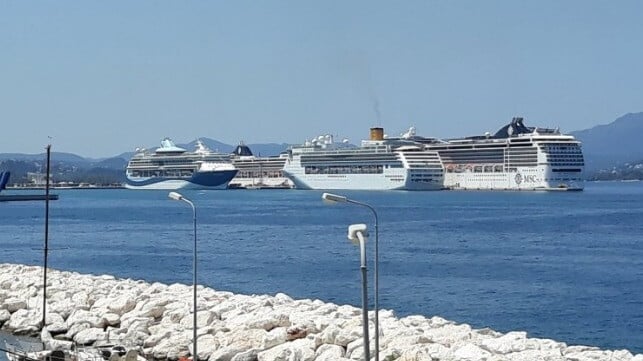
The incident took place at the Port of Kerkyra, better known to many British travellers as Corfu, while one of four cruise ships was docked there. According to reports based on the Hellenic Coast Guard account, strong winds put enough pressure on the vessel’s mooring arrangement for the lines to part, allowing the ship to move away from the berth.
That movement mattered because the gangway was still in use. Passengers were returning from time ashore when the boarding ladder shifted out of position. A 56-year-old New Zealand woman lost her footing and fell into the harbour, where crew members and port personnel recovered her from the water before she was taken to hospital. USA Today reported the passenger suffered minor injuries to her face and body, citing the translated Greek coast guard release and the cruise line response reported by USA Today.

The legal picture then became more complicated. Greek reports said the 56-year-old Italian captain was taken into custody as authorities examined possible exposure of a person to life-threatening danger and whether there had been a failure in the duty of care owed to passengers. Cruise Hive said Article 306 of the Greek Criminal Code concerns exposure to risk, while The Maritime Executive reported that any potential charge would relate to placing an individual in danger or a helpless situation under Greek law.
Norwegian Cruise Line disputed the arrest framing. The company said the captain was requested to give a statement as part of a standard local process, fully cooperated, was released without restriction and immediately resumed duties aboard the vessel. CruiseMapper carried a similar NCL statement saying the captain was at no point under arrest or detained, while noting that the vessel’s identity had not been officially confirmed by Greek authorities or the cruise line in its account of the incident.
Why This Matters
For cruise passengers, the story is not just about one fall. It shows how quickly weather, port operations and passenger movement can overlap. A gangway is meant to make boarding orderly and safe, but when a vessel shifts away from the pier, even a short movement can create a dangerous gap at exactly the point where passengers are least prepared for it.
The issue will resonate with travellers in GB because Greek island cruises are a familiar summer choice, often sold as smooth, low-friction holidays with multiple port calls. Corfu is one of those stops where passengers may spend the day ashore and return shortly before departure, which makes gangway safety and weather decisions especially visible when something goes wrong.

The incident also sits within a wider pattern noted by cruise specialist coverage: mooring breakaways have happened before when sudden winds or storms put stress on lines. Cruise Hive cited previous cases, including Norwegian Epic in Catania in May 2025, where a female guest fell into the water after lines broke, and MSC Seascape at a private island in the Bahamas later that month, where the gangway fell into the water but no injuries were reported.
What Comes Next
The confirmed next step is the Hellenic Coast Guard investigation. Authorities are examining how the mooring arrangement failed and whether safety measures were suitable for the weather conditions at the port. The cause of the line failure has not been disclosed in the provided reports.
The ship was allowed to continue its scheduled voyage after the passenger was rescued and treated. Norwegian Cruise Line said the voyage continued with only minor adjustments to call times, while the captain resumed duties after giving his statement to local authorities.
FAQ
What happened to the cruise passenger in Corfu?
A 56-year-old woman from New Zealand fell into the water after strong winds caused a cruise ship’s mooring lines to part and the gangway shifted away from the pier.
Was the passenger seriously injured?
The provided reports say she suffered minor injuries to her face and body. She was rescued and taken by ambulance to Corfu General Hospital.
Was the cruise captain arrested in Greece?
Greek authorities initially reported that the 56-year-old Italian captain was taken into custody, but Norwegian Cruise Line later said he was not arrested or detained and only provided a statement.
Which cruise ship was involved?
The vessel was described as a Bahamas-flagged cruise ship. CruiseMapper said AIS data indicated Norwegian Viva, but it also noted that this had not been officially confirmed by Greek authorities or the cruise line.
Why did the gangway move?
Reports say strong winds caused the ship’s mooring lines to break. As the ship moved away from the berth, the gangway shifted out of position.
Is the investigation still ongoing?
Yes. The Hellenic Coast Guard investigation is examining the circumstances of the mooring failure and whether further action will be taken.