
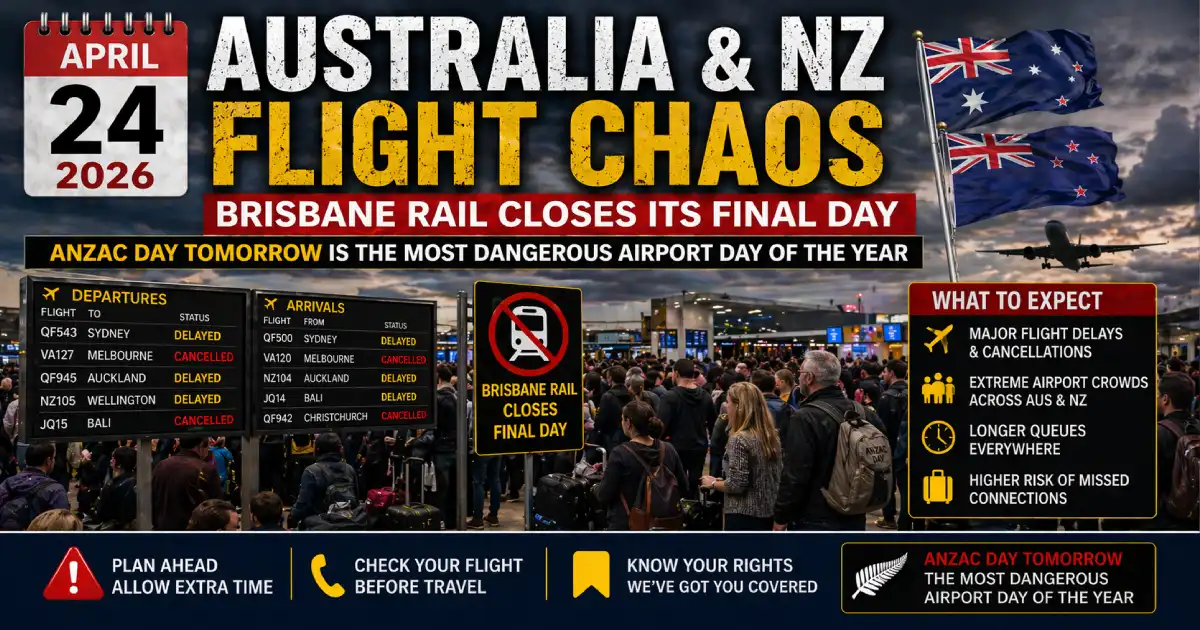
Imagine the scene: thousands of weary travellers slumped against their suitcases, staring at departure boards glowing with the dreaded red of 'Cancelled'. It is a grim tableau currently playing out across major hubs as severe weather and operational meltdowns turn terminal floors into makeshift campsites. What was supposed to be a seamless getaway has descended into a logistical nightmare, leaving hundreds of families wondering if they'll ever reach their destination.
How Events Unfolded
The disruption began as a ripple and quickly turned into a tidal wave. Heavy weather systems sweeping across Australia and New Zealand acted as the catalyst, forcing airlines to pull the plug on scheduled services for safety reasons. At the latest count, 34 flights have been cancelled outright, while a staggering 272 departures faced significant delays, leaving roughly 700 flights affected across the region.
Major hubs like Melbourne and Brisbane bore the brunt of the storm. In Brisbane, the chaos was compounded by the final day of scheduled rail maintenance, stripping away the primary transport artery for those trying to escape the terminal. Talk about a perfect storm. Travellers reported queues stretching out of doors, with little information trickling down from carrier staff who seemed just as overwhelmed as the passengers.
Meanwhile, across the Tasman Sea, New Zealand's airports faced similar gridlock. The timing couldn't be worse, coinciding with the run-up to Anzac Day—a period where travel traditionally spikes. For many, this isn't just about a missed meeting; it's about missing solemn family commemorations that only happen once a year.
Under the Surface
Why did the system buckle so spectacularly? While the 'severe weather' label is the official line, industry insiders suggest the infrastructure is currently stretched to its absolute limit. Fuel costs have been biting hard into operational margins, leaving little 'slack' in the system when things go south. When one plane is grounded, the knock-on effect impacts the entire network because there are simply no spare aircraft or crew on standby.

This level of disruption mirrors the post-pandemic 'travel sickness' we saw in 2022, where airports simply couldn't cope with a sudden surge in demand. Here's the thing: despite years to fix these bottlenecks, a single week of bad weather still has the power to leave hundreds high and dry. It raises serious questions about the resilience of our global aviation links.
Voices & Opinions
The frustration on the ground is palpable. Many feel the communication from major carriers has been subpar at best. For those with connecting flights to the UK or Europe, the stakes are even higher, as a two-hour delay in Melbourne can lead to a 24-hour stranding in a transit hub like Singapore or Dubai.
We've been given a food voucher that doesn't even cover a sandwich and told to 'wait for updates' that never come. It's shambolic.
Aviation analysts suggest that while safety must come first, the lack of robust contingency planning is what truly hurts the industry's reputation. If you're following this story, you'll know that 'force majeure'—an unforeseeable circumstance—is often used to limit compensation, leaving many travellers to foot the bill for last-minute hotels themselves.
Putting It in Perspective
For those of us in GB, this serves as a cautionary tale. Our own aviation network is similarly tuned for efficiency rather than resilience. If a major weather event can cripple a region as prepared as Australia and New Zealand, it highlights how vulnerable our own summer holiday plans might be. Stronger consumer protections are often touted as the solution, but they do little to help when you're stuck on a terminal floor at 3 AM.

The economic ripple effect is also significant. Beyond the personal cost, the disruption to freight and business travel during a significant commemorative week like Anzac Day results in millions of pounds in lost productivity. It's a stark reminder that in the modern world, we are only ever one storm away from total standstill.
Looking Ahead
Airlines are currently working through the backlog, but it is expected to take at least 48 to 72 hours for schedules to return to normal. Major carriers have advised all passengers to check their flight status online before even leaving for the airport. If your flight is cancelled, ensure you get a written statement of the reason to assist with future insurance claims.
FAQ
How many flights were cancelled?
Currently, 34 flights have been cancelled, with over 272 delayed across the region.
Why are the flights delayed?
Severe weather conditions combined with operational pressures and rail maintenance in Brisbane have caused the chaos.
Am I entitled to a refund?
If your flight is cancelled due to weather, you are usually entitled to a rebooking or a refund, though extra compensation for 'extraordinary circumstances' is rare.
Is Brisbane airport train running?
No, today is the final day of scheduled rail maintenance for the Brisbane airport line, adding to the transport difficulties.
Will this affect UK flights?
While the weather is local to AU/NZ, those with connecting flights back to the UK may face significant delays at transit hubs.