
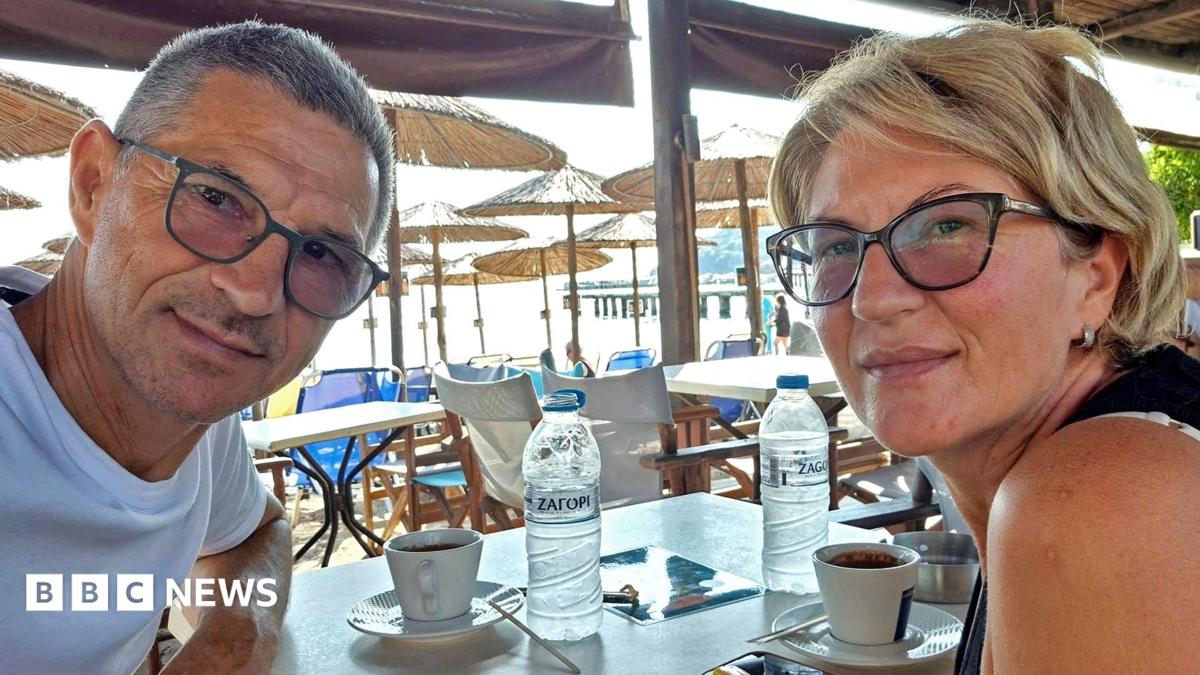
A wife who held onto her husband’s legs for dear life after he was nearly sucked headfirst out of a Ryanair cabin window has recounted their harrowing mid-air ordeal. Svetlana Grković was travelling with her 61-year-old husband, Ljubisa Karović, when a sudden engine failure shattered the acrylic pane next to him, triggering rapid decompression at altitude. The terrifying incident highlights the vital, life-saving role of standard passenger safety protocols during extremely rare structural failures.
The Bottom Line
- Ljubisa Karović, a 61-year-old Serbian national, was partially sucked out of a cabin window up to his chest for at least two minutes mid-flight.
- His wife, Svetlana Grković, and fellow passengers physically pulled him back inside the cabin after he repeatedly lost consciousness.
- A technical adviser believes a failure in the aircraft’s right-hand engine threw debris that shattered the window, causing an explosive decompression.
- The Malta Air-operated Boeing 737-800 abruptly descended 9,000ft (2,700m) in minutes before making an emergency landing back at Thessaloniki.
- Karović survived with serious hand injuries, friction burns, and deep psychological trauma, remaining in a Greek hospital.
Breaking It Down
The Malta Air flight 9H-QEU, operating on behalf of Ryanair, had departed from the Greek city of Thessaloniki bound for Memmingen in Germany. Just 10 minutes into the flight, as the 18-year-old twinjet climbed near the North Macedonian border, those on board heard what sounded like an explosion. Debris from the right-hand engine is believed to have struck and shattered the acrylic window next to Karović. Instantly, the cabin underwent extreme decompression, generating a powerful pressure differential that pulled his head and shoulders into the slipstream.
“Half of his body was sticking out of the plane,” Grković told Serbian outlet Nova. Reacting instantly, she grabbed his legs, telling herself: “If we die, we die together.” Other passengers rushed to help, with one woman holding Karović’s hand and an Albanian passenger helping pull his torso back into the cabin. The crew attempted to block the gaping hole by putting a suitcase against the window, but the extreme force sucked the luggage straight out of the aircraft.
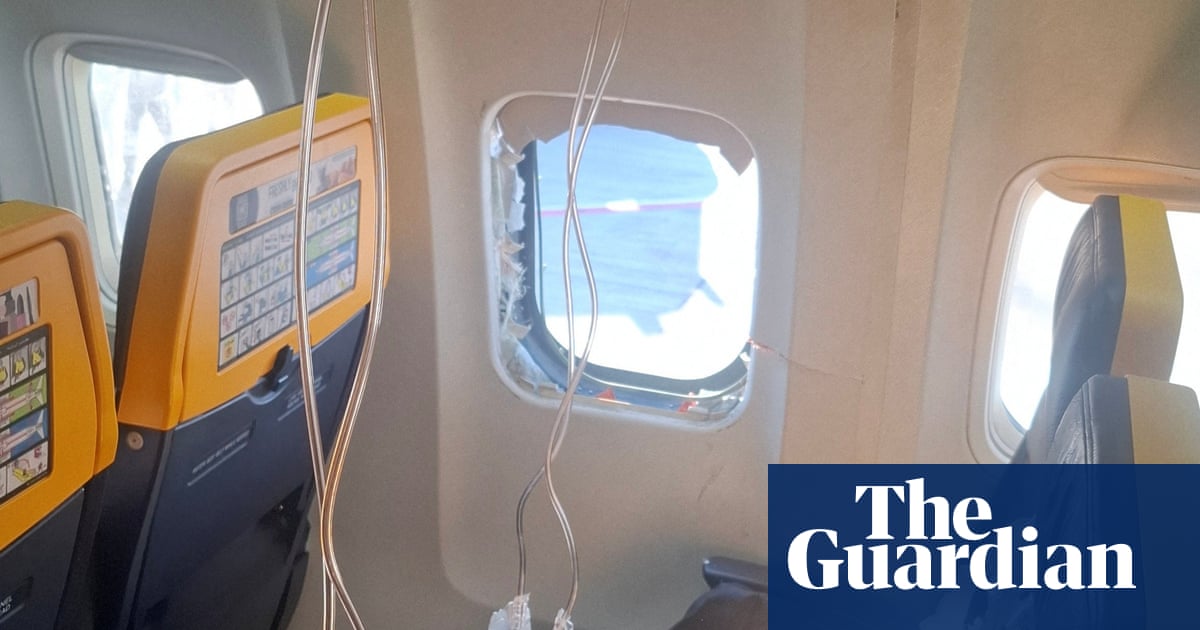
As the flight crew initiated an emergency descent, dropping 9,000ft (2,700m) to reach breathable air, oxygen masks deployed. Passengers reported a strong smell and a feeling that they could not breathe. Crucially, Karović had kept his seatbelt fastened, which helped anchor him to his seat and allowed his rescuers to maintain their grip. The flight landed safely back at Thessaloniki, where emergency medical services were waiting.
Why This Matters
This dramatic incident underscores a terrifying and remarkably rare hazard in commercial aviation: passenger window loss. It draws immediate, sobering parallels to a fatal 2018 Southwest Airlines accident in the US, where fan blade failure led to engine debris puncturing a passenger window. In that case, the passenger did not survive. Experts note there are no federal design requirements for passenger window impact resistance, making this incident a critical test case for global regulators.
For British holidaymakers and regular flyers of budget carriers, the incident serves as a stark reminder of basic safety advice. Chris Brady, a retired airline pilot, explained that keeping your seatbelt fastened throughout a flight is the single best protection against unexpected turbulence or rapid decompression. Had Karović unbuckled after take-off, he almost certainly would have been lost before his wife could react.
What Comes Next
A multi-agency international investigation is underway to determine the exact cause of the engine failure and subsequent window breach. Investigators from the Hellenic Air and Rail Safety Investigation Authority are being assisted by North Macedonian authorities, Boeing, the US Federal Aviation Administration (FAA), and the European Union Aviation Safety Agency (EASA). Meanwhile, Karović remains hospitalised in Greece, recovering from physical friction burns, hand injuries, and severe shock.
FAQ
How did the passenger survive being sucked out?
He survived because he had kept his seatbelt fastened, which kept his lower body anchored inside. Additionally, his wife immediately grabbed his legs, and fellow passengers assisted in pulling him back into the cabin despite the severe slipstream forces.
What caused the window to break mid-flight?
While investigators have not officially confirmed the sequence, a technical adviser appointed by the family believes a mechanical failure in the aircraft’s right-hand engine released debris that struck and shattered the acrylic window pane.
What happens to a plane when a window breaks?
The plane undergoes rapid or explosive decompression. Because air pressure inside the cabin is much higher than the thin air outside at high altitudes, air rushes out of the opening with immense speed, pulling nearby objects and people toward the hole.
Is it common for aircraft windows to fail?
No, complete passenger window loss is incredibly rare. Historical data from Boeing shows only a handful of complete window-loss events in the entire history of the 737 fleet, with most minor window cracks affecting only the outer pane while the inner pressure panes remain intact.