NASA Van Allen Probe A Re-Entry: Defunct Satellite Falling to Earth Trend Summary
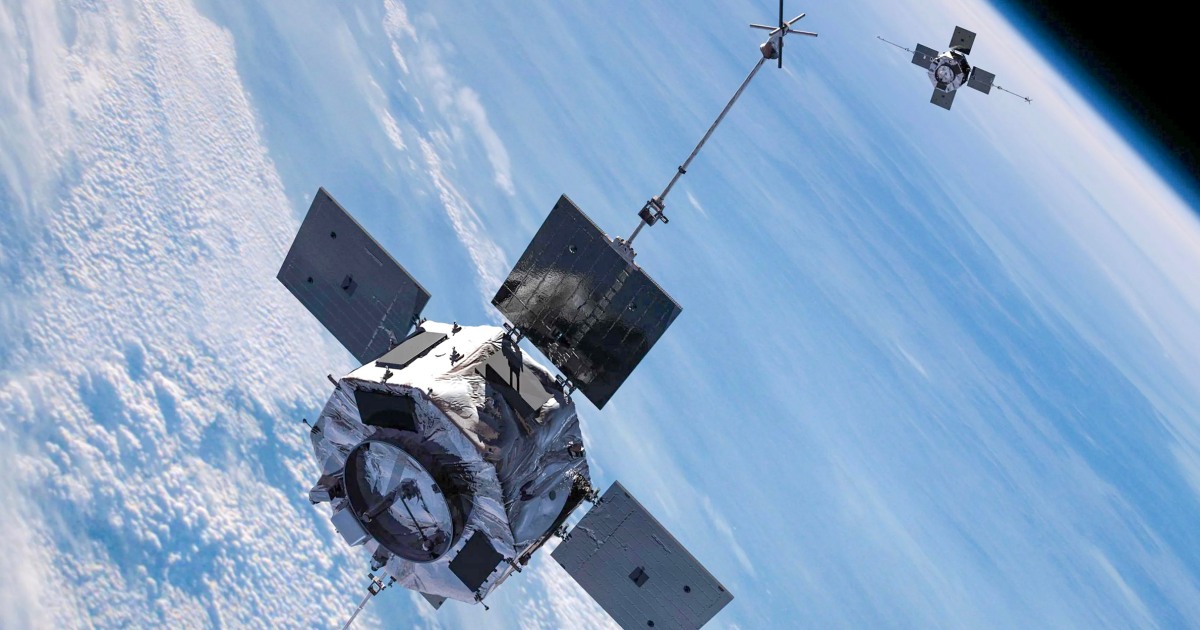
NASA's defunct Van Allen Probe A spacecraft is scheduled to re-enter Earth’s atmosphere on March 10, 2026, after more than a decade in space. The 1,300-pound satellite will undergo a high-speed descent, with most of the structure expected to incinerate during the process. While some fragments may reach the surface, officials confirm the risk to public safety remains extremely low.
TL;DR
- NASA's Van Allen Probe A is re-entering the atmosphere on March 10, 2026.
- The spacecraft weighs approximately 1,300 pounds.
- Most of the satellite will burn up, though small pieces may survive.
- The risk of injury to anyone on the ground is estimated at 1 in 2,500.
What Happened
The NASA spacecraft known as Van Allen Probe A has reached the end of its orbital life and is falling back toward Earth. Launched in 2012, the probe spent seven years actively studying the radiation belts surrounding our planet before its mission was formally decommissioned. Since 2019, the satellite has been in a naturally decaying orbit, gradually losing altitude as it interacts with the outer edges of the atmosphere. On Tuesday night, the craft will hit the denser layers of the atmosphere at thousands of miles per hour, causing it to break apart and melt due to intense friction and heat.
Key Developments
NASA engineers performed a final series of maneuvers in 2019 to ensure the satellite's eventual re-entry would occur safely. These adjustments utilized the remaining propellant to lower the spacecraft's perigee, guaranteeing it would be pulled down by atmospheric drag within a predictable timeframe. The 1,300-pound craft is one of two identical probes used for the mission; its twin, Probe B, followed a similar decommissioning path. Current tracking data indicates the re-entry will occur over the ocean, though the exact impact point of any surviving debris cannot be calculated with total precision until the final minutes of descent.
The risk of debris falling in a populated area is very small, and we expect the vast majority of the spacecraft to burn up entirely during the descent.
Why This Matters
The re-entry marks the final chapter of a highly successful scientific mission that redefined our understanding of the Van Allen Radiation Belts. These belts are high-energy particle clouds held in place by Earth's magnetic field which can damage electronics on GPS and communications satellites. By de-orbiting the craft, NASA is adhering to international space debris mitigation guidelines, which aim to keep the Low Earth Orbit (LEO) environment clear of defunct hardware that could pose a collision risk to active missions.
What Happens Next
Space tracking agencies, including the U.S. Space Command, will monitor the descent in real-time until the craft is confirmed as destroyed. Following the re-entry, NASA will analyze the telemetry and tracking data to refine models for future spacecraft atmospheric entries. There are no recovery missions planned, as any surviving fragments are expected to land in unpopulated regions or the open sea.
Key Terms & Concepts
- Van Allen Belts
- Two doughnut-shaped regions of radiation surrounding Earth that contain energetic charged particles trapped by the planet's magnetic field.
- Atmospheric Re-entry
- The process by which an object from space enters the Earth's atmosphere, experiencing extreme heat and pressure.
- Perigee
- The point in the orbit of a satellite where it is nearest to the Earth.
Frequently Asked Questions
When exactly will the NASA satellite crash?
The Van Allen Probe A is expected to re-enter Earth's atmosphere on March 10, 2026. Precise timing can vary by several hours due to fluctuations in solar activity and atmospheric density.
Where will the debris land?
While the exact location is difficult to predict, most satellite re-entries are directed toward or naturally occur over the Pacific Ocean. NASA anticipates that the vast majority of the 1,300-pound craft will vaporize before reaching the surface.
Is there a danger to people on the ground?
The risk is considered extremely low, with NASA estimating a 1 in 2,500 chance of any person being struck by debris. For context, this is significantly lower than the risk of being struck by lightning.
What was the purpose of the Van Allen Probe?
Launched in 2012, the probe was designed to study the harsh radiation environment surrounding Earth. It provided critical data to help protect other satellites and astronauts from solar radiation and cosmic rays.
Will there be a visible streak in the sky?
Yes, if the re-entry occurs over a dark, clear area, it may appear as a very bright, slow-moving fireball. This phenomenon is caused by the satellite breaking into multiple burning fragments at high altitude.