Lauren Macpherson Prognosis and Health Journey: A Comprehensive Trend Summary
Lauren Macpherson, a 30-year-old woman from Aberdeen, discovered she had terminal brain cancer after a suitcase fell on her head during a train journey to London in 2021. The accidental impact led to a seizure that prompted medical scans, revealing a Grade 4 glioblastoma, the most aggressive form of brain cancer. This unexpected diagnosis has shifted her life's focus toward raising awareness and funding for research into a disease with limited treatment options.

TL;DR
- A suitcase falling on Lauren Macpherson’s head led to a terminal brain cancer diagnosis.
- Medical tests confirmed a Grade 4 glioblastoma, which has an average survival time of 12 to 18 months.
- Macpherson has undergone surgery, radiotherapy, and chemotherapy to manage the tumor.
- She is now focused on campaigning for more research funding, as brain cancer receives only 1% of UK national cancer research spending.
What Happened
In November 2021, while traveling from Aberdeen to London to visit her sister, a heavy suitcase fell from an overhead rack and struck Lauren Macpherson on the head. Despite the initial shock, she continued her journey, but shortly after arriving, she suffered a major seizure while at a restaurant. Paramedics rushed her to the hospital, where an MRI scan initially suggested a possible lesion or scar tissue from the impact. However, a subsequent biopsy and further testing confirmed that the trauma had actually revealed a pre-existing Grade 4 glioblastoma.
I would never have known it was there if that suitcase hadn't fallen on my head. It essentially saved my life in that moment by letting me know what was happening.

Key Developments
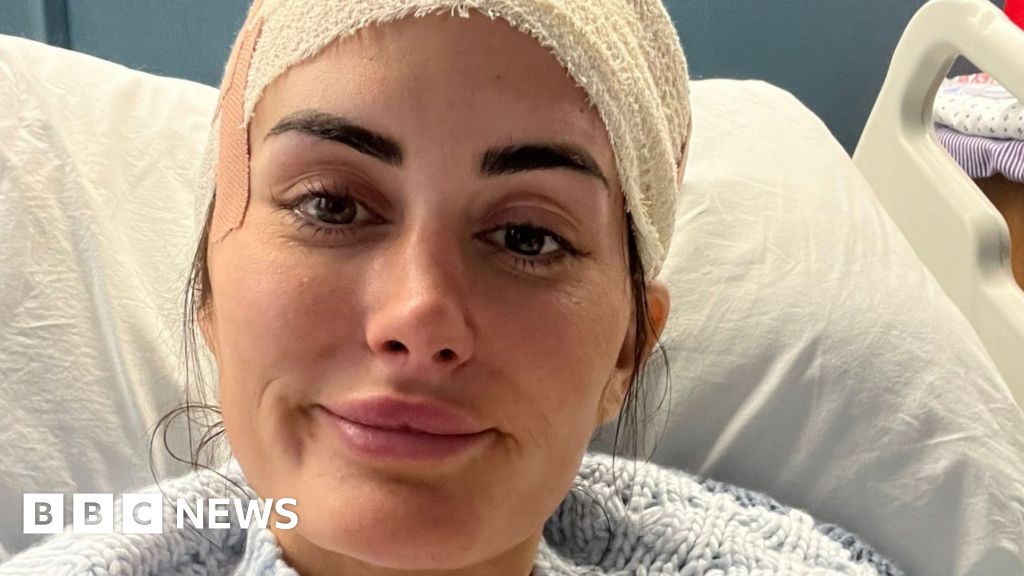
Following the diagnosis, Macpherson underwent a grueling treatment regimen including a craniotomy to remove as much of the tumor as possible. This was followed by six weeks of intensive radiotherapy and several months of chemotherapy. Despite these interventions, the prognosis for glioblastoma remains stark, with statistics showing that only 5% of patients survive more than five years. Currently, Macpherson is stable and continues to be monitored with regular brain scans every three months to check for regrowth.
Why This Matters
This case highlights the critical lack of funding and advancement in brain tumor treatments over the last two decades. Macpherson has pointed out that while survival rates for other cancers have improved significantly, the 12 to 18-month average prognosis for glioblastoma has remained largely unchanged for 20 years. Her advocacy work aims to address the fact that brain tumors kill more children and adults under the age of 40 than any other cancer, yet receive only a tiny fraction of total research investment. She is actively supporting Brain Tumour Research to push for a national increase in clinical trials and laboratory studies.
What Happens Next
Lauren Macpherson is currently preparing for a fundraising walk to support the 'Wear A Hat Day' campaign at the end of March 2026. She continues to share her story to pressure the government and larger health organizations to increase research spending. Her medical team will continue the three-monthly scan cycle to monitor her condition, as the terminal nature of the diagnosis means the focus remains on quality of life and prolonging the period of stability.
Key Terms & Concepts
- Glioblastoma (Grade 4)
- A fast-growing and highly aggressive type of brain tumor that invades the surrounding brain tissue.
- Craniotomy
- A surgical operation where a bone flap is temporarily removed from the skull to access the brain.
Frequently Asked Questions
What is Lauren Macpherson's current prognosis?
Lauren was diagnosed with a Grade 4 glioblastoma in 2021, a condition that typically has an average survival rate of 12 to 18 months. Currently, she is stable and undergoes scans every three months.
How was the brain cancer originally discovered?
The cancer was discovered after a suitcase fell on her head during a train trip to London. The impact caused a seizure, which led doctors to perform the MRI that found the tumor.
Why is Lauren Macpherson campaigning for research?
She is campaigning because brain cancer receives only 1% of the national cancer research budget in the UK. She aims to improve treatment options that have not changed in 20 years.
What treatments has Lauren Macpherson undergone?
Since her diagnosis in 2021, she has completed surgery to remove the tumor, followed by six weeks of radiotherapy and a course of chemotherapy.