Blockchain Technology Adoption and Market Growth: A Comprehensive Trend Summary
Global industries are rapidly integrating blockchain technology to tokenize trade finance and secure pharmaceutical supply chains as of March 2026. This shift aims to eliminate long-standing inefficiencies in international commerce by replacing paper-based processes with digital, immutable ledgers. The transition is driving significant market expansion and operational transparency across North American and international markets.

TL;DR
- The global blockchain market is projected to grow at a 56.1% CAGR through 2031.
- Trade finance is moving toward tokenization to automate credit and payment flows.
- Pharmaceutical companies are adopting blockchain to combat counterfeit drugs and track temperature-sensitive shipments.
- Digitization of trade documents could reduce transaction times from weeks to mere hours.
What Happened
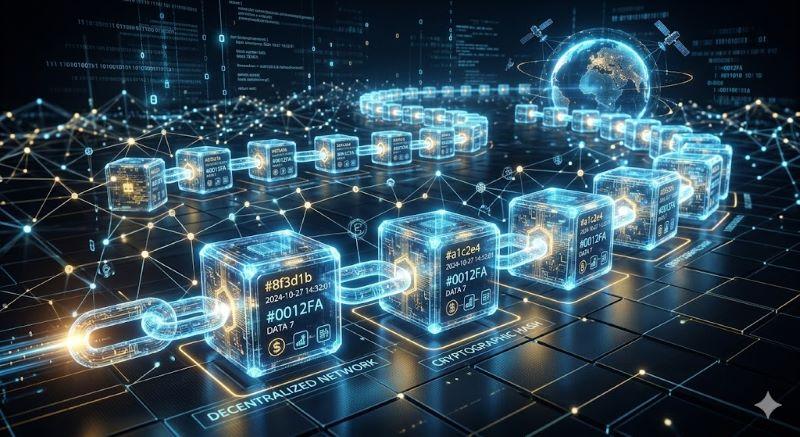
In March 2026, major financial institutions and logistics providers accelerated the deployment of blockchain-based solutions to address bottlenecks in global trade. Historically, trade finance relied on manual, paper-intensive workflows that created delays and increased the risk of fraud. By implementing Distributed Ledger Technology (DLT), stakeholders are now able to create 'digital twins' of physical goods, allowing for real-time tracking and automated settlement.
Specifically, the integration of Smart Contracts has enabled the automatic execution of payments once predefined conditions, such as the arrival of a shipment at a specific port, are met. This development effectively reduces the $2.5 trillion global trade finance gap by making credit more accessible to small and medium-sized enterprises (SMEs) who previously struggled with the high collateral requirements of traditional banking.
Key Developments
The pharmaceutical sector has emerged as a primary driver for blockchain adoption to ensure the integrity of medicine delivery. Companies are utilizing blockchain to maintain an immutable record of a drug’s journey from the manufacturer to the patient. This is particularly critical for biologics and vaccines that require strict temperature controls, as IoT sensors integrated with the blockchain can provide verifiable proof of storage conditions.
Additionally, the tokenization of real-world assets (RWA) has gained significant traction. This process involves converting rights to an asset, such as a cargo shipment or a letter of credit, into a digital token on a blockchain. This allows these assets to be traded or used as collateral with instant settlement capabilities, bypassing traditional clearinghouses. March 17, 2026, marked a pivotal point where several major shipping lanes in Canada and the US reported a 30% increase in the use of electronic Bills of Lading (eBLs) compared to the previous year.
Why This Matters
The shift to blockchain is not merely a technological upgrade but a fundamental change in economic efficiency. By reducing the reliance on intermediaries, businesses can lower transaction costs by an estimated 15% to 25%. For the pharmaceutical industry, the implementation of blockchain is a matter of public safety, as it provides the tools necessary to comply with the Drug Supply Chain Security Act (DSCSA) and prevent the entry of counterfeit products into the legal supply chain.
Furthermore, the 56.1% CAGR projection suggests that blockchain is moving out of the experimental phase and into the core infrastructure of global finance. This growth indicates a massive influx of capital into decentralized infrastructure, which will likely lead to more robust and scalable networks capable of handling millions of transactions per second.
What Happens Next
Expect to see increased regulatory clarity as governments in Canada and other G7 nations move to standardize the legal status of digital tokens and smart contracts. By the end of 2026, more cross-border pilot programs are expected to transition into full-scale commercial operations. Financial analysts predict that the integration of Artificial Intelligence (AI) with blockchain will be the next step to optimize supply chain forecasting and risk assessment.
Key Terms & Concepts
- Tokenization
- The process of sensitive data into a digital token to represent ownership of a real-world asset on a blockchain.
- Smart Contract
- Self-executing contracts with the terms of the agreement between buyer and seller being directly written into lines of code.
- Distributed Ledger Technology (DLT)
- A digital system for recording the transaction of assets in which the transactions and their details are recorded in multiple places at the same time.
Frequently Asked Questions
What is the growth rate of the blockchain market?
The global blockchain market is expected to grow at a compound annual growth rate (CAGR) of 56.1% between now and 2031, driven by industrial adoption.
How does blockchain help the pharmaceutical industry?
It creates an unchangeable record of the drug supply chain, helping to track temperature-sensitive medicine and prevent counterfeit drugs from reaching consumers.
Why is trade finance being tokenized?
Tokenization allows for instant settlement and reduces the need for paper documents, which can lower transaction costs by up to 25% for global businesses.
When did these trade finance updates take effect?
Significant traction in trade finance tokenization was reported throughout March 2026, with specific milestones noted on March 17.
Can blockchain reduce the trade finance gap?
Yes, by automating credit checks and using digital assets as collateral, blockchain helps bridge the $2.5 trillion gap that currently prevents many smaller businesses from engaging in global trade.

Resources
Sources and references cited in this article.