
Slate Auto officially opened non-refundable preorders on Wednesday for its modular electric vehicle, resetting expectations by delivering better range and utility capacities than initially promised. The Michigan-based startup is confronting a cooling EV market with an aggressive, bare-bones pricing model designed to tackle the industry's deep affordability challenges head-on.
The Full Story
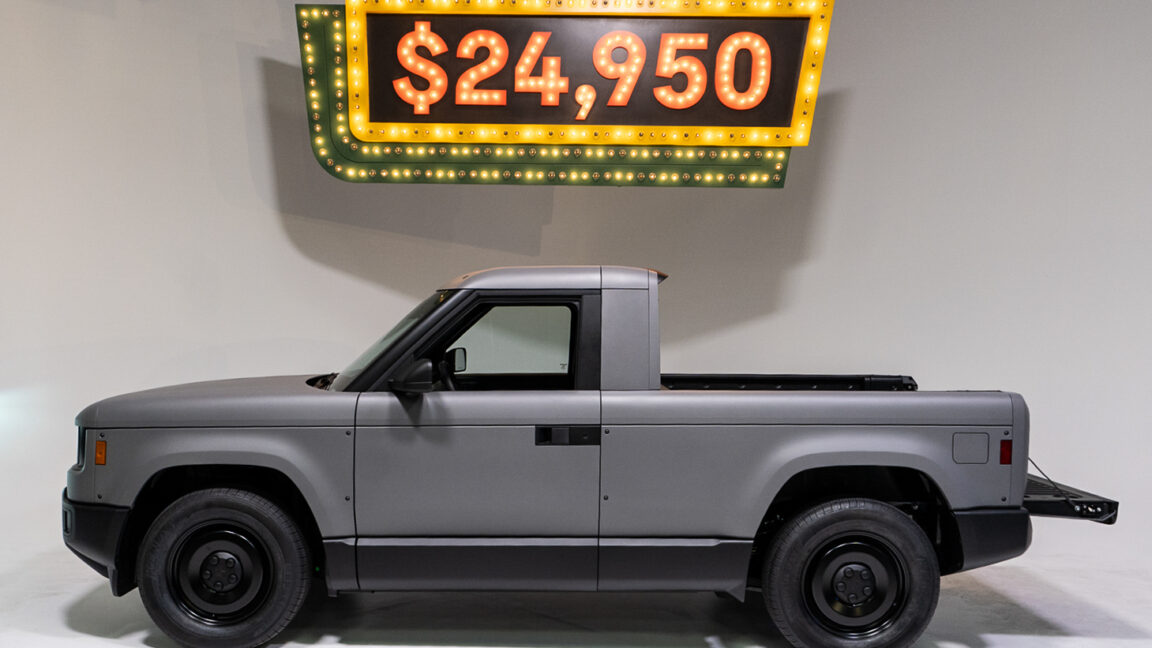
In a series of announcements made from its new West Coast design studio, Slate Auto revealed that its highly anticipated two-seat electric pickup truck will retail at a base price of $24,950. While a destination and delivery charge of roughly $1,500 will push the final base cost closer to $26,500, the vehicle remains positioned to become the most affordable EV and pickup truck on the U.S. market. Early-build prototypes were recently showcased during media ride-alongs in Gardena, California, proving the vehicle is a functional reality as the company moves toward production.
What surprised observers most was the automaker's decision to shift its battery strategy and upgrade core capabilities right at the launch line. Originally, Slate planned to offer two battery options providing 150 or 240 miles of range. Responding to buyer feedback, the company consolidated its approach into a single 63 kWh usable lithium iron phosphate (LFP) battery pack, establishing a standardized 205 miles of range. Mechanical ratings saw similar jumps: the truck's towing capacity doubled from an initial 1,000 pounds to 2,000 pounds, while its maximum payload capacity increased to 1,550 pounds.
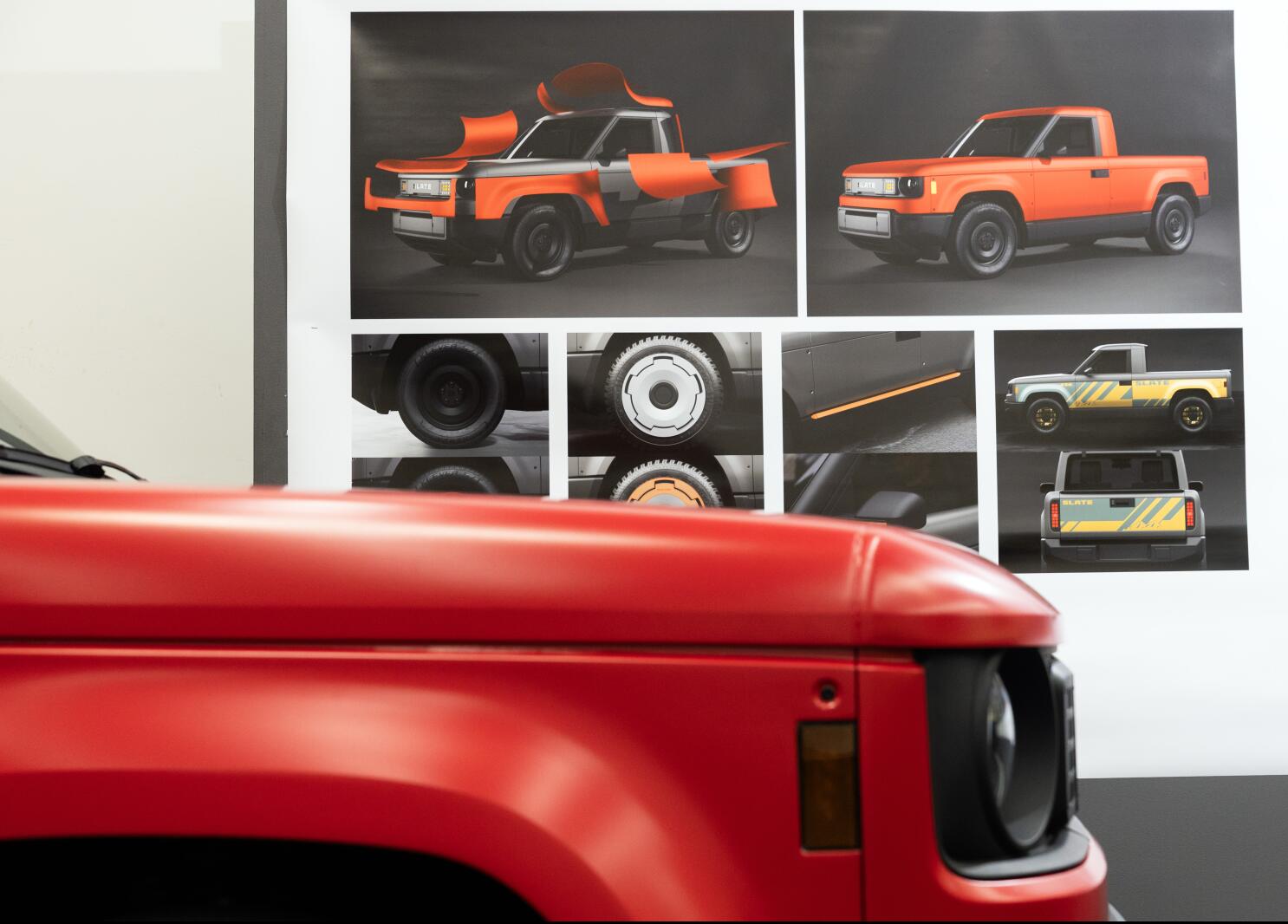
To drastically compress costs, Slate eliminated components that modern drivers take for granted. The base vehicle completely lacks a central infotainment screen, advanced driver assistance systems, built-in speakers, and an internal modem. Even the windows are operated by manual hand cranks. Rather than paying for complex factory paint jobs, owners receive gray composite body panels engineered to be covered with vinyl wraps. The company is leaning heavily into a marketplace of over 175 accessories—including stereos, roof racks, and 3D-printable components—allowing buyers to build up their vehicles over time.

The company's assembly facility in Warsaw, Indiana, is currently building about three prototype vehicles a day by hand while finalizing the factory tooling. Slate expects to transition the plant to normal production processes by the fourth quarter of 2026, with the earliest consumer deliveries slated before the end of the year. Buyers who already placed a $50 refundable reservation have until July 24, 2026, to add $250 and lock in their non-refundable preorder window, while new buyers must commit a full $300 non-refundable deposit.
Who's Involved
Several key leaders and high-profile backers are driving Slate Auto's unconventional market strategy:
- Peter Faricy: The Chief Executive Officer of Slate Auto, a former Amazon Marketplace vice president who joined the company in March to scale consumer retail and manufacturing operations.
- Chris Barman: President of Vehicles and former initial CEO, a world-class automotive executive who co-founded the vehicle's development roadmap three years ago.
- Eric Keipper: Slate's Head of Engineering, who co-developed the modular, stripped-down technical architecture.
- Dan Tasiemski: Head of Manufacturing Engineering, overseeing the production ramp-up at the Indiana assembly plant.
- Jeff Bezos & Mark Walter: High-profile billionaire backers; Bezos funded an early financing round, while Walter's TWG Global investment firm led two subsequent rounds, contributing to a total capital pool exceeding $1.3 billion.
By the Numbers
The technical and financial realities underlying Slate's market entry include distinct metrics:
- $24,950: The baseline retail price of the core two-seat pickup truck.
- 181 horsepower and 195 lb-ft of torque delivered to the rear wheels from a single electric motor.
- 180,000: The total number of consumer reservations accumulated by June 2026.
- 150,000 vehicles: The total annual production capacity of the Warsaw, Indiana facility.
- 80,000 vehicles: The annual volume required for Slate to hit its corporate break-even point.
- 120 kW: The maximum DC fast-charging rate via its Tesla-compatible NACS port, enabling a 20% to 80% charge in 30 minutes.
What This Means
Slate's strategy challenges the core assumptions of the modern EV industry. According to data from Cox Automotive, the average transaction price for an electric vehicle in the U.S. sits at $55,000, leaving cost-sensitive buyers entirely priced out. By offering an ultra-low entry price point, Slate is shifting the traditional automotive business model away from complex upfront manufacturing and toward a long-term ecosystem of aftermarket hardware additions. Analysts note that while the consumer concept is brilliant, executing vehicle validation, direct-to-consumer delivery, and production scaling represents an enormous risk for an unproven startup.
The vehicle arrives at a volatile moment. Legacy automakers are currently pulling back on their electric programs, while established EV peers like Rivian and Lucid have recently cut hundreds of jobs to stem heavy financial losses. Slate's focus on an exclusively two-door, rear-wheel-drive platform is a massive gamble given that the vast majority of American buyers favor four-door trucks and all-wheel-drive configurations. However, if the company captures even a fraction of its 180,000 reservation holders, it could carve out a highly profitable niche in a market starving for affordability.
What to Expect
Existing reservation holders must make an additional $250 non-refundable down payment before the hard deadline of July 24, 2026, to guarantee an early production slot. Slate plans to transition its Indiana factory into normal manufacturing workflows during the fourth quarter of 2026, targeting initial consumer deliveries before the end of the year. Company executives are aiming for the business to achieve positive gross margins on every vehicle built, setting an ambitious corporate milestone to reach positive free cash flow and positive EBITDA by 2027.
Frequently Asked Questions
How much does the Slate electric truck cost?
The baseline Slate electric pickup truck retails for $24,950. With an anticipated destination and delivery charge of approximately $1,500, the entry point sits just under $26,500 before adding any modular accessories.
Can the Slate truck be converted into an SUV?
Yes. Slate offers a modular squareback SUV conversion kit for an additional $5,000, bringing the vehicle cost to roughly $29,950. A fastback SUV variation is also available for an extra $2,000 over the base price.
What is the battery range and charging time of the Slate truck?
The vehicle features a single 63 kWh usable LFP battery pack with an estimated range of 205 miles. It supports DC fast-charging up to 120 kW via an NACS port, recharging from 20% to 80% in 30 minutes, while Level 2 AC charging takes four hours.
Does the Slate truck come with a radio or touch screen?
No, the base model does not include a radio, speakers, or a central infotainment screen. It provides a small driver display for speed and range, and drivers use their own smartphones or tablets for music and navigation.
Where are Slate trucks built?
While Slate Auto has its headquarters in Troy, Michigan, and its design studio in Carson, California, all production vehicles will be manufactured at its assembly plant in Warsaw, Indiana.