
American homebuyers experienced a roller-coaster week in the housing market as massive geopolitical breakthroughs and a shift in central bank leadership sent borrowing costs swinging. The average interest rate on a benchmark 30-year fixed mortgage initially fell to 6.47% for the week ending June 18, according to Freddie Mac data. This sudden relief stemmed directly from an international peace agreement that reopened vital oil shipping lanes and suppressed inflation fears. However, a hawkish stance from the Federal Reserve under new Chairman Kevin Warsh quickly introduced fresh volatility, keeping long-term projections uncertain for summer shoppers.
The Backstory
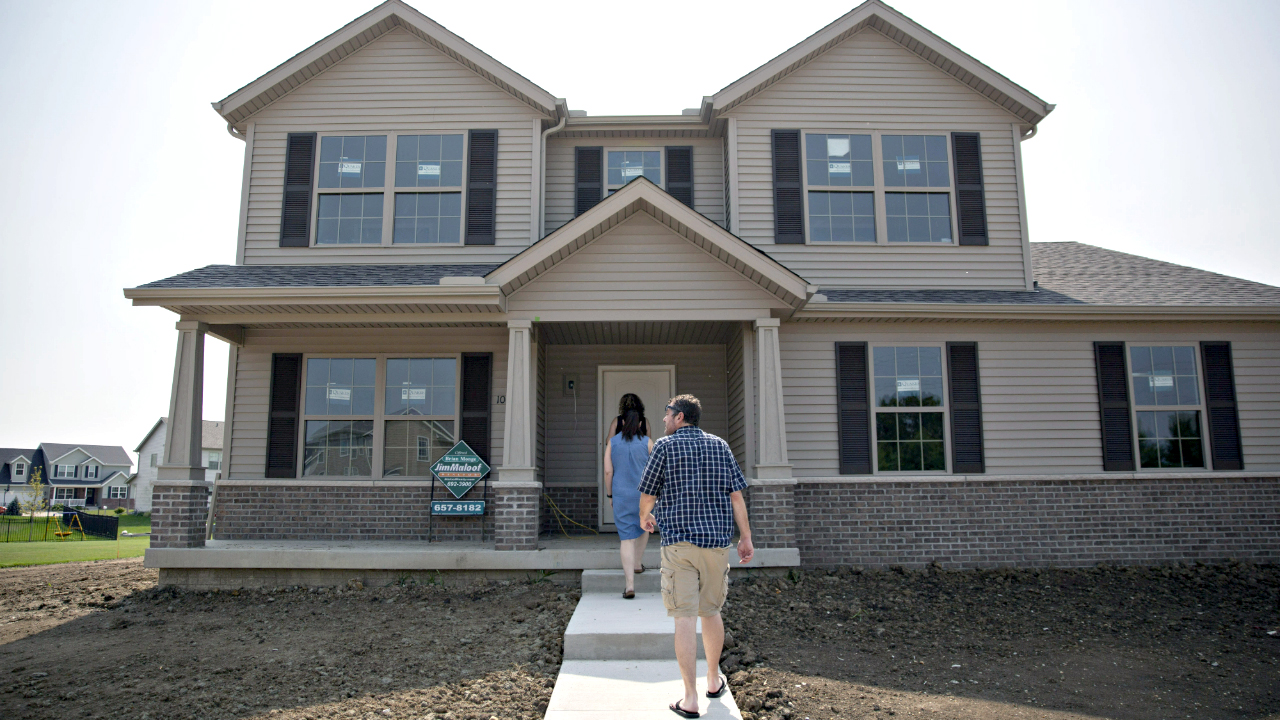
The housing market has been heavily constrained by a phenomenon known as the lock-in effect, where current homeowners refuse to list their properties because they do not want to trade their existing low rates for today's steep borrowing costs. Unfavorable market conditions prompted nearly 5% of home listings to be taken off the market in May, marking the highest share of delistings for that month since records began in 2022. This gridlock has left prospective buyers competing for a highly restricted supply of available homes.
Simultaneously, global tensions heavily influenced domestic lending. Mortgage rates spiked throughout the spring as a direct result of the U.S.-Israeli war with Iran, which drove up oil prices and triggered fears of persistent energy-driven inflation. Because mortgage lenders closely track the 10-year Treasury yield, the threat of rising consumer prices caused bond investors to demand higher yields, subsequently forcing consumer home loan costs upward.
Here's What Happened
A dramatic shift occurred on June 17, 2026, when President Donald Trump signed a memorandum of understanding in France alongside a remote signing by Iranian leadership. The temporary framework established an immediate cessation of hostilities, the reopening of the Strait of Hormuz, and a 60-day window to negotiate a permanent nuclear agreement. As news of the signed peace deal spread, oil prices softened, bond yields eased, and Freddie Mac reported that the average 30-year fixed mortgage rate dropped from 6.52% down to 6.47%, while the 15-year fixed mortgage fell to 5.81%.

The relief was short-lived. Hours after the peace deal announcement, the Federal Open Market Committee concluded its two-day meeting. Policymakers voted 12-0 to hold the benchmark federal funds rate steady at its current range of 3.5% to 3.75%. However, the Fed's revised Summary of Economic Projections revealed a dot plot showing that nine out of 18 officials expect rate increases before the end of 2026 due to sticky consumer price data from May.
Lenders reacted immediately to the Fed's hawkish warning and Chairman Warsh's less transparent communication style during his first official press conference. Lenders raised rates up to three times in a single afternoon, pushing top-tier 30-year fixed mortgage rates up to 6.62%. By the following day, longer-term debt markets managed a partial recovery, bringing top-tier rates back to the lower-middle portion of their recent historical range.
What People Are Saying
Industry experts emphasize that the central bank is entering a restrictive and unpredictable phase under its new leadership. Anthony Smith, a senior economist at Realtor.com, highlighted the structural changes unfolding at the central bank during the transition.
Warsh used his first decision as chair to signal a broader regime change: the easing bias is gone, forward guidance has been shelved, and the committee's statement was rewritten around a single, unhedged commitment to delivering price stability.
Despite the high rate environment, consumer behavior reveals a growing resilience among active home shoppers. Pent-up demand is forcing buyers into the market regardless of daily fluctuations, as many come to terms with the current macroeconomic reality.
A late spring buyer rush — even with mortgage rates not budging — is an indication of pent-up housing demand and consumers’ acceptance of above-6% mortgage rates as the new normal.
The Bigger Picture
The slight moderation in the weekly average provides tangible financial relief compared to previous cyclical peaks. For a buyer securing a median-priced home of $429,500 with a 20% down payment, a 6.47% rate results in a monthly principal and interest payment of approximately $2,165. This translates to an $11 monthly savings from the prior week, and a $77 monthly savings compared to June 2025 rates of 6.81%. Most notably, compared to the late 2023 peak of 7.79%, today's buyers avoid $110,191 in lifetime interest charges over a 30-year term.
If rates continue to stabilize or ease further due to the geopolitical framework, economists anticipate a steady return of inventory. Lower rates will gradually dilute the lock-in effect, allowing current homeowners to sell without taking on an unaffordable premium on their next purchase.
The Road Ahead
The path forward depends entirely on whether the 60-day diplomatic window yields a permanent peace accord with Iran and cools energy prices. Meanwhile, the Mortgage Bankers Association projects that mortgage rates will remain anchored near an average of 6.5% for the remainder of 2026, meaning buyers should prepare for a plateau rather than a swift downward trend.
Frequently Asked Questions
Why did mortgage rates drop briefly this week?
Rates dropped because the U.S. and Iran signed a temporary peace framework that reopened the Strait of Hormuz. This lowered oil prices and eased immediate Wall Street fears regarding energy-driven inflation, which lowered the 10-year Treasury yields that govern mortgage pricing.What did the Federal Reserve decide at its June meeting?
The Federal Reserve voted unanimously to keep the benchmark interest rate unchanged at a range of 3.5% to 3.75%. However, officials signaled via their dot plot projections that they may raise rates later this year if inflation remains stubborn.How does the Fed benchmark rate affect my mortgage?
The Fed does not directly set mortgage rates, but its policy shifts influence the 10-year Treasury yield. When the Fed adopts a hawkish tone or hints at future rate hikes, bond yields rise, which causes mortgage lenders to raise consumer borrowing rates.Are homebuyers still purchasing properties at these rates?
Yes, pending home sales rose 3.8% month-over-month in May. Real estate data shows that many buyers are accepting mortgage rates above 6% as the new standard and are moving forward with purchases due to high pent-up demand.