
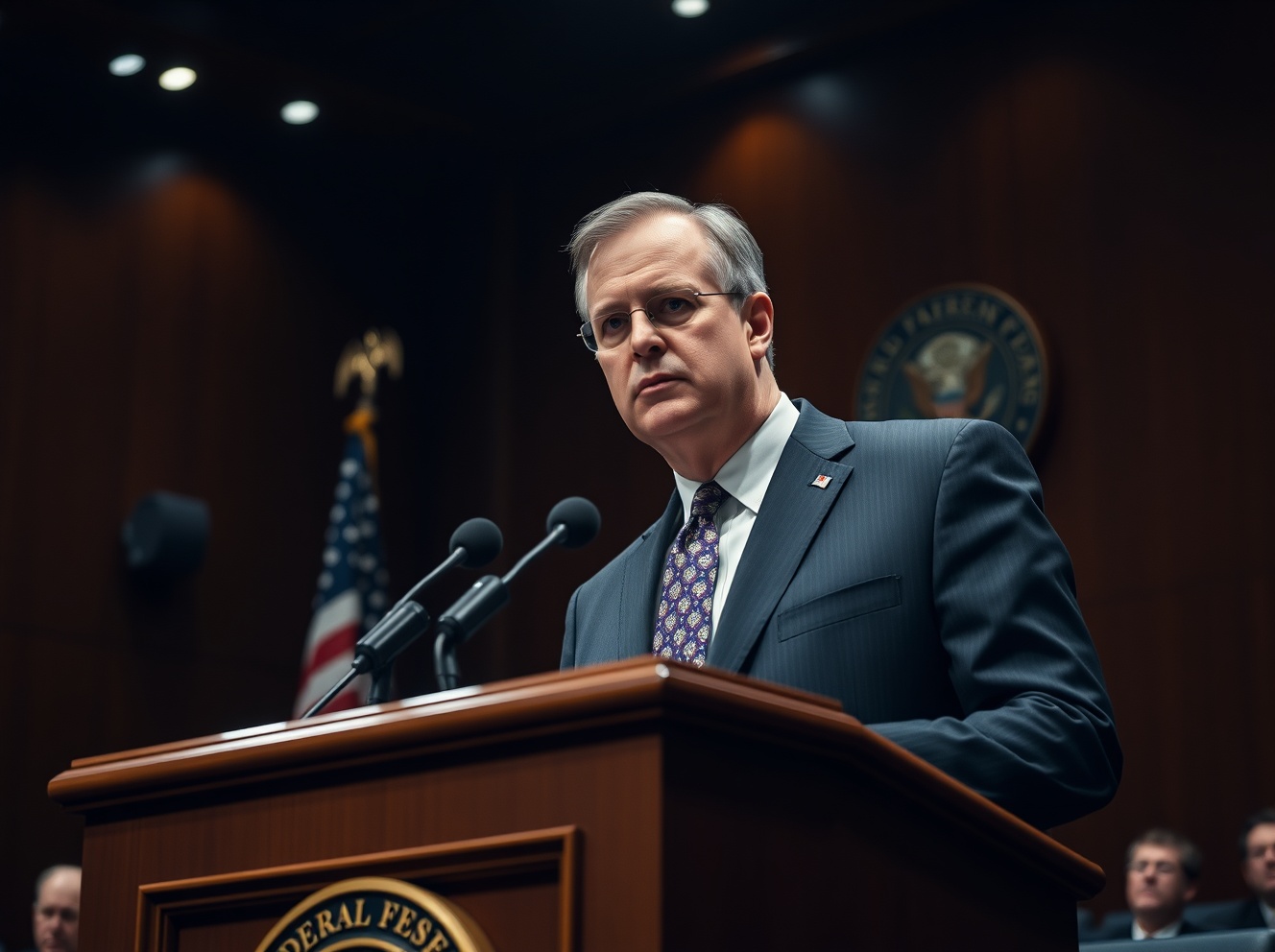
Federal Reserve Governor Christopher Waller says the central bank's biggest concern has shifted from jobs to inflation, a reversal that could reshape the next interest-rate decisions. Speaking in Rome on July 6, Waller said the labor market has stabilized while inflation has accelerated. His message puts the Fed's 2% inflation target back at the center of the policy debate just days before a major consumer-price report.

What We Know So Far
Waller described a sharp change in the balance of risks facing the Federal Reserve. A year earlier, he supported rate cuts because weakness in the labor market appeared more dangerous than a slower return to the inflation goal. Now, he says that relationship has reversed: employment conditions have steadied while inflation has become the larger threat.
That shift matters because the Fed operates under a dual mandate that includes price stability and maximum employment. When one side of that mandate looks healthier and the other deteriorates, the case for policy support becomes weaker. Waller did not specify a preferred rate move, but he said the change in economic risks affects how policymakers should think about policy.
In remarks reported by investingLive, Waller said Fed policymakers have always been committed to 2% inflation and called that objective a credible pledge. He also said the Fed would not hold interest rates down to help the U.S. government finance its deficit.

The next major test comes on July 14, when consumer-price data through June is scheduled for release. That report will arrive before the Fed's July 28-29 meeting. According to IndexBox, Fed projections from the June meeting showed the central bank's preferred inflation measure still more than one percentage point above the 2% target by year-end.
- 2% inflation target
- The rate of inflation the Federal Reserve says it is committed to achieving.
- Forward guidance
- The Fed's communication about how it expects interest-rate policy to develop.
- Dual mandate
- The Fed's responsibility for price stability and maximum employment.
The Response
Waller's strongest point was that the economic tradeoff has changed. TipRanks reported his description of the shift as risks having “completely flipped around.” The labor market, in his view, no longer carries the same weight it did when he supported rate cuts.
So then that changes how you might want to think about policy.
Waller also defended forward guidance, the practice of explaining how policymakers expect interest-rate decisions to evolve. That position differs from Fed Chair Kevin Warsh's concerns that such guidance can restrict the central bank's ability to respond quickly when conditions change.
The June jobs report added another layer to the debate. Hiring was weaker than expected, but unemployment declined to 4.2% from 4.3% in May. Waller did not directly address that report in his Rome remarks.
What It Means for You
For U.S. households, the practical issue is the direction of borrowing costs. If inflation remains the Fed's primary risk, pressure for easier monetary policy is reduced. Higher interest rates generally discourage borrowing and investment, which is one way the Fed attempts to slow price increases.
That does not establish a specific path for mortgage, auto-loan or other consumer rates, because Waller did not announce a rate decision. It does show what could drive the Fed's next move: whether upcoming inflation data confirms that price pressures are still moving away from the 2% goal.
Oil prices have fallen back to around $70 a barrel, according to IndexBox, which could ease headline inflation. The broader question is whether the July 14 consumer-price report shows enough improvement to change the Fed's assessment before its late-July meeting.
Coming Up
The next confirmed milestone is the release of consumer-price data through June on July 14. The Federal Reserve is then scheduled to meet on July 28 and 29, giving policymakers a final major inflation reading before they decide whether the current policy stance still fits the balance of risks.
Waller's comments do not settle that decision. They do establish the test: with the labor market appearing more stable, inflation data now carries greater weight in the argument over what the Fed should do next.
At a Glance
- Waller says inflation has become the Fed's primary risk as the labor market stabilizes.
- The Federal Reserve remains committed to a 2% inflation target.
- June unemployment fell to 4.2% from 4.3% in May.
- Consumer-price data through June is scheduled for July 14.
- The Fed's next scheduled meeting is July 28-29.
Frequently Asked Questions
What did Christopher Waller say about inflation?
Waller said the balance of economic risks has reversed because the labor market has stabilized while inflation has accelerated. He reaffirmed the Federal Reserve's commitment to bringing inflation back to 2%.
Is the Federal Reserve changing its 2% inflation target?
Waller said policymakers remain committed to the 2% target and described it as a credible pledge. He said he would prefer a target range but argued that changing the target now would not be credible.
When is the next U.S. inflation report?
Consumer-price data through June is scheduled for release on July 14. The report will arrive before the Federal Reserve's July 28-29 meeting.
What was the latest unemployment rate mentioned in the reports?
The June jobs report showed unemployment declining to 4.2% from 4.3% in May. Hiring was weaker than expected, but Waller did not directly discuss the report in his Rome remarks.
Why does the 2% inflation target matter?
Waller described 2% inflation as a credible commitment for the Federal Reserve. The target helps define whether price pressures are moving toward the central bank's stated goal or remaining too high.