Last updated: November 5, 2026
Kalshi's prediction markets became a major destination for Americans tracking the 2026 midterm elections, with billions of dollars changing hands as voters and traders followed closely contested races. But the company's election-night success has brought a new round of scrutiny, including a public dispute with polling expert Nate Silver and fresh legal action from Arkansas. For cofounder and CEO Tarek Mansour, the challenge is increasingly about proving that prediction markets can operate as legitimate financial exchanges rather than unlicensed gambling platforms.

What the Company Announced
Mansour took to X on Wednesday night to celebrate Kalshi's performance during the midterm elections. He presented the results as evidence that ordinary participants, rather than established political commentators and institutional experts, could collectively produce valuable information about election outcomes.
According to Mansour's post, prediction market favorites won 479 of the first 487 races, representing 98%. He argued that millions of individual participants contributed local knowledge and perspectives that traditional political analysts could overlook.
His message quickly attracted criticism from Nate Silver, the polling expert who challenged the suggestion that prediction markets had outperformed established forecasting methods.
Give me a break, the polls and models provided the direction in contrast to vibes and dumb insiders.
Silver argued that stronger election models had been more confident about the results and reached their conclusions faster than the prediction markets. The disagreement puts the spotlight on a central question surrounding Kalshi: whether market prices provide a genuinely superior forecasting signal or simply reflect information already identified by pollsters and analysts.
The controversy comes alongside another challenge. Arkansas Attorney General Tim Griffin filed two lawsuits on November 5 against the owners of Kalshi and online gaming platform VGW, alleging violations of state law involving illegal gambling operations.

Key Financial Details
Kalshi's election activity has expanded rapidly. A Columbia Journalism Review interview published November 4 reported that Americans had wagered more than $1.3 billion on the midterm outcomes through the platform in recent months.
Following the election, Mediaite reported that more than $2.5 billion had been traded on Kalshi in connection with the midterms. The figures reflect reporting at different points in the election cycle, with the later figure covering the broader trading activity reported after election night.
The company's financial position is also attracting attention. Mansour told Columbia Journalism Review that Kalshi had just raised $1 billion at a $40 billion valuation. That fundraising milestone illustrates the scale of investor interest in prediction markets, even as their legal status faces challenges in several states.
Other financial details remain undisclosed. When asked about the company's partnerships with CNN, CNBC and Fox, Mansour declined to reveal their financial terms. The interview noted that CNBC's relationship with Kalshi includes customer acquisition and a minority investment.
- Prediction market
- A marketplace where participants trade contracts tied to the outcomes of future events.
- Trading volume
- The total value of transactions conducted during a specified period.
- Insider information
- Material, nonpublic information that can provide an unfair advantage to someone trading on an event.
For investors, the $40 billion valuation places considerable attention on the company's ability to expand its business while navigating regulatory uncertainty. However, the available reporting does not disclose Kalshi's revenue, operating profit or the financial terms of its media partnerships.
Why the Company Is Doing This
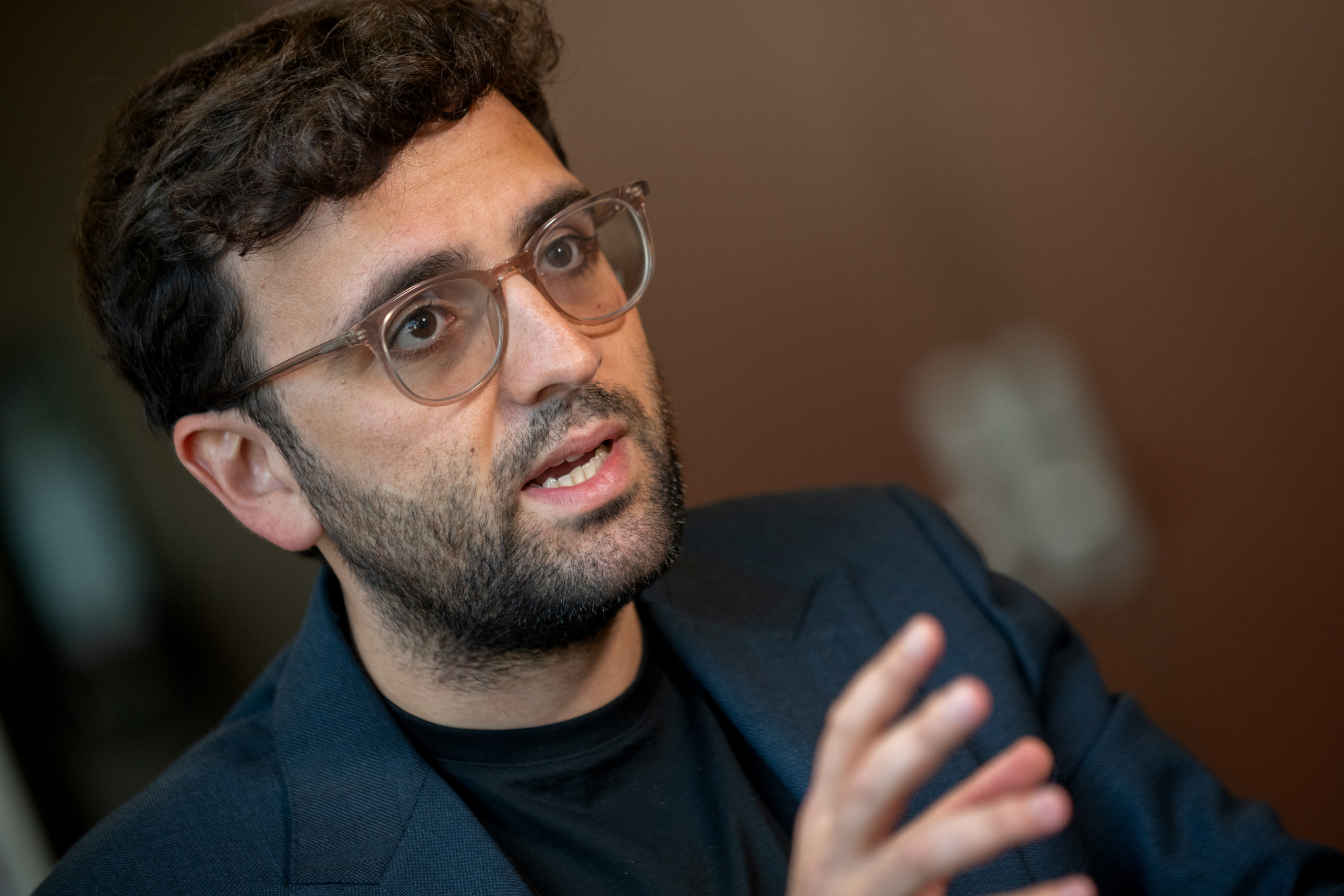
Mansour's stated ambition goes beyond building another trading platform. In his interview with Columbia Journalism Review, he described political polarization and the spread of misinformation as major reasons for launching Kalshi in 2018.
He believes prediction markets can encourage more careful judgments because participants have a financial incentive to make accurate predictions. Unlike social media platforms, where extreme opinions can attract attention regardless of accuracy, Kalshi's model rewards participants when their positions are correct and penalizes them when they are wrong.
Mansour also wants the company to become part of the wider information ecosystem. Its partnerships with CNN, CNBC and Fox put market-based probabilities in front of audiences who regularly consume political and financial news.
However, the distinction between information and wagering remains contested. Critics argue that markets covering elections, sports and other real-world events can expose consumers to gambling-related financial losses and insider-trading risks. Mansour maintains that Kalshi operates as a federally regulated exchange where participants trade against one another rather than against a betting house.
The company's growing political activity adds another layer of scrutiny. Mansour acknowledged that Donald Trump Jr. serves as a strategic adviser and described Kalshi as politically engaged. He rejected claims that political relationships influence market outcomes, arguing that trading activity is visible to participants and that market rules should apply equally to everyone.
Impact on Employees, Customers, and Investors
For customers, the most immediate concern is whether state-level legal disputes will restrict access to particular event contracts. Arkansas alleges that Kalshi's owners opened the platform to state residents without obtaining the licenses and complying with the requirements applicable to lawful gambling operators.
Attorney General Tim Griffin also highlighted the availability of the platform to customers as young as 18 and the financial and mental health risks associated with excessive wagering. KATV reported that Kalshi offers self-exclusion tools, deposit limits, trading breaks and gambling-addiction resources through a partnership with the National Council on Problem Gambling.
Investors face a different concern. A company valued at $40 billion must contend not only with competition and customer growth but also with the possibility that state authorities will challenge its operating model. Legal restrictions could affect the markets available to customers and complicate expansion into additional states.
Utah provides an example of how quickly regulatory pressure can affect the industry. Following criminal charges against Kalshi and two executives, other prediction market providers began restricting certain event contracts in the state. DraftKings stopped offering sports, novelty, political and certain other event contracts to Utah customers, while Fanatics and Robinhood also announced restrictions affecting selected categories.
These developments demonstrate that the dispute extends beyond Kalshi itself. Customers may encounter different trading options depending on where they live, while competing platforms must decide how to respond to conflicting state and federal regulatory positions.
What Comes Next
Arkansas is seeking restitution, penalties, taxes and injunctive relief in its lawsuits against Kalshi's owners and VGW. The allegations have not been established as findings of liability, and the available reporting does not identify a final court ruling in the Arkansas cases.
Utah's separate legal battle is also continuing. Kalshi's CEO and COO have been ordered to appear before a judge in Salt Lake City's 3rd District Court in December, according to FOX 13 News Utah. The state has also pursued civil action and sought an injunction to prevent Kalshi from operating there.
The broader dispute concerns which regulators have authority over prediction markets. Kalshi argues that its event contracts fall under federal oversight through the Commodity Futures Trading Commission, while state authorities maintain that certain contracts constitute gambling subject to state laws.
For Mansour, the midterm results offer a major commercial and promotional opportunity. Yet the next phase of Kalshi's growth will depend on more than forecasting performance or trading volume. Its ability to maintain access to customers, defend its business model in court and establish trust among users and media partners will shape the company's future in the American financial and information markets.
Frequently Asked Questions
Who is Tarek Mansour?
Tarek Mansour is the cofounder and CEO of Kalshi, a prediction market platform that allows users to trade contracts tied to real-world events, including elections and sporting competitions.
How much money was traded on Kalshi during the 2026 midterms?
Mediaite reported that more than $2.5 billion was traded on Kalshi in connection with the 2026 midterm elections.
Why is Arkansas suing Kalshi?
Arkansas Attorney General Tim Griffin alleges that Kalshi's owners operated an illegal gambling business in the state without obtaining the required licenses or complying with state gambling regulations.
What did Nate Silver say about Kalshi's election predictions?
Silver challenged Mansour's claims about the platform's forecasting performance, arguing that stronger polling models were more confident about the election outcome and reached their conclusions faster.
Is Kalshi considered a gambling platform?
That classification is disputed. Kalshi argues that it operates as a federally regulated exchange, while Arkansas and other state authorities argue that certain event contracts constitute illegal gambling under state law.