American investors watching their 401(k) accounts saw benchmark U.S. equities jump as Wall Street reacted to a sweeping shift in congressional power. The benchmark S&P 500 climbed 1.58%, logging its second-largest post-midterm election single-day advance since 1982. In derivatives markets, the SPDR S&P 500 Tokenized ETF (SPY) traded up to $767.89, holding firmly above its short-term moving averages while traders recalibrated expectations around government spending, energy prices, and trade policy.

What Moved
U.S. equities rallied across the board following the decisive Democratic sweep in the midterm elections. The Dow surged 1,569 points, or 3%, marking its sharpest single-day surge since April 2025 and its best post-midterm gain in 44 years. The S&P 500 advanced 1.58%, while the Nasdaq Composite rose 1.44%. The equally weighted S&P 500 reached a fresh all-time high, signaling broad participation across sectors rather than a move driven strictly by mega-cap technology firms.
In parallel, the VIX volatility index dropped nearly 20% as election uncertainty cleared. Benchmark 24-hour trading data for the SPDR S&P 500 tracking fund showed SPY quoted at $767.89, gaining 1.36% over the session within a daily band between $757.10 and $770.34.
Why It Moved
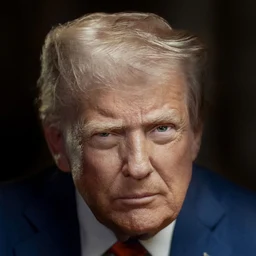
Markets rallied primarily as investors welcomed divided government in Washington. Historically, congressional gridlock limits dramatic tax changes and curbs unilateral fiscal expansion, providing a more predictable landscape for corporate earnings. Furthermore, President Donald Trump stated he anticipates working with the newly elected Democratic majorities, dampening fears of protracted legislative chaos.

Energy markets provided an immediate boost to consumer sentiment and inflation outlooks. Brent crude plummeted almost 8.7% to settle at $94.62 per barrel, hitting its lowest settle level since August 31. The plunge in crude followed public comments from Vice President JD Vance attributing election losses to the ongoing war with Iran, which prompted traders to aggressively price in potential geopolitical de-escalation.
The combination of a large Democratic majority in Congress and President Trump’s statement that he is willing to work with the opposition should act as a break on extreme policy outcomes and bring down risk premia.
However, the broader market rally occurred alongside pronounced weakness in artificial intelligence hardware. While the broader S&P gained, semiconductor leader Nvidia dropped 3%, an exchange-traded fund tracking AI infrastructure sank 9%, and cloud infrastructure providers CoreWeave and Nebius fell roughly 10% and 6.7%, respectively. The divergence followed campaign debates highlighting local community pushback against high-power AI data centers.
The Numbers That Matter
Macroeconomic indicators present two contrasting pictures of the current economic environment. On top-line growth, the U.S. economy remains robust:
- Gross domestic product accelerated at a 3.4% annualized pace in the third quarter.
- Consumer spending grew 3.8% over the same period.
- The national unemployment rate sits at 4.2%, with overall layoffs near their lowest mark since 1969.
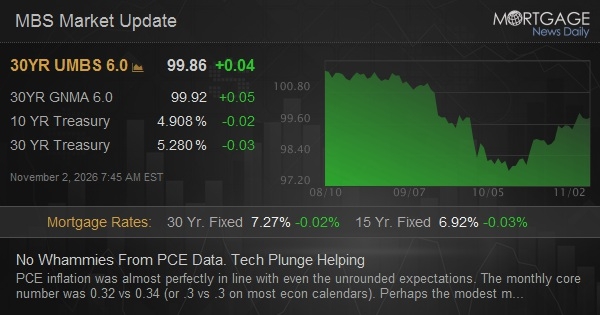
- Third-quarter core PCE inflation recorded a monthly rate of 0.32%, closely matching economists' 0.34% expectations.
Conversely, household affordability metrics remain strained. The consumer price index ran at 3.7% in September, up from 2.3% in April 2025. Real wage growth adjusted for inflation dropped 0.7% year-over-year in September, according to the Bureau of Labor Statistics. Meanwhile, the U.S. national debt reached $40.5 trillion, with net annual interest payments totaling $1.05 trillion in fiscal 2026, surpassing all federal outlays except Social Security and Medicare.
On technical price charts, SPY at $767.89 trades above its 7-day simple moving average of $760.69, its 20-day average of $764.71, and its 12-day exponential average of $763.69, while hovering just below its 50-day moving average of $768.66. The 14-day relative strength index sits neutral at 52.26, reflecting stable momentum following the midterm surge.
What Analysts Are Watching
Economists and market strategists remain divided on whether executive policies will shift in response to the election outcome. Tariffs, trade disputes, and foreign policy actions are largely managed through executive order rather than congressional legislation.
I don't expect any change in economic policy. The Iran war, the tariffs and trade policy, the heavy-handed immigration policy, all are done under executive order. They're not legislatively driven. The president thought they were good policies before the election. I don't know why he'd change his mind after the election.
Energy analysts also warn that market expectations of an immediate end to Middle East hostilities may prove premature. Rapidan Energy Group founder Bob McNally cautioned that traders betting on rapid disengagement may face renewed geopolitical volatility if conflicts escalate rather than subside.
On fiscal matters, Morgan Stanley analysts noted that congressional Democrats will likely target reversals of spending cuts to Medicaid and SNAP food assistance previously enacted under the One Big Beautiful Bill Act. Goldman Sachs chief economist Jan Hatzius noted that while debt ceiling debates could trigger friction, legislative negotiations could center on tariff modifications and healthcare benefit extensions.
What Happens Next
Market participants are focusing on whether easing crude oil prices will alleviate broad headline inflation, potentially taking an aggressive Federal Reserve interest rate hike off the table for its December policy meeting. Meanwhile, business leaders are evaluating potential bipartisan discussions regarding North American trade agreements. Former National Economic Council director Gary Cohn noted that potential compromise could emerge to transition unilateral tariffs into formal legislative statutes protecting domestic manufacturing, particularly regarding trade with China.
Frequently Asked Questions
Why did the S&P 500 and SPY rally after the midterm election?
Stocks gained because the decisive Democratic election sweep established a divided government. Historically, political gridlock prevents rapid regulatory overhauls and massive fiscal spending bills, reducing policy volatility for corporations.
What levels is the SPY ETF testing on technical charts?
SPY is holding above its central pivot of $765.11, with immediate overhead resistance near $773.12 and strong resistance at $778.35. Downside support rests at $759.88, followed by $751.87.
Why did AI and chip stocks fall while the broader market gained?
Shares of Nvidia, CoreWeave, and Nebius declined between 3% and 10% due to election victories by candidates who voiced concern over local data center expansion and heavy power consumption, raising concerns about future construction moratoriums.
How are falling oil prices impacting inflation expectations?
Brent crude dropped 8.7% to $94.62 per barrel as traders weighed potential de-escalation in the Middle East. Lower fuel prices help reduce headline inflation pressures that had elevated the CPI to 3.7% in September.