
The Bank for International Settlements warned in its Annual Economic Report 2026 that the global AI investment boom could become a financial risk if returns fall short. The warning centers on technology giants, private credit lenders, chipmakers and data-center builders that are now tied together by massive spending plans and opaque financing.
The immediate concern is not that AI lacks value. It is that the race to build the infrastructure behind it may be moving faster than profits, cash flow and the wider economy can safely absorb.

The Full Story
The BIS, often described as the central bank for central banks, used its 2026 report to compare today’s AI spending surge with earlier investment manias, including canal building in the 1830s, British railways in the 1840s, electrification in the 1920s and the dot-com boom. The link is straightforward: each case began with a real technological shift, then attracted more capital than commercial returns could support.
According to Fortune’s account of the BIS report, the five largest hyperscalers are on pace to spend more than $1 trillion on AI-related capital expenditure across 2025 and 2026 combined. The BIS said that pace is already outrunning earnings and free cash flow, pushing some companies to issue debt to keep funding the build-out.

The fear is a classic crowding problem with a modern twist. Every major player is racing to secure chips, power, data centers and market share because each believes only a few winners will dominate AI. That same logic can push firms to spend too much at the same time, leaving the entire sector exposed if productivity gains or customer demand arrive more slowly than expected.
Pablo Hernández de Cos, the BIS general manager, framed the risk as a competitive spiral rather than a simple tech-stock story.
One risk is that large-scale investment in AI infrastructure becomes excessive, as each firm tries to outcompete rivals and dominate market share
Behind the headline numbers, the BIS also flagged what it called a complex web of private arrangements. That includes circular financing, where cloud giants or chipmakers invest in AI labs that then commit to buying their chips or computing power. Data centers may also be handled through contractors and long-dated leases whose terms are not always fully visible to investors.
Key Figures
The central player is the Bank for International Settlements, the Basel-based institution that advises and coordinates central banks. Its warning carries weight because the BIS focuses on financial stability, not consumer hype or tech marketing.
Pablo Hernández de Cos, the BIS general manager, presented the concern as a policy issue: if financing tightens or AI returns disappoint, the damage could move from tech valuations into credit markets and the real economy. Zhang Tao, the BIS chief representative for Asia and the Pacific, also warned that a correction could unwind faster than previous banking-crisis episodes because so much funding now flows through hedge funds and private credit vehicles rather than traditional banks.
The companies at the center of the story are the hyperscalers building AI infrastructure, along with chipmakers, AI labs, data-center contractors and private credit lenders. The risk is shared because their revenues, loans, leases and investment commitments increasingly depend on one another.
Facts & Figures
The BIS warning rests on a few numbers that show how large the bet has become:
- The five largest hyperscalers are projected to spend more than $1 trillion on AI-related investment across 2025 and 2026.
- Task-level studies cited in the Fortune report show AI productivity gains of 20% to 50% in time savings, but the BIS questions how quickly those gains translate into broad economic returns.
- Direct lending funds are already a $1 trillion-plus ecosystem, and their lending to AI and IT sectors has quadrupled over five years.
- AI and IT now represent about 15% of direct lending fund portfolios, according to the Fortune summary of the report.
- U.S. stocks account for roughly 64% of the MSCI Global index, increasing the global impact of any sharp AI-led market repricing.
- Hyperscaler
- A large technology company that builds and operates massive cloud and computing infrastructure.
- Capex
- Capital expenditure, or money spent on long-term assets such as data centers, chips and power infrastructure.
- Private credit
- Loans made by funds or private lenders outside traditional bank lending channels.
- Circular financing
- A funding setup where companies invest in customers or partners that then buy services or products from those same investors.
What This Means
For the U.S., the story matters because the AI boom is now tied to stock-market wealth, electricity demand, corporate borrowing and consumer prices. The BIS warned that a major repricing of AI-related stocks could create stronger wealth effects than in past cycles, especially because household equity exposure has more than doubled relative to income since 2010.
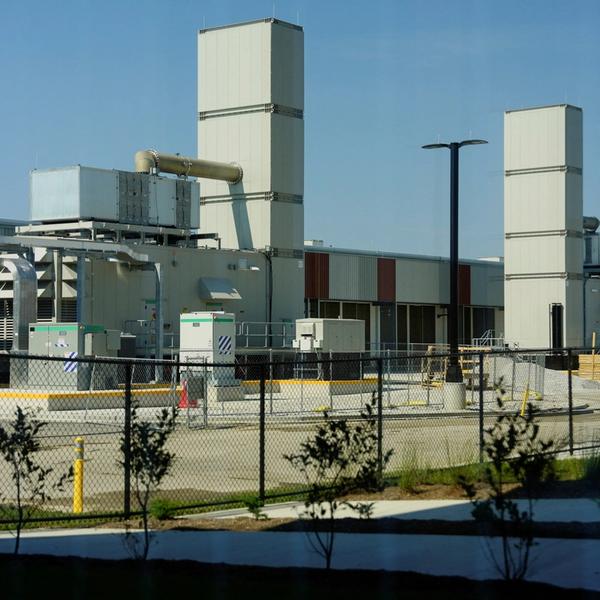
There is also a household angle. Euronews reported that Goldman Sachs expects data centers to account for nearly half of the growth in U.S. electricity demand by 2030, while consumer power prices are forecast to rise around 6% a year through 2026 and 2027. That means the build-out is not just a Wall Street issue; it can show up in power bills, device prices and inflation pressure.
The BIS does not dismiss AI’s usefulness. Its argument is narrower and more practical: genuine technology can still produce a bad investment cycle if companies borrow heavily, investors accept thin disclosure and everyone assumes demand will keep rising without interruption.
What to Expect
The BIS called for stronger financial-system robustness, including vigilance from central banks on inflation, more fiscal space for governments and tighter attention to non-bank financial institutions involved in AI financing. Regulators are likely to focus on private credit exposure, data-center financing and disclosure around long-term AI infrastructure deals.
Investors will also be watching whether AI spending keeps running ahead of earnings and free cash flow. A slowdown by hyperscalers could pressure chipmakers, contractors, AI labs and lenders at the same time, which is exactly the chain reaction the BIS is warning about.
FAQ
What did the BIS say about AI spending?
The BIS warned that massive AI infrastructure spending could become excessive and trigger a wider investment bust if returns disappoint.
How much are big tech firms spending on AI?
The five largest hyperscalers are projected to spend more than $1 trillion on AI-related capex across 2025 and 2026.
Does the BIS think AI is fake?
No. The report recognizes real productivity gains from AI, but warns that investment may be moving faster than commercial returns.
Why does private credit matter here?
Private credit funds have increased lending to AI and IT sectors, and those lenders face less traditional bank-style oversight.
How could this affect U.S. households?
A sharp AI stock repricing could hit household wealth, while data-center growth could add pressure to electricity costs and consumer prices.
What happens next?
Central banks and regulators are expected to watch AI-related debt, private financing and inflation pressure more closely.