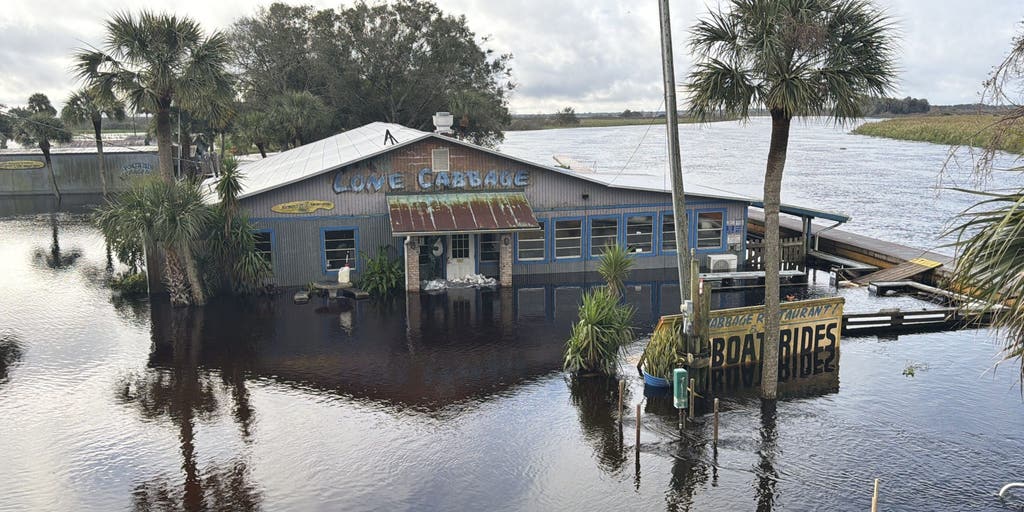
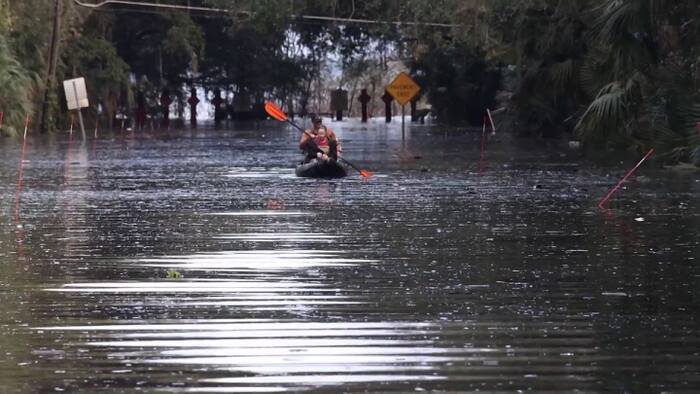
Flooded streets have become waterways in parts of Central Florida, where residents are navigating neighborhoods by kayak and watching rising water approach their front doors. Although the heaviest rainfall has eased in some areas, the St. Johns River continues to threaten communities across the state's eastern counties. Major river flooding is expected to persist through much of Thanksgiving week, extending an emergency that began with torrential storms across South Florida. Emergency crews have already carried out hundreds of rescues as officials prepare for additional flooding.
What Is Happening
Florida's flood emergency has entered a dangerous new phase. The initial downpours overwhelmed streets and drainage systems in Broward and Miami-Dade counties, but attention is increasingly shifting toward rivers and lakes farther north.
According to FOX Weather's latest flooding report, parts of Florida's Atlantic Coast have received approximately 2 feet of rain since the storms began Tuesday. Cocoa Beach has recorded more than 2 feet, while the St. Johns River near Cocoa remains at exceptionally high levels.
The situation has evolved from the earlier emergency in Fort Lauderdale and Hollywood, where more than a foot of rain triggered flooding and local emergency declarations. Although the most persistent rainfall has weakened in some locations, accumulated runoff is continuing to move through the river system.
Seminole County Emergency Management Director Alan Harris explained why improving weather does not necessarily mean improving flood conditions:
It's not going down just because the rain stopped outside. That does not mean that the water is going down. The water is actually going up
His warning captures the central danger: river flooding can intensify after the storms responsible for it have passed.
Where and When
The most serious ongoing river concerns stretch across Florida's Central East Coast and communities connected to the St. Johns River.
Brevard County: Cocoa, Rockledge and Merritt Island have experienced particularly severe flooding. The river near Cocoa has reached record-high levels, and major flood conditions are expected to continue through much of Thanksgiving week.
Seminole County: Neighborhoods surrounding Lake Harney, Lake Jessup and Lake Monroe are being monitored as floodwaters continue rising. Near Lake Harney, water has entered homes, covered yards and submerged neighborhood streets.
South Florida: Fort Lauderdale, Hollywood and surrounding Broward County communities experienced extensive flooding earlier in the storm. Additional thunderstorms brought tornado warnings to Broward and Miami-Dade counties on Saturday, while a confirmed tornado occurred in Palm Beach County.
Rainfall records underline the scale of the event. Melbourne, Daytona Beach, West Palm Beach and Fort Lauderdale have recorded their wettest November on record, according to FOX Weather.
The key distinction is timing: the most intense rainfall has eased in some places, but officials expect river levels to remain elevated or continue climbing over the coming days.
Expected Impacts
The flooding has already disrupted homes, roads and emergency services across multiple counties.
Florida Gov. Ron DeSantis announced that more than 1,000 state personnel, including National Guard members, transportation crews and emergency management teams, had been mobilized. Their response included nearly 200 rescues, deployment of 9,000 feet of flood barriers and distribution of 20,000 sandbags.
Brevard County reported more than 160 water rescues by Friday night. In Broward County, Florida Fish and Wildlife Conservation Commission responders helped rescue more than 90 residents from a flooded apartment complex.
Road closures are creating another serious problem. In Seminole County, residents described lengthy detours around flooded streets, with journeys normally taking minutes becoming considerably longer.
Floodwaters have also approached residential properties near Lake Harney, where some families are watching water levels rise within inches of their homes.
Crews have deployed pumps near Cocoa to move water into a nearby canal and reduce additional residential flooding. Heavy equipment has also been used to repair critical roadways, including Interstate 95.
Two terms help explain the continuing threat:
- Major flood stage
- A river level associated with extensive flooding and potentially serious impacts on nearby communities and infrastructure.
- Runoff
- Rainwater that flows across land and into rivers, lakes and drainage systems after rainfall.
- Flood barrier
- A temporary structure designed to hold back or redirect rising water away from vulnerable locations.
Official Advice
Emergency management officials are urging residents in vulnerable areas to remain informed as conditions change, even where rainfall has stopped.
The City of Palm Bay announced mandatory evacuations for Palm Bay Estates residents west of the canal and east of the railroad tracks because of ongoing flood concerns.
Brevard County opened emergency shelters in Cocoa and Melbourne for displaced residents. Seminole County has also prepared shelters, sandbag distribution sites and temporary flood barriers, including a Tiger Dam near Lake Monroe Hospital.
Residents should follow current local emergency instructions and verify shelter availability and evacuation requirements with their county or municipal emergency management agencies. Conditions and access routes may change as river levels rise.
For additional local reporting, WKMG details the flooding around Seminole County lakes, including road disruptions and preparations underway.
What Forecasters Are Watching
The central concern is how high the St. Johns River and connected lakes will rise as accumulated rainfall continues draining through the watershed.
The river is particularly slow to drain, and its levels were already elevated following historic flooding earlier in the month. That leaves communities vulnerable to additional inundation without another prolonged period of heavy rain.
Emergency crews are closely monitoring Lake Harney, Lake Jessup and Lake Monroe, along with river communities near Cocoa. Officials have warned of potentially historic flooding as water moves through the system.
The exact peak levels and timing for individual neighborhoods have not been established in the supplied reports. What is clear is that improving skies are not an all-clear: river flooding is expected to remain a serious concern through much of the holiday week.
Frequently Asked Questions
Why is Florida still flooding after the rain stopped?
Rainwater continues flowing into the St. Johns River and connected lakes. Because the river drains slowly, water levels can rise for days after heavy rainfall ends.
Which Florida counties are facing the worst river flooding?
Brevard and Seminole counties are major areas of concern, including Cocoa, Rockledge, Merritt Island and neighborhoods near Lake Harney, Lake Jessup and Lake Monroe.
How much rain has fallen in Florida?
Some Atlantic Coast locations received approximately 2 feet of rain since Tuesday, with Cocoa Beach recording more than 2 feet.
Are there mandatory evacuations in Florida?
Palm Bay announced mandatory evacuations for Palm Bay Estates residents west of the canal and east of the railroad tracks. Residents should check current local emergency notices.
How long will the St. Johns River flooding last?
FOX Weather reports that major flooding along the St. Johns River is expected to persist through much of Thanksgiving week, with additional rises possible in affected communities.