
Last updated: July 16, 2026
What's behind the orange haze blanketing US skies?
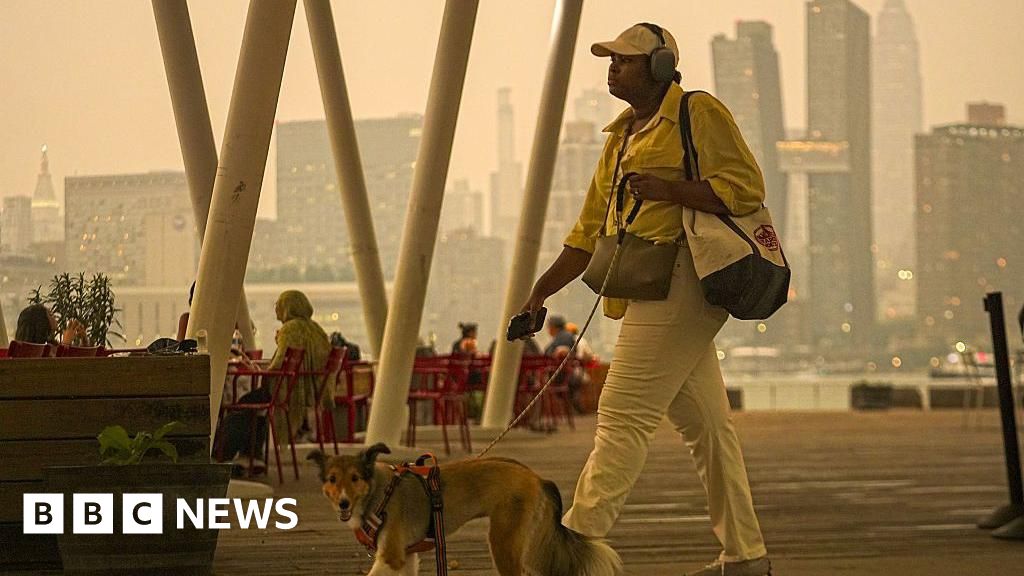
A choking blanket of wildfire smoke has crossed the border, triggering widespread air quality alerts across several US states. Over 800 active wildfires are currently burning in Canada, sending thick plumes of smoke south into regions like the Midwest and the Northeast. Millions of Americans are waking up to hazy orange skies and the unmistakable smell of burning wood.
What We Know So Far
The sheer scale of the fires is staggering. With more than 800 wildfires burning across Canada, the smoke has traveled hundreds of miles, severely impacting air quality across the border. Air quality alerts have been issued for parts of Michigan, Wisconsin, Illinois, and Minnesota. Major metropolitan areas including Chicago, Detroit, Minneapolis, and Cleveland are reporting heavily degraded air conditions.
The Air Quality Index (AQI) in these regions has spiked to levels deemed unhealthy for sensitive groups, and in some areas, unhealthy for everyone. AirNow, the US air quality monitoring platform, has shown high concentrations of fine particulate matter, known as PM2.5. These tiny particles can penetrate deep into the lungs and enter the bloodstream, posing severe health risks.
Local departments are advising residents, especially those with respiratory issues, children, and the elderly, to limit outdoor activities. In cities like Chicago and Detroit, the skyline has been partially obscured by the thick haze. The sun has appeared as a strange, glowing orange ball, a visual phenomenon caused by the smoke particles scattering shorter wavelengths of light while letting longer red and orange wavelengths pass through.
Voices & Opinions
Meteorologists and health officials are urging extreme caution. Weather experts explain that atmospheric wind patterns are channeling the smoke directly southward into the US. Public health departments are emphasizing that high PM2.5 levels are dangerous, advising people to keep windows closed, run air purifiers, and wear high-quality masks like N95s if they must go outside.
Local Impact
For communities across the US Midwest and Northeast, the immediate impact is highly noticeable. Outdoor events are being rescheduled, and local sports leagues are monitoring the air conditions. In places like Philadelphia and New York City, local agencies are tracking the smoke's movement and issuing warnings. The Mackinac Bridge in Michigan has seen reduced visibility, prompting local authorities to urge drivers to use extra caution.
Coming Up
In the coming days, wind patterns will dictate where the smoke goes next. Meteorologists are tracking low-pressure systems that could potentially shift the smoke plume or bring clean air to clear the haze. Residents are advised to keep checking local air quality maps on platforms like AirNow to monitor real-time updates.
At a Glance
- Over 800 active wildfires are burning across Canada.
- Smoke has crossed the border, prompting air quality alerts in multiple US states.
- Major cities like Chicago, Detroit, and Minneapolis are experiencing high AQI levels.
- Fine particulate matter (PM2.5) from the smoke poses health risks to residents.
- Officials recommend reducing outdoor exposure and keeping windows closed.
Frequently Asked Questions
Why is the air quality so bad today?
The poor air quality is caused by thick smoke drifting south from more than 800 active wildfires burning across Canada.
Which US states are affected by the wildfire smoke?
States in the Midwest and Northeast, including Michigan, Wisconsin, Illinois, Minnesota, Ohio, and New York, are experiencing smoke and hazy skies.
What is PM2.5 and why is it dangerous?
PM2.5 refers to fine particulate matter that is 2.5 micrometers or smaller. It is dangerous because it can travel deep into the respiratory tract and lungs, causing health issues.
How can I protect myself from wildfire smoke?
Limit your time outdoors, keep windows closed, use air purifiers, and wear an N95 mask if you must go outside.
When will the air quality improve?
The air quality will depend on wind patterns and weather systems. It will improve once the winds shift or rain helps clear the smoke from the region.