
Three Republican proposals are now pressing Congress to restrict automatic citizenship after the Supreme Court rejected President Donald Trump’s executive-order approach. Sen. Jim Banks of Indiana introduced the Citizenship Act of 2026, seeking to deny automatic citizenship to certain children born in the United States to parents who entered without authorization or came for what the bill calls birth tourism. The proposal shifts the fight from presidential action to federal legislation, but the sources describe major constitutional and political obstacles ahead.

The Bottom Line
- Banks introduced the Citizenship Act of 2026 after the Supreme Court blocked Trump’s attempt to restrict birthright citizenship through an executive order.
- The bill would classify unauthorized entrants and people arriving for birth tourism as “invaders” and exclude some of their U.S.-born children from automatic citizenship.
- The proposal would amend federal citizenship law rather than begin with a constitutional amendment.
- House Republicans John McGuire and Greg Steube have introduced separate measures pursuing similar restrictions through different statutory standards.
- No source provided a timetable for a vote on Banks’s bill, and the measure faces a difficult path through Congress and likely legal challenges.
Breaking It Down
Trump signed an executive order on Jan. 20, 2025, seeking to require at least one parent with citizenship or permanent legal status before a child born on U.S. soil could automatically receive citizenship. Courts challenged that policy, and the Supreme Court later ruled that children born to parents who are unlawfully or temporarily present are protected by the Citizenship Clause of the 14th Amendment, according to USA Today’s account of the ruling.
Banks’s response is to ask Congress to change federal law. His bill says illegal immigration and birth tourism constitute an ongoing invasion, then uses that declaration to argue that children of those categorized as invaders should not receive automatic citizenship. Banks said the measure was influenced by Justice Brett Kavanaugh’s discussion of federal citizenship statutes, although the supplied reports differ over how much room the Court’s opinions left Congress to act without changing the Constitution.
The Supreme Court’s birthright citizenship decision was an unprecedented assault on American sovereignty, and we must do whatever it takes to save our country.
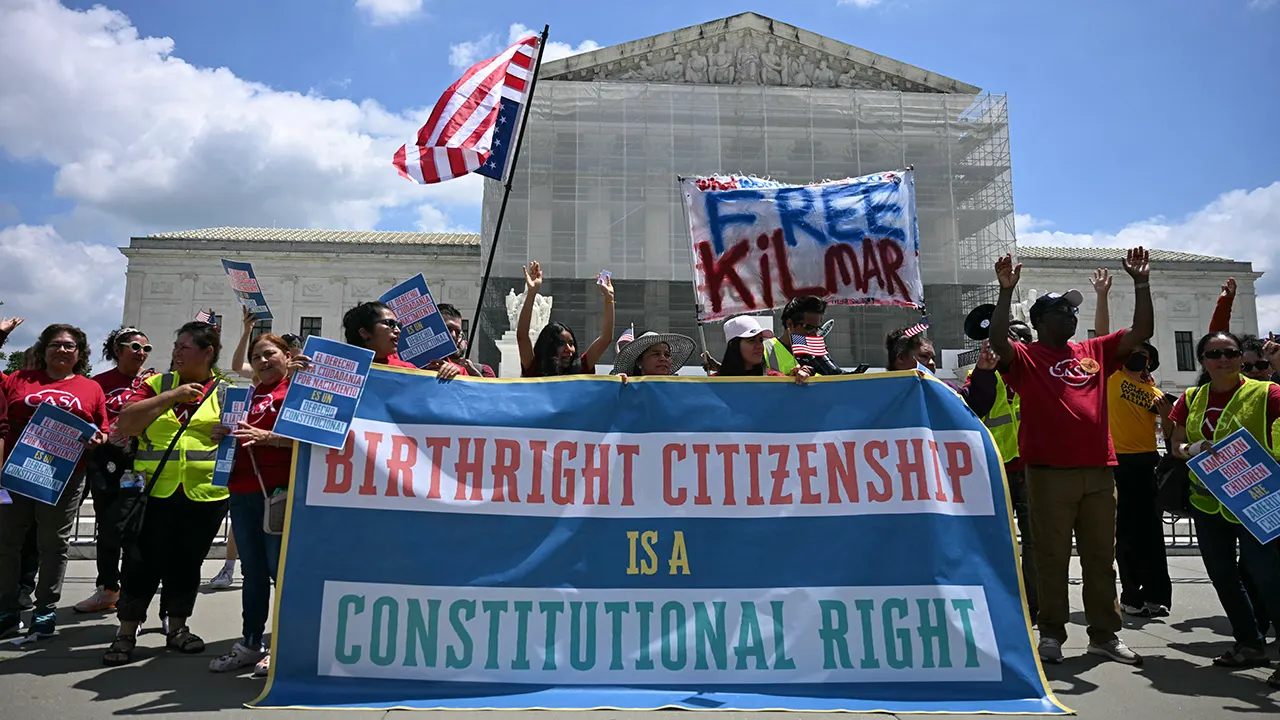
The Senate bill is part of a broader Republican legislative push. Rep. John McGuire III introduced the Birthright Citizenship Clarification Act, which would amend the Immigration and Nationality Act and withhold citizenship in several parental-status combinations. Rep. Greg Steube followed with the Birthright CLAIM Act, which would deny automatic citizenship when neither parent is a citizen or national and at least one parent is unlawfully present or holds only a temporary visa. Steube’s proposal also includes DNA paternity verification in certain citizenship claims and stronger residency requirements for some children born abroad.
These bills share a goal but are not identical. Banks emphasizes an invasion-based legal theory, McGuire targets the statutory “right of the soil” framework, and Steube sets parental-status rules. That variation shows Republicans testing several possible routes after the executive order failed in court.
- Birthright citizenship
- Citizenship granted at birth to people born in the United States and subject to its jurisdiction.
- Birth tourism
- Travel to the United States for the stated purpose of giving birth so the child can obtain citizenship.
- Jus soli
- A legal principle commonly translated as “right of the soil,” linking citizenship to place of birth.
Why This Matters
The proposals could directly affect how citizenship is documented for newborns whose parents lack permanent legal status. The Steube bill, for example, would introduce parental-status tests and, in some cases, DNA verification. That would move citizenship decisions beyond the location of birth and toward additional evidence about each parent’s nationality, immigration status and relationship to the child.

The dispute also tests the boundary between Congress and the Constitution. Chief Justice John Roberts wrote that the 14th Amendment extended citizenship to “every free-born person in this land,” while supporters of the new bills argue Congress can revise the federal statute governing citizenship at birth. Because the proposals challenge a rule that shapes passports, Social Security records and legal identity from the moment of birth, any enacted restriction would carry consequences far beyond immigration enforcement.
For U.S. families, the practical question is whether birthplace alone will continue to establish citizenship in most cases or whether hospitals and government agencies could eventually require more information about parents. None of the supplied sources says that current citizenship procedures have changed; the proposals remain legislation rather than law.
What Comes Next
Banks’s bill must move through Congress before it could reach the president. The supplied reports provide no confirmed hearing or vote date, and one report says McGuire’s House bill had been referred to the House Judiciary Committee with no hearings scheduled at the time of publication.
Trump has also said he will ask the Supreme Court to rehear the birthright citizenship case. That creates two parallel efforts: another court challenge and a congressional attempt to rewrite federal law. Whether either route advances will determine the next phase of the citizenship dispute.
Frequently Asked Questions
What would Jim Banks’s birthright citizenship bill do?
It would amend federal law to deny automatic citizenship to certain U.S.-born children whose parents entered without authorization or came to the country for birth tourism.
Is the Citizenship Act of 2026 already law?
No. Banks introduced the proposal in Congress, but the supplied sources report no completed vote, presidential signature or effective date.
Why did Banks introduce the bill after the Supreme Court ruling?
The Court blocked Trump’s executive-order approach. Banks is attempting to pursue similar restrictions through legislation passed by Congress.
Would the bill affect citizenship that has already been granted?
The supplied sources do not explain whether the proposal would apply retroactively. They describe restrictions on automatic citizenship for children born under specified parental circumstances.
What happens to birthright citizenship while Congress debates the bills?
The reports do not identify any immediate change to current procedures. The Republican proposals remain pending legislation, while Trump has said he will seek another Supreme Court review.