
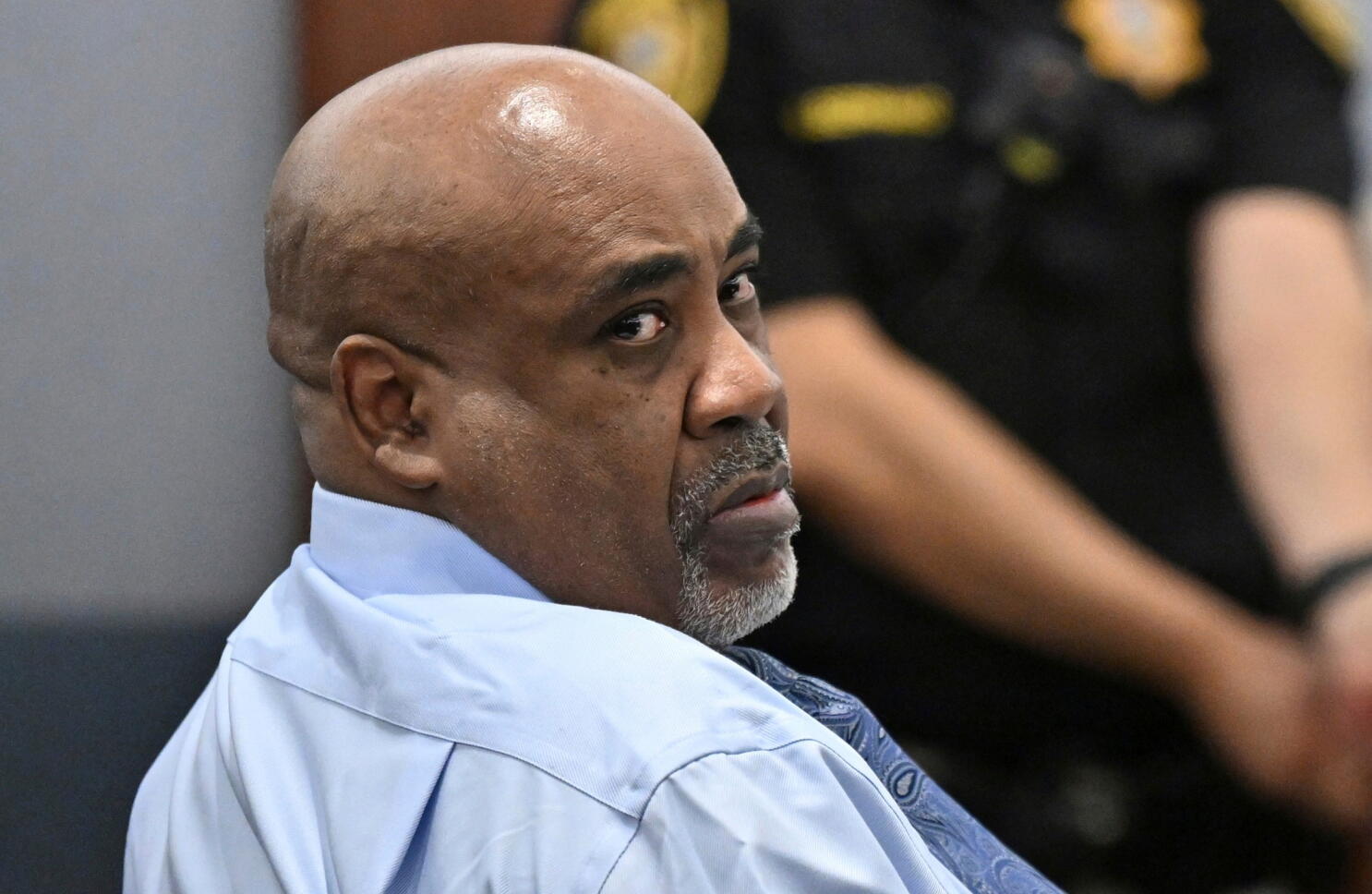
Nearly 30 years after Tupac Shakur was fatally shot in Las Vegas, a jury took less than three hours to convict Duane “Keffe D” Davis of murder. The 63-year-old was found guilty Monday of first-degree murder with use of a deadly weapon, making him the first person convicted in the long-unsolved case. Davis faces a possible life sentence and is scheduled to be sentenced on Oct. 13. He indicated after the verdict that he plans to appeal.
The Story at a Glance
Jurors unanimously convicted Davis after a trial centered heavily on statements he made over many years about his role in the Sept. 7, 1996 drive-by shooting. Prosecutors argued that Davis was a senior gang figure who obtained a gun and helped organize retaliation after Shakur and Marion “Suge” Knight participated in the beating of Davis' nephew, Orlando Anderson, at the MGM Grand.
Davis was not accused of firing the fatal shots. Prosecutors argued that Nevada law allowed him to be convicted for helping orchestrate the killing, including acquiring and passing along the weapon. The defense countered that there was no physical evidence, phone record, photograph or forensic proof independently placing Davis in the Cadillac from which the shots were fired.
The Associated Press account of the verdict said Shakur's sister, Sekyiwa “Set” Shakur, cried and hugged prosecutors after the decision was announced.
How the Story Developed
The case began on Sept. 7, 1996, after Shakur, Knight and others were involved in an assault on Anderson at the MGM Grand following the Mike Tyson-Bruce Seldon fight. Prosecutors said Davis and associates later searched for Shakur and Knight, eventually encountering their BMW near the Las Vegas Strip.
A white Cadillac pulled alongside the BMW and gunfire erupted. Knight survived his wounds. Shakur, who was 25, died six days later.
The investigation stretched across decades. A key turning point came during a 2008 federal task-force investigation into the killing of Christopher Wallace, known as the Notorious B.I.G. According to testimony reported by the Los Angeles Times, Davis described who was inside the Cadillac and discussed the shooting during interviews with investigators.
His later public interviews and 2019 memoir, “Compton Street Legend,” became central evidence. Prosecutors said his repeated accounts contained details consistent with the state's theory. Defense attorney Michael Sanft argued that Davis exaggerated or fabricated those stories for money and notoriety.
Key People and Details
Duane “Keffe D” Davis, 63, was described by prosecution witnesses as a “shot caller” in the South Side Compton Crips. Prosecutors said he acquired a firearm and helped set the retaliation in motion after Anderson's beating.
Tupac Shakur was riding with Death Row Records co-founder Marion “Suge” Knight when the shooting occurred. Knight was wounded but survived. Shakur died six days later.
Jurors heard testimony from 24 prosecution witnesses and three defense witnesses over nine days, according to AP. After closing arguments, deliberations lasted less than three hours.

- Proffer agreement
- An arrangement under which a person gives information to investigators in exchange for potential legal consideration under specified conditions.
- Circumstantial evidence
- Evidence that supports an inference about what happened rather than directly showing the act itself.
- Premeditation
- Planning or deciding to commit a killing before it occurs, a point prosecutors tied to the Cadillac's movements and the decision to pursue Shakur and Knight.
Reaction and Response
The emotional reaction in court reflected the case's unusual longevity. Shakur's family members embraced prosecutors following the verdict, while Davis' son covered his face with one hand. Davis himself immediately signaled that the legal fight would continue.
I would like to appeal this matter.
Former federal prosecutor Neama Rahmani told the Los Angeles Times that the rapid verdict was surprising given how strongly the prosecution relied on Davis' own past statements. The jury nevertheless accepted the state's broader argument that those statements, combined with circumstantial evidence and testimony, established his responsibility.
What to Watch
The next major date is Oct. 13, when Judge Carli Kierny is scheduled to sentence Davis. Multiple reports say he faces a possible life sentence. Davis' stated intention to appeal also means the verdict may begin a new phase of litigation rather than end the case entirely.
The conviction does not answer every question surrounding the 1996 shooting, including the broader disputes that persisted for decades over who fired the weapon and why investigators took so long to bring a case. What the verdict does establish is that a Nevada jury accepted prosecutors' argument that Davis bore criminal responsibility even though they did not accuse him of pulling the trigger.
FAQ
Was Keffe D found guilty of killing Tupac Shakur?
Yes. A Las Vegas jury found Duane “Keffe D” Davis guilty of first-degree murder with use of a deadly weapon in connection with Tupac Shakur's 1996 killing.
Did Keffe D shoot Tupac?
Prosecutors did not accuse Davis of firing the shots. They argued that he acquired and passed along the gun and helped orchestrate the attack, making him legally responsible for the murder.
Why did prosecutors say Tupac Shakur was targeted?
They said the shooting was retaliation after Shakur, Suge Knight and others beat Davis' nephew Orlando Anderson at the MGM Grand earlier that night.
What sentence could Keffe D receive?
Davis faces a possible life sentence. His sentencing is scheduled for Oct. 13.
Will Keffe D appeal the Tupac murder verdict?
Yes. Davis said after the verdict that he wanted to appeal the conviction.