
In a virtual Utah courtroom on Friday, a judge read a ruling that shifted the tone of one of the country’s most closely watched murder cases. The prosecutor was sanctioned. The death penalty stayed on the table. And the man accused of killing conservative activist Charlie Kirk, Tyler Robinson, moved one step closer to a high-stakes preliminary hearing set for July 6.

How Events Unfolded
Judge Tony Graf Jr. found Utah County prosecutor Christopher Ballard in civil contempt for public comments about the strength of the case against Robinson. The issue began with a pretrial publicity order that limited what lawyers could say publicly about the case.
Ballard had spoken to reporters after defense filings cited an inconclusive ballistics report. According to the filings described by CNN, the ATF was unable to identify the bullet recovered at autopsy as coming from the rifle allegedly tied to Robinson. Prosecutors said that left out a key point: the ATF also could not exclude the rifle as the source.
The judge drew a line between correcting public misunderstanding and commenting on guilt. Graf found Ballard’s general comments about ballistics permissible, but ruled that statements about prosecutors having “ample evidence” went too far because they risked influencing potential jurors before trial.
Robinson, 23, is accused of fatally shooting Kirk at Utah Valley University in Orem on Sept. 10, 2025. He has been charged with aggravated murder and other offenses, including firearm and obstruction-related charges, and has not yet entered a plea.
Critical Details
The defense asked Graf to block prosecutors from seeking the death penalty, arguing that Ballard’s media comments could sway the jury pool. Graf rejected that request, saying the penalty would be too severe for the violation and would not directly fix possible prejudice.
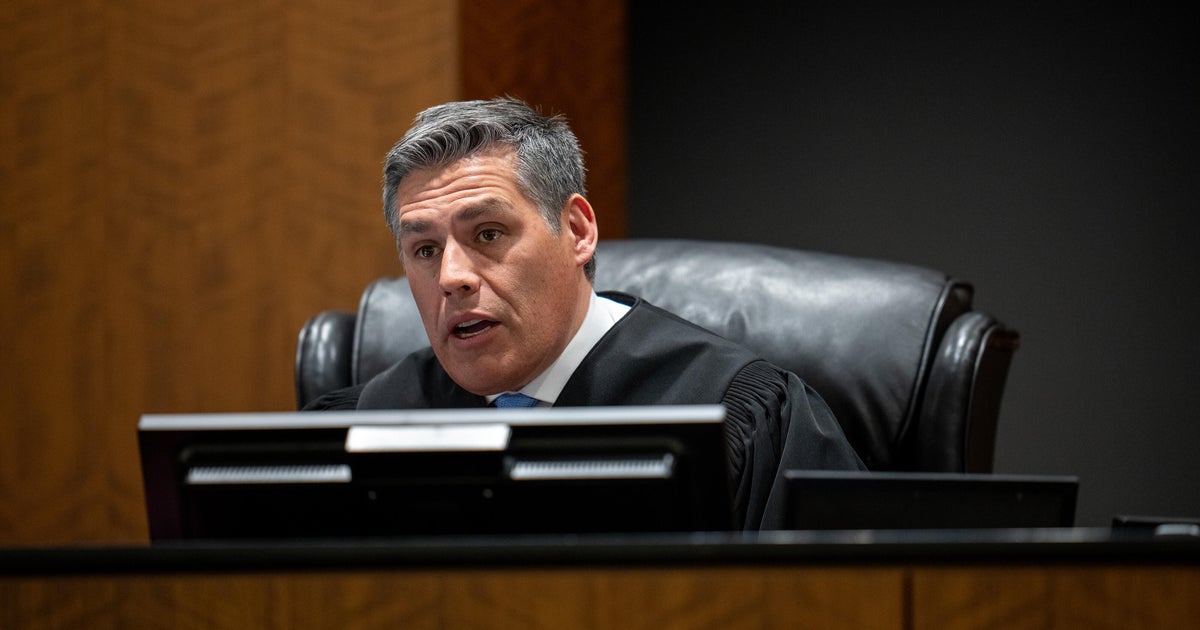
Instead, the court said it would use trial safeguards. Those could include additional jury questionnaires and a possible expansion of the jury pool. That matters because in a case with heavy public attention, jury selection can become as important as the evidence itself.
- Civil contempt
- A court finding that someone violated a court order, usually handled with a remedy designed to correct the problem.
- Pretrial publicity order
- A judge’s restriction on public comments that could affect a defendant’s right to a fair trial.
- Preliminary hearing
- A hearing where prosecutors must show enough evidence for the case to proceed toward trial. It is not a decision on guilt.
The next major step is Robinson’s preliminary hearing, scheduled for July 6 to 10. CBS News reported that the hearing will determine whether there is enough evidence to bring Robinson to trial.
Reactions & Responses
Graf said the public comments at issue created a real risk for the fairness of the proceedings, but he also signaled that the legal remedy had to match the violation.
Those additional public statements possessed a substantial likelihood of materially prejudicing the proceedings by communicating the prosecutor’s assessment of the defendant’s guilt.
In another part of the ruling, Graf said the court would not erase the death penalty option as a contempt sanction. KUTV reported that he called that remedy grossly disproportionate to the misconduct and legally unavailable in the civil contempt framework.
Fox News carried commentary from former federal prosecutor Andrew Cherkasky, who described the prosecution’s conduct as a correction rather than a gag order violation and predicted the judge would not accept the defense request. The final ruling partly matched that view on the death penalty, while still finding Ballard in contempt.
Putting It in Perspective
The ruling shows how quickly media attention can become part of the legal battlefield. The ballistics dispute was not just a technical fight over evidence; it became a fight over whether public statements could shape what future jurors believe before they enter a courtroom.
NBC News reported that Robinson is accused of firing a single round from a rooftop, striking Kirk as he debated with students at Utah Valley University. The killing drew national attention because Kirk was a high-profile conservative activist and co-founder of Turning Point USA.
For readers across the U.S., the case sits at the intersection of criminal law, political violence and courtroom transparency. The judge has allowed public access to key proceedings, while also limiting electronics in the courtroom for the July hearing to protect constitutional rights.
Looking Ahead
The death penalty remains available if Robinson is convicted, but that does not decide the outcome of the case. The immediate question is whether prosecutors can show probable cause at the preliminary hearing beginning July 6.
Graf has already ruled that Robinson’s former roommate and romantic partner will not have to testify in person at that hearing. Prosecutors intend to rely on a recorded interview, a handwritten note, text messages and other evidence, according to NBC News.
The contempt ruling also means jury selection will receive extra scrutiny if the case moves to trial. The court’s next decisions will shape what evidence is heard, how witnesses appear and how far the state can go in pursuing its case.
FAQ
Who is Tyler Robinson in the Charlie Kirk case?
Tyler Robinson is the 23-year-old man accused of killing Charlie Kirk at Utah Valley University in Orem on Sept. 10, 2025.
Did the judge remove the death penalty from the Charlie Kirk case?
No. Judge Tony Graf Jr. declined to block prosecutors from seeking the death penalty if Robinson is convicted.
Why was the prosecutor held in contempt?
The judge found that prosecutor Christopher Ballard violated a pretrial publicity order by commenting publicly on the strength of the state’s case.
When is Tyler Robinson’s preliminary hearing?
The preliminary hearing is scheduled to begin on July 6 and run through July 10.
Has Tyler Robinson entered a plea?
No. Multiple reports state that Robinson has not yet entered a plea.