
A staggering 90% reduction in protected federal land was ordered in Utah on Monday as the White House moved to strip monumental preservation boundaries from two of the nation's most contested public landscapes. President Donald Trump signed executive orders to drastically roll back the borders of Bears Ears and Grand Staircase-Escalante national monuments. The administration’s aggressive action eliminates protections for an area nearly the size of Connecticut, reviving a fierce decades-long legal and cultural battle over conservation, tribal sovereignty, and corporate resource extraction in the American West.
The Bottom Line
- President Donald Trump signed proclamations cutting Grand Staircase-Escalante National Monument by approximately 90% and Bears Ears National Monument by 91%.
- The combined acreage of the two monuments was reduced from over 3.2 million acres to less than 303,000 acres.
- Utah state officials and Republican leaders celebrated the decision as a critical victory for local land control and economic development.
- Native American tribal representatives and conservation groups condemned the decision, declaring it an illegal violation of the Antiquities Act and vowing immediate lawsuits.
- The downsized areas contain massive deposits of coal and uranium, which can now potentially be fast-tracked for extraction.
Breaking It Down
The executive action on Monday represents the second time Donald Trump has targeted these specific Utah landscapes. During his first term, Trump also reduced the boundaries of both monuments, only for President Joe Biden to restore them to their full size in 2021. This latest order reduces the grand total of protected acreage down to less than 303,000 acres, leaving the vast majority of the previously protected terrain open to potential commercial development.
Standing alongside Utah officials in the Oval Office, Trump framed the dramatic reduction as a return of power to local communities. "They took the land from the people quite honestly," Trump said during the signing ceremony. "We’re giving it back." Utah Governor Spencer Cox and the state’s congressional delegation applauded the decision, asserting that monument designations under the 1906 Antiquities Act must be limited to the smallest area compatible with protecting historic or scientific objects.
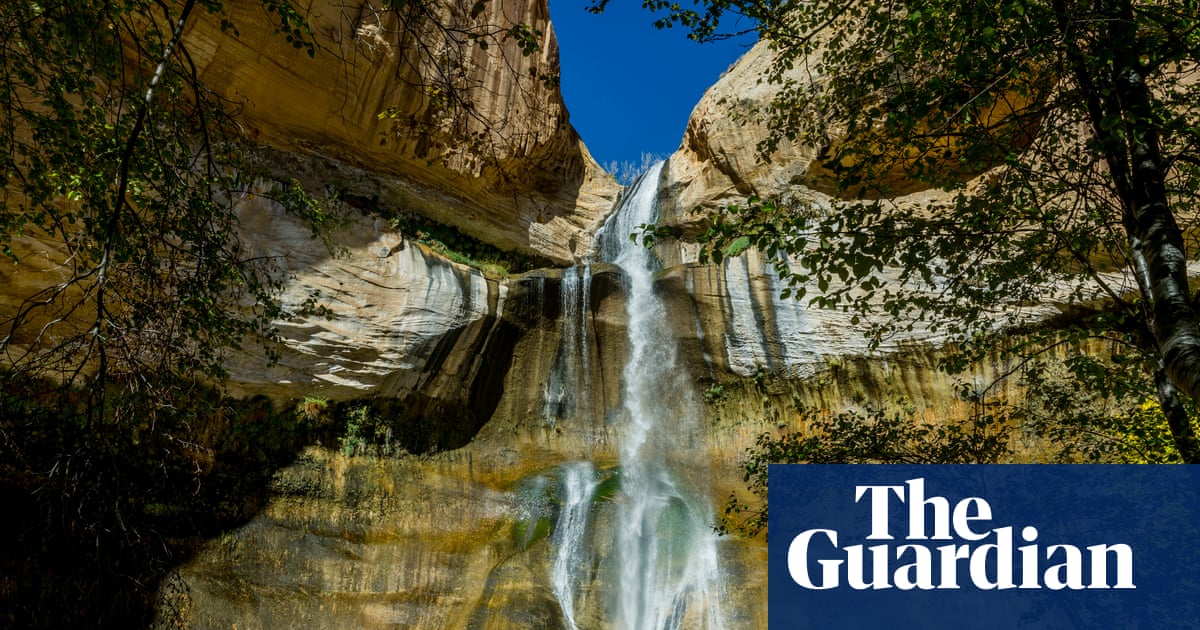
The physical landscape of southern Utah is rich in both ancient history and raw energy resources. Grand Staircase-Escalante, established by President Bill Clinton in 1996, holds significant coal reserves alongside a labyrinth of scenic canyons, arches, and petroglyphs. Bears Ears, established by President Barack Obama in 2016, is rich in uranium and copper deposits. The monument is famous for its ancestral cliff dwellings, burial sites, and objects of profound archaeological importance.
For Indigenous nations, the downsizing represents a severe betrayal of federal trust. Bears Ears was the first national monument established at the explicit request of tribal nations, honoring the regional heritage of the Navajo, Hopi, Zuni, Ute Mountain Ute, and Uintah-Ouray Ute tribes. A first-of-its-kind co-management agreement from early 2025 had previously allowed tribal leaders to work alongside federal agencies to manage the lands using traditional ecological knowledge.
Why This Matters
The implications of this move stretch far beyond the borders of Utah. By stripping monument protections, the administration is laying the groundwork to drastically accelerate drilling, mining, and logging on vast expanses of public lands. This aligns directly with a broader push to declare a national energy emergency and accelerate the permitting process for fossil fuel and mineral extraction across the western United States. The Bears Ears proclamation explicitly highlights the presence of copper and uranium, identifying them as critical to national security.
For residents and visitors across the United States, this decision highlights a stark divide in how public lands are valued. While state officials argue that "right-sizing" the monuments will make them more manageable and allow for multiple uses, conservationists warn of severe damage to native plants, wildlife habitats, and dark skies. Interestingly, public sentiment in Utah leans toward preservation; a 2024 poll indicated that nearly two-thirds of Utah voters supported maintaining the original boundaries, while a 2025 regional poll showed 82% in favor of keeping the monuments intact due to their positive impact on the local outdoor tourism industry.
From a Navajo perspective, Bears Ears is not simply a piece of federal public land. This is a living cultural site that holds our histories, our ceremonies, our traditional foods and medicines and our ancestors’ footprints.
What Comes Next
Legal challenges are already being mounted to halt the downsizing. Environmental law firms, including Earthjustice, have announced plans to file immediate litigation to block the executive orders, arguing that the Antiquities Act of 1906 allows a president to establish monuments but does not grant them the power to dismantle or shrink them. This will pit conservation groups and tribal coalitions against federal attorneys in a high-stakes court battle that could eventually land in the Supreme Court.
Simultaneously, the state of Utah is pursuing a separate lawsuit in the lower courts. After a recent appellate panel ruled that federal courts have the authority to review presidential monument designations, Utah continues to argue that the multi-million-acre boundaries of the Clinton and Obama eras violate federal law. This parallel legal warfare guarantees that the future of Bears Ears and Grand Staircase-Escalante will remain tied up in courtroom battles for months, if not years, to come.
- Antiquities Act of 1906
- A United States law that grants the president authority to unilaterally create national monuments on public lands to protect historic, scientific, or cultural resources.
- Co-stewardship
- An administrative agreement where federal agencies and local Native American tribal nations collaborate to jointly manage public lands and preserve cultural resources.
- Wilderness Study Areas
- Roadless, undeveloped areas of federal land managed to preserve their natural, wild state while Congress evaluates them for permanent wilderness designation.
Frequently Asked Questions
Why did President Trump shrink the Utah national monuments?
The administration downsized the monuments to expand domestic energy production, paving the way for mining and resource extraction. The decision also aligns with Utah state officials who argue the original boundaries represented federal overreach and locked up lands that should be open to multiple public and commercial uses.
Which monuments were affected and by how much?
Grand Staircase-Escalante National Monument was cut by roughly 90%, and Bears Ears National Monument was reduced by 91%. Their combined area fell from over 3.2 million acres to under 303,000 acres.
Why are these lands considered sacred to Native American tribes?
The Bears Ears region contains over 100,000 archaeological sites, ancestral villages, burial grounds, and rock art panels. It holds deep spiritual, ceremonial, and historical significance for five regional tribes, including the Navajo, Hopi, Zuni, Ute Mountain Ute, and Uintah-Ouray Ute.
Is it legal for a president to shrink national monuments?
This is the core of the legal dispute. Conservationists argue the Antiquities Act is a "one-way road" that only allows presidents to create monuments, not destroy or shrink them. However, proponents of the downsizing point to historical precedents where previous presidents have successfully reduced monument boundaries.
What resources are located within the downsized monument lands?
The areas removed from monument protections contain significant natural resource deposits, including large reserves of coal in Grand Staircase-Escalante and uranium and copper in the Bears Ears region.