
The Trump administration has implemented a sweeping array of policy changes aimed at slowing legal migration, removing traditional protections for noncitizen spouses of American citizens. These aggressive measures have introduced heightened scrutiny at permanent residency interviews and expanded the scope of deportation targets to include immediate family members who lack formal status.

The Full Story
For generations, marrying an American citizen provided a relatively straightforward legal avenue toward permanent residency and subsequent citizenship. However, recent executive strategies have fundamentally modified this dynamic, treating spouses of U.S. citizens with the same restrictive enforcement metrics applied to the general immigrant population. The administration has paused immigrant visas for individuals originating from 75 countries, forcing multiple mixed-status households into immense legal limbo.
The administrative shift centers on a policy memorandum issued by U.S. Citizenship and Immigration Services (USCIS) on May 21, 2026. This directive reclassifies "adjustment of status"—the domestic process of securing a green card without departing the United States—as an "extraordinary form of relief" rather than a routine statutory benefit. Adjudicating officers are now instructed to apply severe case-by-case discretion, weighing past visa overstays, unauthorized employment, and personal backgrounds before approving applications.
Concurrently, a new Department of Homeland Security interim final rule taking effect on July 10, 2026, escalates the stakes for administrative filing errors. Under this rule, USCIS possesses broader authority to reject or deny applications that omit valid signatures even after they have been accepted for standard processing. Furthermore, the agency will retain the steep filing fees in these instances, forcing applicants to completely restart the costly application cycle if a technical error occurs.
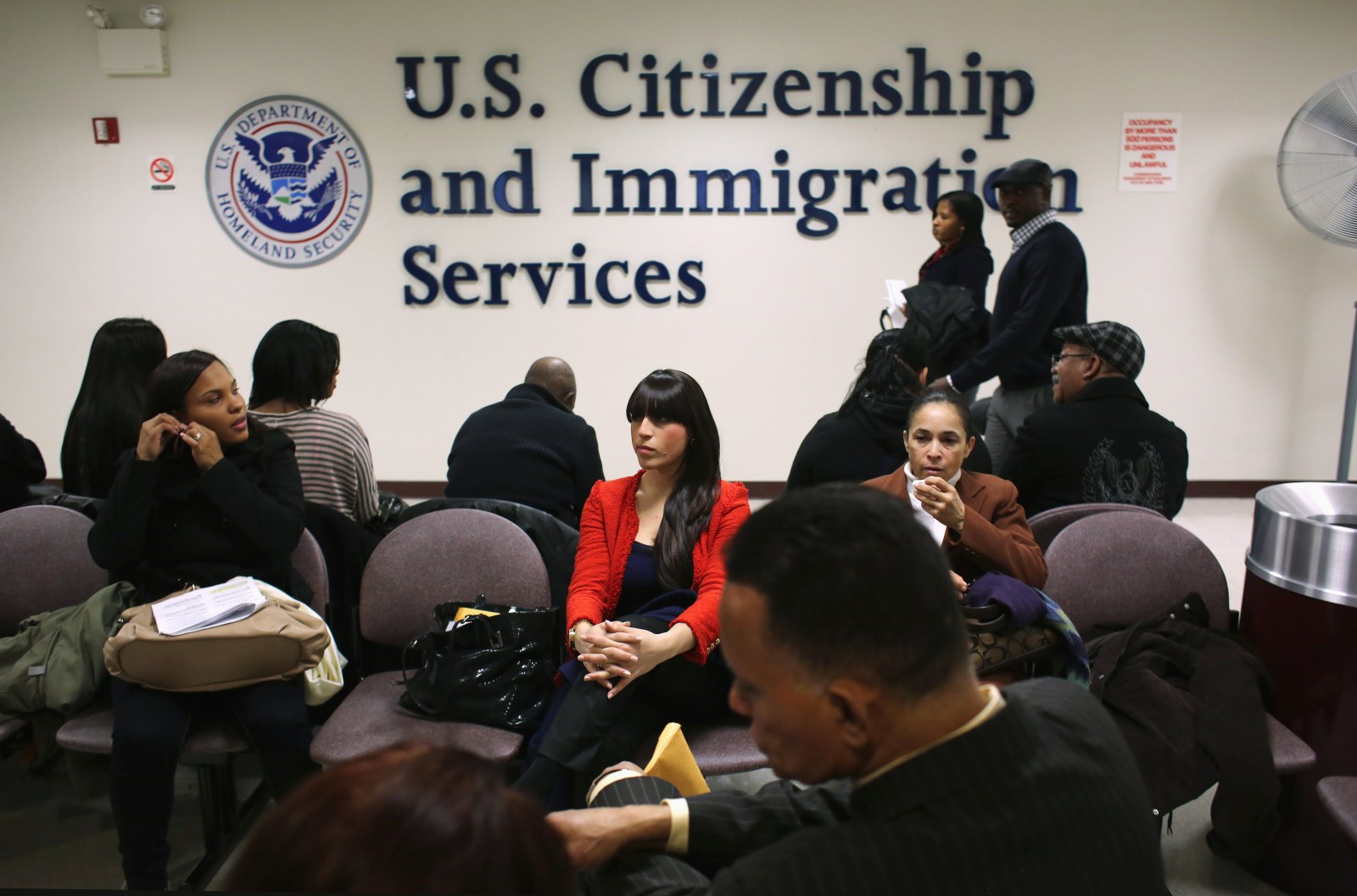
The policy ecosystem is generating significant anxiety across local communities, leading some individuals to exit the country voluntarily. Advocacy groups report that certain families choose to leave the United States out of fear of indefinite detention. Previously, immigration authorities prioritized other specific categories for enforcement, ensuring immediate family members remained largely insulated from domestic sweeps while their relative petitions were pending.
Central Figures
The operational framework and political opposition surrounding these updates involve several key national figures and agencies:
- Donald Trump: The U.S. President whose administration initiated the restrictive legal migration directives and requested financial institutions to review bank accounts of individuals lacking permanent status.
- Zach Kahler: The USCIS spokesperson who defended the rigorous identity verification protocols, emphasizing that an approved or pending Form I-130 petition does not confer legal status or guard an individual against deportation.
- Ashley DeAzevedo: Executive director of American Families United, an advocacy organization supporting 1.4 million individuals domestically and 300,000 people abroad navigating these sudden modifications.
- Sharvari Dalal-Dheini: Senior director of government relations at the American Immigration Lawyers Association, who detailed the loss of preferential status historically granted to citizen spouses under the law.
- Eric Welsh: A California-based immigration attorney who counsels clients on the discretionary hurdles and expanding evidentiary burdens related to "good moral character" reviews.
- Alex Padilla: The California U.S. Senator and Ranking Member of the Senate Judiciary Immigration Subcommittee who, alongside top Congressional Democrats like Dick Durbin, Jamie Raskin, and Pramila Jayapal, formally challenged the administration's policy memo.
The Data
Statistics provided by federal reporting highlight the immense scope of family-based immigration pathways within the American system:
- 343,000: The number of individuals who secured green cards through their American spouses in 2024, representing approximately 25% of all total green card approvals.
- 13 months: The average wait time for processing an immediate relative family petition, remaining constant with timelines recorded in early 2025.
- 167,401: Total immediate family relative petitions officially approved during the first quarter of the 2026 fiscal year.
- 8,612: Total fiancé petitions approved by USCIS during the same first-quarter window.
What This Means
The operational reality of these rules extends far beyond corporate or legal boardrooms, filtering into everyday American homes, real estate decisions, and local workforces. By instructing officers to view domestic green card applications as administrative grace rather than an intended right, the policy implicitly favors consular processing abroad. For long-term undocumented residents married to U.S. citizens, departing the country to attend an overseas consular interview can trigger multi-year reentry bars, effectively splitting families apart indefinitely.
Even active military personnel are grappling with these new processing speed bumps. One anonymous military spouse identified as Es, whose husband serves in the U.S. Army, reported that her pending citizenship application has been entirely stalled by the country-specific travel bans, despite a federal judge declaring the pause unlawful. The family was forced to delay a mandatory military relocation to Germany from July until October as they attempt to resolve her legal standing, directly complicating domestic real estate and military readiness.
- Adjustment of Status
- The statutory immigration process allowing eligible noncitizens already residing inside the United States to apply for lawful permanent residence without leaving the country.
- Consular Processing
- The alternative pathway where an immigrant visa applicant completes their final paperwork and interviews at a U.S. embassy or consulate located in a foreign country.
- Form I-130
- The Petition for Alien Relative used by a U.S. citizen to legally establish a valid family relationship with a foreign-born spouse, which does not by itself grant legal status or work authorization.
What to Expect
The tightening of legal migration channels will see immediate escalations as the calendar turns. The stricter signature rule officially launches on July 10, 2026, empowering USCIS to reject flawed paperwork on the spot. The current allocation caps and final action chart limits are confirmed to stay active through September 30, 2026, marking the conclusion of the federal fiscal year. A fresh supply of visas will unlock on October 1, 2026, though immigration lawyers advise couples to seek legal counsel prior to filing or making any international travel plans.
Frequently Asked Questions
Can you still get a green card through marriage to a U.S. citizen?
Yes. The legal pathway itself has not been erased by Congress. U.S. citizens can still file a Form I-130 petition for their foreign-born spouses, but the subsequent application steps face much higher scrutiny and longer domestic reviews.
What is the new USCIS signature rule taking effect in July?
Beginning July 10, 2026, an interim final rule grants USCIS the authority to completely reject or deny applications that lack valid signatures. The agency can deny these cases even after accepting them for processing and will keep the filing fees.
Why are immigration lawyers warning against traveling for consular interviews?
If an undocumented spouse currently living inside the U.S. leaves the country for an interview at an overseas consulate, their departure can automatically trigger legal reentry bars. This can leave them stuck outside the country for years without an approved waiver.
Does a pending family petition protect someone from deportation?
No. USCIS officials have explicitly stated that a pending or approved Form I-130 does not confer legal immigration status. Individuals who overstayed visas or entered without inspection remain subject to domestic immigration enforcement actions.