
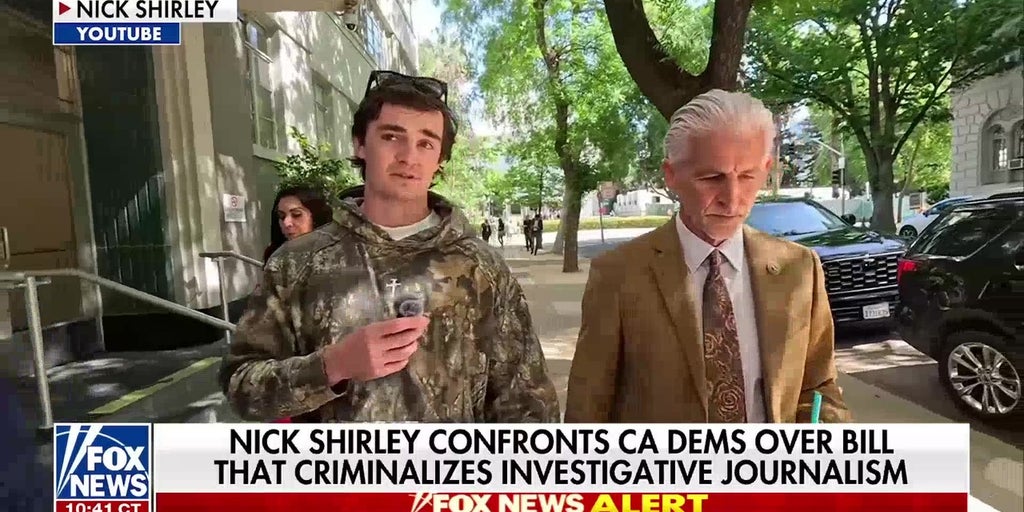
One hundred thousand dollars. That is the staggering potential fine being floated in California's latest legislative push, a move critics argue would effectively silence independent journalists and digital creators. YouTuber Nick Shirley is at the center of this firestorm, warning that the proposed bill isn't about safety—it's about protection for those in power.
The Bottom Line
- The proposed California bill, AB 2624, seeks to criminalize certain forms of 'deceptive' digital reporting.
- Influencer Nick Shirley claims the bill is a direct response to his viral videos exposing government fraud and corruption.
- Critics call it a 'chill bill' designed to protect political figures like Attorney General Rob Bonta and his wife, Mia Bonta.
- The legislation could impose heavy fines and even criminal charges on those who record and share investigative content deemed 'misleading' by state standards.
Breaking It Down
The controversy ignited when Nick Shirley, known for his gritty, on-the-ground reporting of immigrant fraud and public assistance abuse, began appearing on national news to decry AB 2624. He argues that his lens has captured things the mainstream media refuses to touch—and the establishment is feeling the heat. According to Shirley, the bill’s language is intentionally broad, allowing the state to gatekeep what constitutes 'legitimate' journalism.
Central to this debate is the role of Mia Bonta, a California Assemblywoman and wife of the state's Attorney General. Recent reports have highlighted a perceived conflict of interest, suggesting the bill would shield her husband’s office from public scrutiny. Shirley’s videos often document individuals admitting to fraudulent activities on camera, a practice this bill could potentially outlaw as 'non-consensual' or 'deceptive' under specific new legal frameworks.

The pushback isn't just coming from YouTubers. Major editorial boards and legal experts are weighing in, questioning if California is attempting to redefine the First Amendment. They argue that by 'protecting' against fraud, the state might actually be protecting the perpetrators of fraud by making it illegal to film them in the act. It creates a classic catch-22: you can't expose a crime if the act of recording it becomes a crime itself.
This bill is about one thing: making sure people don't see what's actually happening on our streets and in our government offices.
Why This Matters
For Americans, this isn't just a California problem; it’s a blueprint for digital censorship. If AB 2624 passes, it sets a precedent that state governments can regulate 'independent journalism' (the practice of reporting outside traditional corporate media structures) by labeling it as misinformation or harassment. This could fundamentally change how you consume news on platforms like YouTube or X.

In a world where citizen journalism often breaks stories before the 6 o'clock news even wakes up, this bill acts as a digital fence. The writing is on the wall: if the public's right to record in public spaces is curtailed, the accountability of public officials and the transparency of government-funded programs will likely evaporate. People in the US should be concerned about the 'chilling effect'—where reporters stop investigating out of fear of legal retaliation.
What Comes Next
The bill is currently moving through committee hearings where public testimony is expected to be heated. KMPH has launched a public poll asking residents if they believe the bill is for protection or suppression, reflecting the deep divide in the community. Advocacy groups are expected to file challenges based on the First Amendment if the bill reaches Governor Gavin Newsom's desk for a signature.
FAQ
What is California bill AB 2624?
It is a proposed law that aims to regulate digital content, specifically targeting videos that the state deems deceptive or harmful, though critics say it targets investigative journalism.
Who is Nick Shirley?
Nick Shirley is a popular YouTuber and independent journalist who has gained notoriety for exposing government fraud and documenting issues surrounding immigration and public policy.
How would this bill affect regular social media users?
If you record a video in public that documents a crime or official misconduct, you could potentially face fines or legal action if the state decides the video was edited or captured 'deceptively.'
Why are the Bontas involved in this story?
Assemblywoman Mia Bonta is a lead supporter of the bill, and critics argue the law would prevent journalists from investigating her husband, Attorney General Rob Bonta.