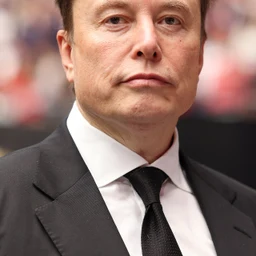
One election loss was enough to trigger a public rebuke from President Donald Trump. After Republican Texas Gov. Greg Abbott conceded defeat to Democrat Gina Hinojosa on November 3, Trump branded him a “RINO” on Truth Social, blaming Abbott's political decisions for the upset. The exchange adds another layer of tension to an extraordinary election night that saw Democrats reclaim Texas's governorship for the first time since 1995.

The Result
Democratic state Rep. Gina Hinojosa defeated three-term Republican Gov. Greg Abbott, ending his bid for a fourth term, according to the Associated Press. NBC News projected Hinojosa as the winner, making her the first Democratic governor of Texas since Ann Richards left office in 1995.
The result was particularly striking because Abbott's campaign had spent tens of millions of dollars more than Hinojosa's. Abbott had initially appeared positioned to secure another term in a state that had been a Republican stronghold for decades.
The available election reports do not provide a verified final vote margin or statewide turnout figure, so those numbers should not be confused with projections or preliminary estimates. The political significance, however, was already clear: Republicans lost control of the governor's office after more than three decades.
Democrats also celebrated another major Texas victory. James Talarico defeated Ken Paxton to become the first Democrat elected to the U.S. Senate from Texas in nearly four decades, according to CNBC.
How the Vote Unfolded
Hinojosa's victory reflected a changing political environment rather than a single campaign issue. NBC News pointed to changing demographics, growing Republican difficulties and personal scandals surrounding several GOP candidates as factors that contributed to the outcome.
Latino voters were an important part of Hinojosa's campaign strategy. They make up around one-third of Texas's electorate, and the Democratic candidate connected with voters through bilingual television advertisements and Spanish-language town halls. Hinojosa, who speaks Spanish fluently and was born and raised in the Rio Grande Valley, made an effort to reach communities that could influence the statewide result.
Rural voters also became a point of difficulty for Abbott. His previous support for data center development generated friction in communities concerned about the industry's expansion. Texas already has more than 500 data centers, making it the second-largest state for such facilities, according to NBC News.

The result also produced an unusually visible public celebration. More than 100 people gathered at the Texas Capitol in Austin after Hinojosa and Talarico claimed victory. The Texas Tribune reported that students, teachers and longtime Democratic supporters joined the crowd, with celebrations continuing past midnight.
For some younger Texans, the outcome represented their first experience of a Democratic statewide victory. The atmosphere illustrated how dramatically the political mood had shifted among at least some voters and communities.
Who Won and Why
Hinojosa built her campaign around issues that extended beyond traditional party messaging. Education funding, school performance, household costs and the expansion of data centers featured prominently in her appeal.
She also promised to replace Texas Education Agency Commissioner Mike Morath and criticized Abbott's approach to education. Before entering the state Legislature in 2016, Hinojosa worked as a civil rights and labor lawyer. Her interest in education policy was shaped partly by her efforts to prevent her son's elementary school from closing because of state budget cuts.
Abbott, meanwhile, attacked Hinojosa over her previous positions on transgender female athletes and gender-affirming care for minors. His campaign characterized her as too liberal, while Hinojosa repeatedly redirected attention toward the financial pressures facing working Texans.
Another major dividing line was the relationship between politicians and wealthy corporate interests. Hinojosa criticized Abbott's support for data center construction, arguing that his decisions favored billionaire donors over Texas communities.
CNBC reported that Elon Musk spent record amounts supporting Republican candidates during the election cycle, including in Texas. The broader Republican losses also affected prominent Trump-backed candidates in several states, including Ken Paxton and Jon Husted.

What It Means for Policy and Power
Trump's RINO accusation is significant because it places Abbott's defeat within a wider Republican debate about loyalty, political strategy and responsibility for election losses. RINO stands for “Republican in name only,” a political insult used to question whether someone represents the party's conservative identity.
In his Truth Social post, Trump argued that Abbott would not have lost if he had not become a RINO during the final six months of his political life. He followed that criticism by saying he intended to become a political pundit and discuss why candidates won or lost.
The accusation also creates a contrast between Trump's interpretation of the defeat and the issues highlighted in reporting about the campaign. NBC News identified education, changing demographics and concerns about data centers as important factors, while CNBC reported widespread voter frustration with rising prices, corruption and the direction of the country.
Hinojosa will enter office facing a Republican-controlled Texas Legislature. That division could make implementing her campaign promises difficult, even though the governor has substantial authority over state agencies and executive orders.
Her proposed priorities include a pause on new data center projects, increased teacher pay, changes to education leadership, electricity-rate measures and temporary suspension of gas and diesel taxes. A proposed $1,500 payment to Texans from state savings was also part of her platform.
These proposals will face different political and legal requirements. For example, replacing the education commissioner involves Senate approval, while legislation generally requires cooperation from both legislative chambers. A governor can veto legislation, but lawmakers can override a veto with a two-thirds majority in both chambers.
What Happens Next
The immediate political transition will determine how much of Hinojosa's agenda can become policy. Her campaign has emphasized executive orders as an early tool, but the Republican majorities in the Texas House and Senate will remain a significant obstacle to broader legislative changes.
The education commissioner's position could provide an early test. NBC News reported that Morath's term expires in January, potentially giving Hinojosa an opportunity to nominate a replacement relatively quickly. However, the Texas Senate must approve the nominee by a two-thirds vote, making bipartisan support necessary.
Another test will involve data center development. Abbott had already directed state agencies to pause certain permit approvals while the effects of these facilities on Texas's electricity grid were examined. Hinojosa's proposed broader restrictions could therefore become an early point of conflict between the governor's office, industry representatives and Republican lawmakers.
Trump's criticism adds a separate national political dimension. Abbott's loss is part of a wider set of Democratic victories that CNBC reported included control of Congress and several important Senate races. The president's response suggests that the Republican losses are already generating internal arguments over campaign strategy and political accountability.
For Texans, the immediate question is whether the change in the governor's office will translate into lower household costs, stronger education funding and a different approach to major infrastructure projects. For Republicans, Abbott's defeat and Trump's public criticism create difficult questions about the party's direction heading into the next political cycle.
Frequently Asked Questions
Why did Donald Trump call Greg Abbott a RINO?
Trump accused Abbott of abandoning his political approach during the final six months of his political life and suggested that this contributed to his defeat. RINO means Republican in name only.
Who defeated Greg Abbott in the 2026 Texas governor election?
Democrat Gina Hinojosa defeated Abbott, ending his attempt to win a fourth term and becoming Texas's first Democratic governor since 1995.
When did Greg Abbott lose the Texas governor's race?
Abbott conceded to Hinojosa on November 3, 2026, following the midterm election.
Will Gina Hinojosa have a Democratic-controlled Texas Legislature?
No. Republicans are expected to retain control of both the Texas House and Senate, creating a divided state government.
What policies does Gina Hinojosa want to introduce?
Her campaign priorities include increased teacher pay, education leadership changes, a pause on new data centers, electricity-rate measures and temporary gas and diesel tax relief.