
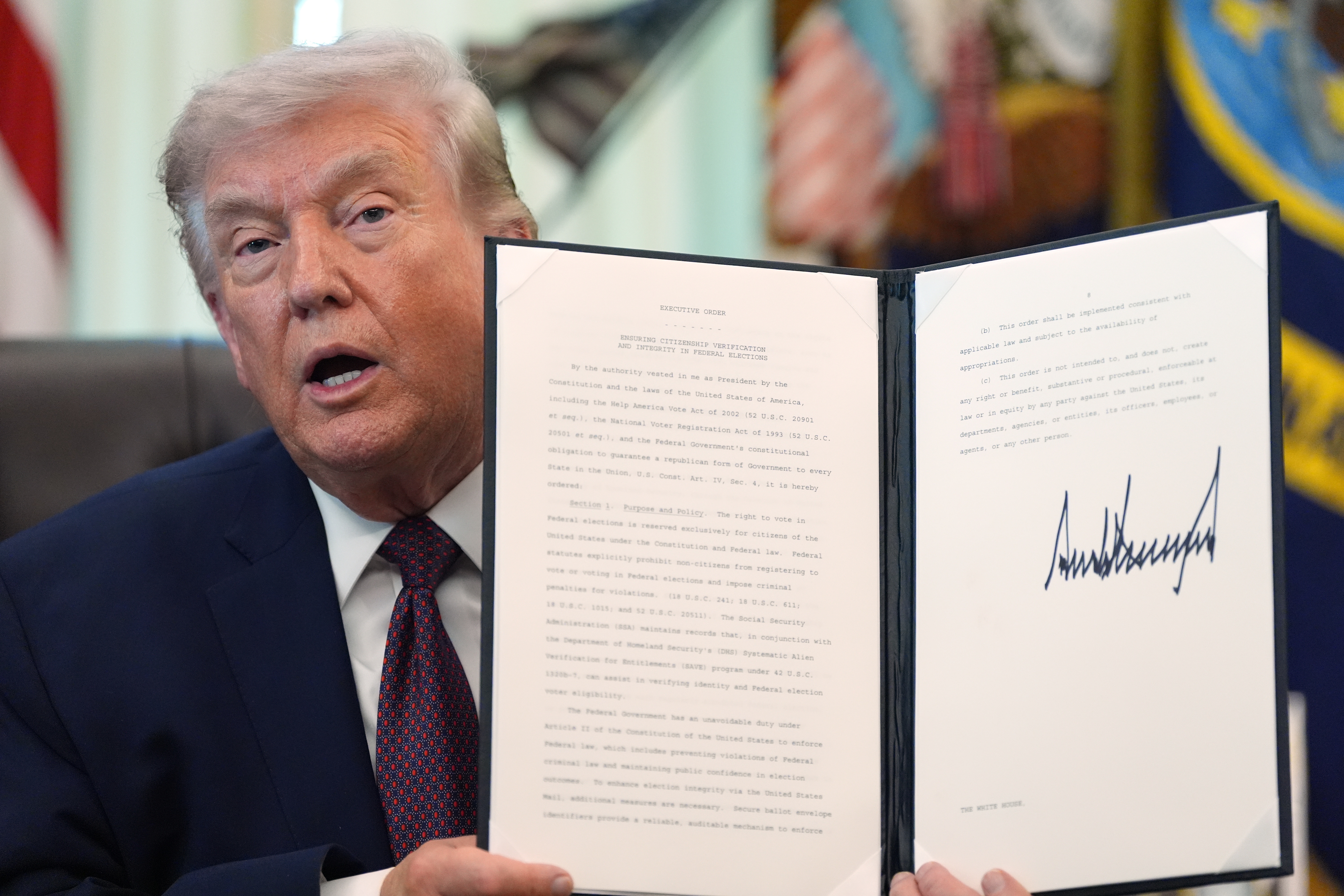
The first legal test of President Donald Trump’s executive order targeting mail-in voting just landed — and the White House scored an early win. A federal judge in Washington declined to immediately block the order, allowing parts of the administration’s election overhaul effort to move forward while lawsuits continue to unfold.
The ruling does not instantly change how Americans cast ballots in the 2026 midterms. But it signals that the fight over mail voting, voter registration databases, and federal election authority is far from over. If you have been following election policy battles since 2020, this feels like another chapter in a political tug-of-war that refuses to cool down.
Meanwhile, state election officials from both parties are already bracing for months of legal uncertainty.
What We Know So Far
The executive order signed by Trump seeks to tighten rules surrounding mail ballots and direct federal agencies toward building a national voter list system. Supporters inside the administration argue the move is designed to improve election security and standardize voting practices across the country.
Critics see something very different. Voting-rights organizations and Democratic officials argue the order pushes beyond presidential authority and risks creating confusion ahead of the 2026 elections. Several lawsuits were filed almost immediately after the order was announced.
A federal judge in Washington, D.C., refused to grant an emergency request to block the order while the broader constitutional challenge moves through court. That decision means the administration can continue implementation efforts for now, although the underlying case is still alive.

One major issue centers on mail ballots arriving after Election Day. Some states currently count ballots postmarked before Election Day even if they arrive later. Trump’s order attempts to pressure states and federal agencies toward stricter deadlines.
Another flashpoint is the proposed national voter list. Election experts say creating a centralized system would raise legal and logistical questions because states traditionally manage voter rolls independently. That’s where the rubber meets the road in this debate: how much authority the federal government really has over elections run by states.
The timing matters too. Midterm campaigns are already ramping up, and election administrators typically avoid major procedural changes close to voting periods. Some legal scholars believe courts may eventually narrow parts of the order even if they do not fully strike it down.
What’s interesting is how familiar this all sounds. Since the pandemic-era expansion of mail voting in 2020, disputes over ballot deadlines, voter ID requirements, and election oversight have become recurring political battlegrounds nationwide.
Voices & Opinions
Republican allies of the president praised the ruling as an early victory for election integrity efforts.
The court recognized there was no basis for emergency intervention at this stage.
Voting-rights advocates pushed back hard, warning that the decision was procedural rather than final.
This does not settle the legality of the executive order.
State election officials are also watching carefully because implementation could affect how ballots are processed and verified. Some county administrators worry new federal guidance arriving close to election season could complicate already stretched election operations.
Read the federal court coverage here. You can also review details on the ongoing legal battle.
Local Impact
For voters across the United States, the immediate reality is simple: existing voting rules remain largely unchanged for now. Americans can still follow the ballot procedures already established in their home states.
Still, the political and legal uncertainty could affect how states prepare for the midterms. Election offices may face new administrative costs, updated ballot procedures, or additional lawsuits as the case moves forward.

If you vote by mail regularly, especially in states with flexible ballot deadlines, you might be wondering whether anything changes immediately. Right now, the answer is no. But election experts say voters should pay close attention to official guidance closer to November 2026.
The ball is now in the courts’ hands, and the outcome could shape election procedures for years.
Coming Up
Additional hearings are expected later this year as courts weigh whether the executive order exceeds presidential authority. Legal observers expect appeals regardless of how lower courts rule.
Congressional Democrats are also discussing legislative responses, while Republican officials continue defending tighter mail-ballot standards ahead of the midterms.
Election-related court updates are expected throughout the summer.
At a Glance
- A federal judge declined to immediately block Trump’s mail voting executive order.
- The order targets mail-ballot deadlines and proposes a national voter list effort.
- Current voting procedures for the 2026 midterms remain mostly unchanged for now.
- Voting-rights groups and Democratic officials continue challenging the policy.
- More court hearings and potential appeals are expected later this year.
- Election administrators warn legal uncertainty could complicate preparations.
FAQ
What does Trump’s executive order on mail voting do?
It seeks to tighten mail-ballot rules and encourage creation of a national voter registration system.
Did the judge fully approve the executive order?
No. The judge only refused to block it immediately while lawsuits continue.
Will mail voting change before the 2026 midterms?
For now, existing state voting rules still apply.
Can presidents control state election systems?
States traditionally oversee elections, which is central to the legal dispute.
Why are voting-rights groups challenging the order?
They argue the administration exceeded federal authority and could restrict voter access.
What should voters do now?
Follow guidance from state election officials and watch for updates closer to Election Day.