
Seats reserved for the U.S. delegation emptied as France began speaking inside the U.N. Security Council chamber. The brief walkout turned a dispute over human rights into a public rupture between two longtime allies. U.S. diplomats said the protest would continue during French remarks until Paris withdrew language they called condescending and disrespectful.
The Story at a Glance
The confrontation began after the United States voted against giving U.N. human rights chief Volker Türk another four-year term. The General Assembly approved the extension by 144 votes to 10, with 13 abstentions, and France publicly criticized Washington for joining countries including North Korea and Russia in opposition.
France's U.N. mission wrote that the United States was no longer a beacon of human rights. U.S. Ambassador Mike Waltz answered that France had backed an official who, in his view, criticized democracies while treating authoritarian governments too gently. The dispute then moved from social media to the Security Council, where the U.S. delegation left during France's turn to speak.
The walkout reported by AP was brief, but the message was unusually direct: Washington was willing to use a formal U.N. meeting to register anger at an ally.
How the Story Developed
On Friday, the General Assembly backed Türk's second term. The United States was among the 10 countries voting no. France's mission in Geneva then posted a sharp response, saying Washington stood isolated beside North Korea, Nicaragua, Mali and Russia.
Waltz replied on X, accusing France of supporting a rights chief who had criticized the United States, the United Kingdom and Israel. By Monday, the dispute had escalated. As French diplomats took the floor during a Security Council session on Ukraine, U.S. representatives walked out.

Deputy U.S. Ambassador Dan Negrea returned and delivered Washington's explanation. He accused France of “disingenuous grandstanding” and said the U.S. would not listen to French remarks until Paris changed its tone. France's ambassador, Jérôme Bonnafont, did not directly address the walkout. He instead emphasized France's historical alliance with the United States and its support for the U.N.'s work on peace, security and human rights.
Key People and Details
Volker Türk sits at the center of the dispute. As the U.N.'s top human rights official, his role includes criticizing member states over alleged violations. The supplied reports say he has condemned Russia's invasion of Ukraine, Israel's conduct in Gaza and aspects of U.S. immigration enforcement.
Mike Waltz framed the vote as a challenge to what he sees as selective criticism inside the U.N. Dan Negrea turned that disagreement into a diplomatic protest inside the council chamber. Bonnafont, speaking for France, chose not to answer the walkout directly.
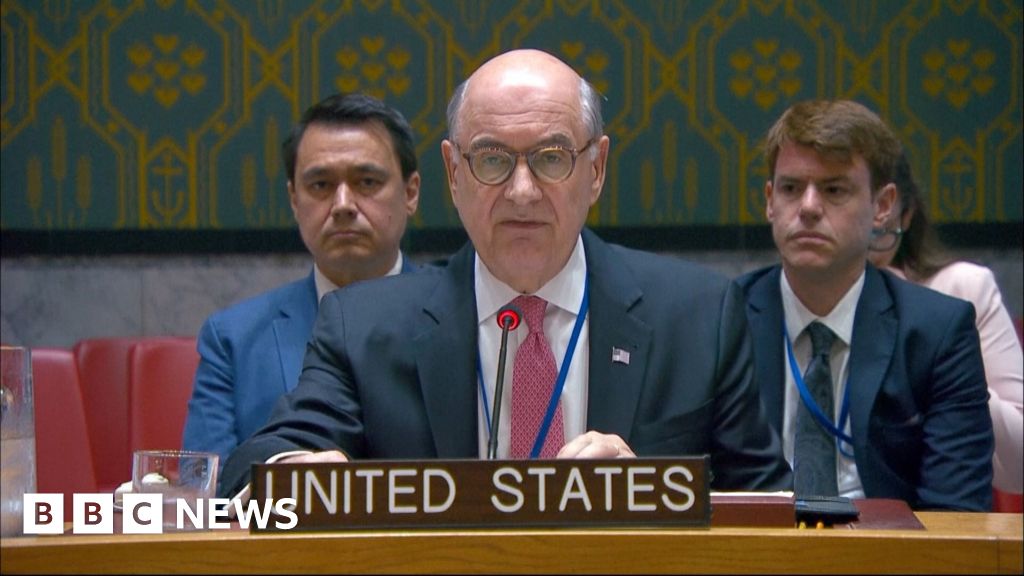
The vote margin matters because it shows how isolated the U.S. position was on Türk's reappointment. Only 10 countries opposed the extension, while 144 supported it. That imbalance gave France a basis for its criticism, but the comparison with authoritarian governments made the exchange far more personal.
Reaction and Response
The US used to be a beacon of human rights. Not anymore.
Washington rejected that framing. Negrea said the United States remained a “beacon of liberty” and accused France of politicized rhetoric. The France 24 account added that a U.N. spokesperson declined to comment on the walkout while saying member states were expected to respect the General Assembly's decision.
The clash also lands amid wider strains between Washington and European governments over NATO spending, troop deployments, trade, Greenland and the war involving Iran. Those disputes did not cause the walkout by themselves, but they made a fight over one U.N. vote harder to contain.
What to Watch
The immediate question is whether the U.S. follows through on its threat to keep leaving during French statements. A second walkout would turn a one-day protest into a recurring tactic inside the Security Council.
Another point to watch is whether France softens or defends its public language. Neither side has announced a reconciliation, and the supplied reports do not identify any planned meeting to resolve the dispute. The episode may also shape how Washington approaches U.N. funding and future cooperation with the human rights office.
Frequently Asked Questions
Why did U.S. diplomats walk out of the U.N. meeting?
They were protesting France's criticism of the U.S. vote against extending Volker Türk's term as U.N. human rights chief.
What did France say about the United States?
France's U.N. mission said the U.S. was no longer a beacon of human rights and compared its vote with those of countries including North Korea and Russia.
How did the U.N. vote on Volker Türk?
The General Assembly approved his second four-year term by 144 votes to 10, with 13 abstentions.
Did France respond to the walkout?
Ambassador Jérôme Bonnafont did not directly mention it. He spoke instead about the U.S.-France alliance and France's support for the U.N.
What could happen next?
The U.S. said it could continue walking out during French remarks unless Paris withdraws what Washington calls disrespectful rhetoric.