
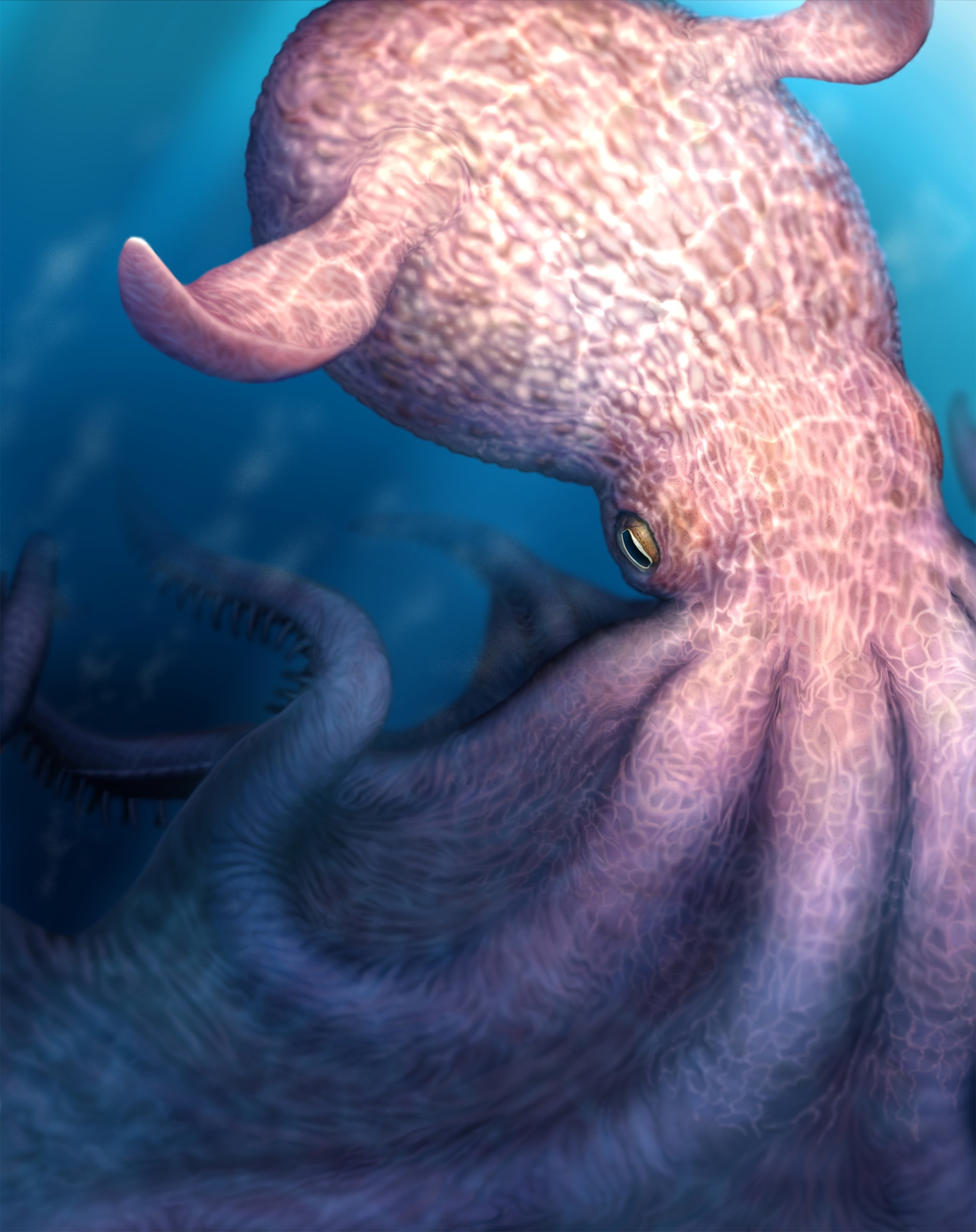
It turns out that the legendary Kraken might not have been a myth after all—it was just waiting to be dug up. Imagine a creature longer than a school bus, with a grip that could crush prehistoric marine reptiles, lurking in the very oceans where dinosaurs once swam. For those of us who grew up fascinated by the mysteries of the deep, this discovery is a jaw-dropping reminder that the real world often beats fiction.
Context & Background
For decades, paleontologists believed that while the Cretaceous period was home to massive marine reptiles like Mosasaurs, octopuses were relatively small players in the oceanic food chain. Because octopuses are soft-bodied, they rarely leave behind fossils, making their evolutionary history a bit of a black box for scientists. Most of what we knew came from rare imprints or tiny beak fragments that suggested modest sizes.
However, new research into jaw fossils found in Japan and Europe has completely flipped that script. These aren't just any fossils; they are massive chitinous beaks that indicate a cephalopod of truly monstrous proportions. It’s like finding a needle in a haystack, only the needle is the size of a broadsword. This discovery fills a massive gap in our understanding of how life in the oceans functioned 100 million years ago.
Here's What Happened
A global team of researchers recently unveiled evidence of a giant octopus that reached lengths of up to 19 meters (over 60 feet). To put that in perspective, that is roughly the length of two standard city buses parked end-to-end. The study, published this week, describes these creatures as "apex predators" that would have rivaled the most terrifying dinosaurs of the sea.
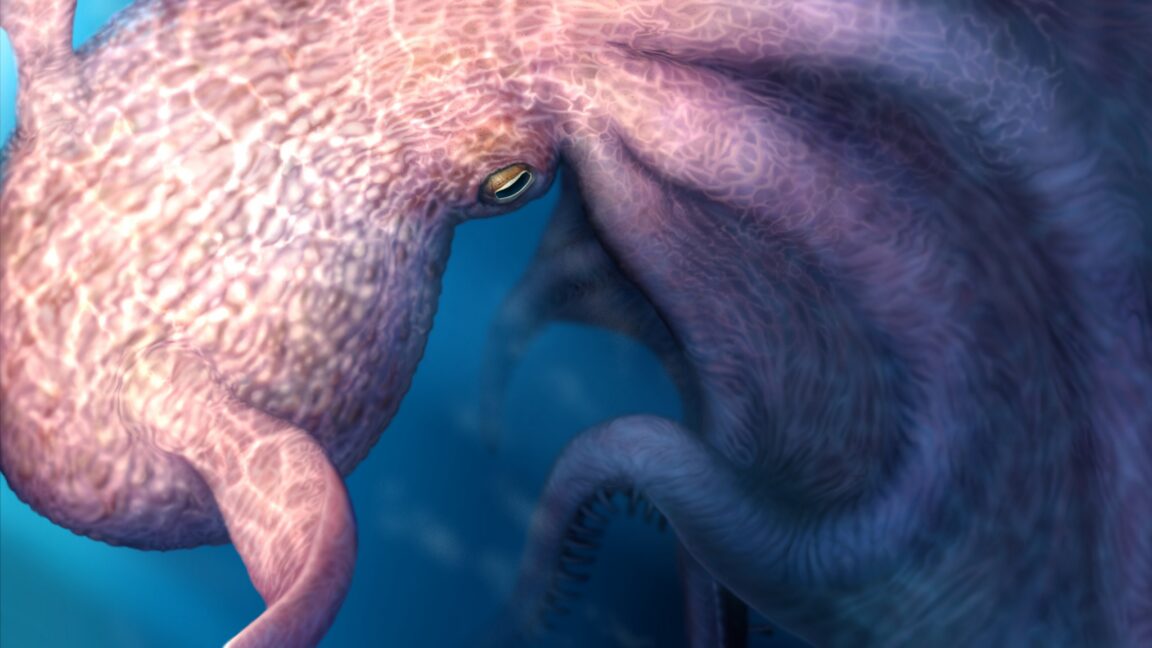
The evidence comes from fossilized lower jaws that are significantly larger than any previously recorded. By comparing these fossils to the anatomy of modern-day octopuses, scientists were able to estimate the total body mass and length. These creatures didn't just hide in crevices; they were actively hunting. They were the masters of their domain.
What's truly fascinating is the sheer power these animals possessed. Analysis suggests their beaks were capable of exerting immense pressure, enough to crunch through the bones and shells of large prey. If you're following the timeline, these giants thrived during the mid-Cretaceous, a time of extreme warmth and high sea levels that created vast, shallow seaways perfect for giant predators.
"This discovery reveals a 'hidden' apex predator that lived in the shadow of the more famous marine reptiles, but was likely just as formidable."
The Response
The scientific community is buzzing, but there’s also a healthy dose of awe. Many experts are noting that this find changes the "underdog" narrative of cephalopods. Instead of being the prey that hid from the big guys, they were likely the ones doing the chasing. "We’ve always known octopuses were smart," noted one marine biologist not involved in the study, "but we didn't know they were this big and this dominant so early in their history."
Public reaction has been equally intense, with the "Kraken" label trending across social media. It taps into a deep-seated human fear and fascination with what lies beneath the waves. While these 19-meter giants are long extinct, the fact that they existed at all makes the modern giant octopus look like a literal shrimp by comparison.
The Bigger Picture
What does this mean for us today? Beyond just being a cool "dino-era" fact, it helps scientists model how ecosystems react to climate change. The Cretaceous was a greenhouse world; understanding how these massive predators evolved and eventually disappeared provides clues about how today’s shifting ocean temperatures might impact modern marine life.
For those interested in deep-sea exploration, this discovery is a push to keep looking. If a 60-foot monster could stay hidden in the fossil record for 100 million years, what else is waiting to be found in the unexplored 80% of our modern oceans?
The Road Ahead
Museums in Japan and the US are already coordinating to bring these fossil casts to the public. Expect a surge in "Cretaceous Kraken" exhibits later this year. Meanwhile, paleontologists are heading back to the sites where these beaks were found, hoping to find more than just jaws—perhaps even a rare skin impression or a fossilized tentacle hook.
Frequently Asked Questions
Is the 60-foot octopus still alive today?
No, this specific giant species, often referred to as a "Cretaceous Kraken," has been extinct for millions of years. Modern giant Pacific octopuses are much smaller, usually reaching about 15 to 30 feet in arm span.
How do scientists know how big it was from just a beak?
Scientists use a method called allometric scaling. By measuring the beaks of modern octopuses and comparing them to their total body size, they can create a mathematical ratio to estimate the size of prehistoric species based on their fossilized beaks.
Did these octopuses eat dinosaurs?
While they didn't hunt land dinosaurs like T-Rex, they certainly would have preyed on marine reptiles that lived alongside them, and potentially any smaller dinosaurs that ended up in the water.
Where were these fossils found?
The primary jaw fossils used in the recent study were discovered in geological formations in Japan and parts of Europe, dating back to the mid-Cretaceous period about 100 million years ago.