
Four astronauts, two commercial lunar landers and one Orion spacecraft are now at the center of NASA’s reshaped Artemis III mission. The crew announced Tuesday will not attempt a lunar landing; instead, it will spend about two weeks in low-Earth orbit testing the docking moves NASA says future moonwalkers will depend on. That makes Artemis III less like a victory lap after Artemis II and more like a pressure test for the machinery that could carry astronauts to the lunar South Pole in 2028.
The Bottom Line
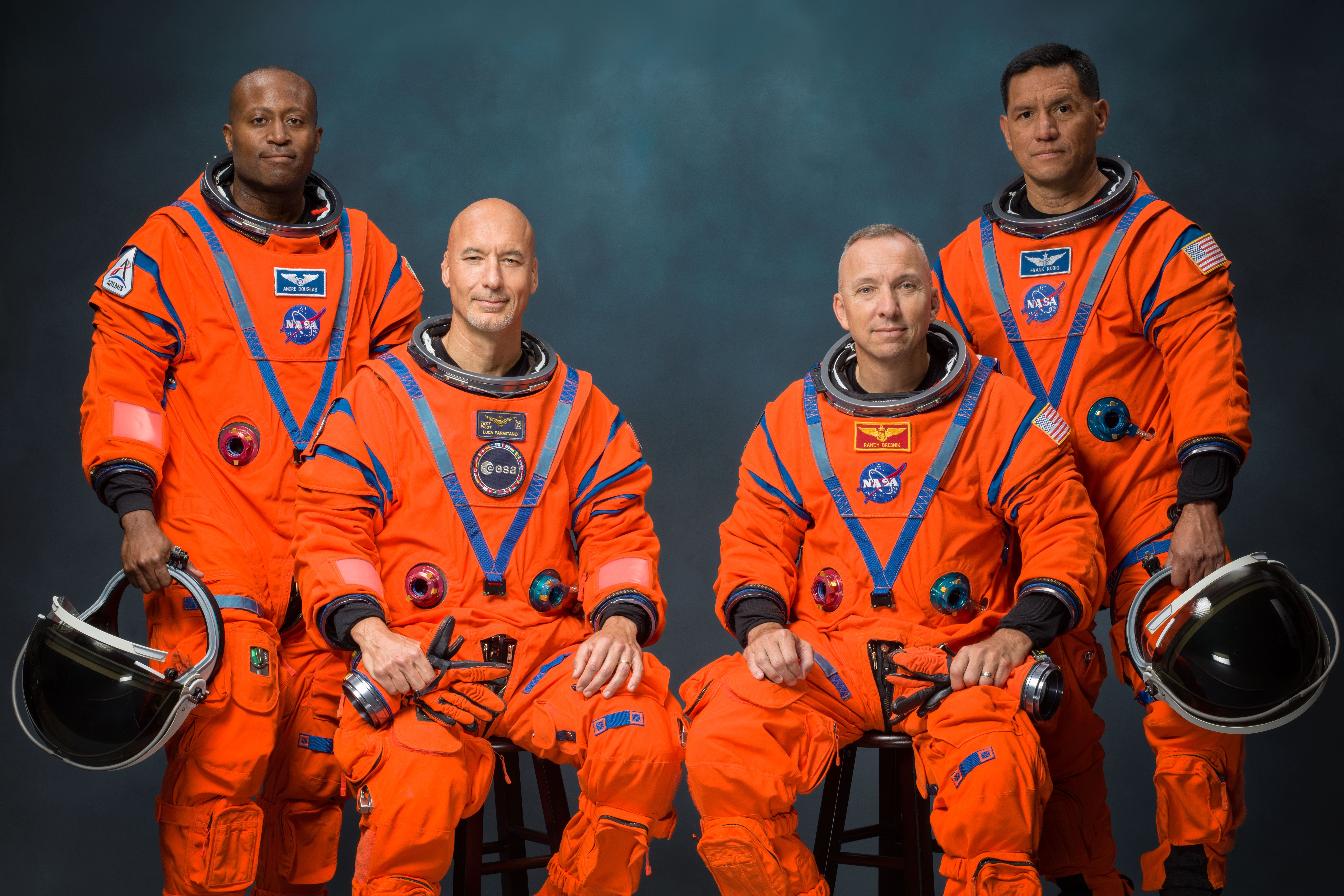
- NASA named Randy Bresnik, Luca Parmitano, Andre Douglas and Frank Rubio as the prime Artemis III crew.
- The mission is planned for 2027 and is expected to last about two weeks, with the exact length determined during operations.
- Instead of landing on the moon, Artemis III will test Orion docking with lunar lander test articles from Blue Origin and SpaceX in low-Earth orbit.
- Luca Parmitano will become the first European astronaut assigned to an Artemis mission.
- NASA astronaut Bob Hines was named backup crew member and will train with the four-person team.
Breaking It Down
NASA’s crew lineup puts veteran test pilot Randy Bresnik in command, with European Space Agency astronaut Luca Parmitano as pilot and NASA astronauts Frank Rubio and Andre Douglas as mission specialists. Bresnik has flown on the space shuttle and Soyuz, Rubio holds the American record for longest single-duration spaceflight at 371 days, and Parmitano has completed two missions to the International Space Station. Douglas, selected by NASA in 2021, will be making his first spaceflight after training as a backup for Artemis II.
The mission plan is deliberately closer to Earth than earlier expectations. Artemis III had once been aimed at a crewed lunar surface attempt, but NASA revised the sequence after deciding that moving straight from the Artemis II lunar flyby to a landing carried too much technical risk. The new version keeps the astronauts in low-Earth orbit, the region where the International Space Station operates, so engineers can test docking procedures before requiring a crew to perform them near the moon.

NASA says SLS will launch Orion and the crew from Kennedy Space Center in Florida. Blue Origin’s Blue Moon lander pathfinder is expected to launch first and wait in orbit, giving Orion time to rendezvous, dock and spend about two days connected for tests. The crew is expected to enter the Blue Origin lander test article and evaluate systems such as life support, controls, interfaces, software, propulsion and communications.
After undocking from Blue Moon, Orion is expected to link with SpaceX’s Starship pathfinder for about a day of checkouts. NASA’s Jeremy Parsons told CNN the crew would not enter Starship during this mission because it will not have a built-out crew cabin or life-support system. The trip would end with Orion returning to Earth and splashing down in the Pacific Ocean, where NASA and the U.S. Navy would recover the astronauts.
Why This Matters
The Artemis program is trying to restart human lunar exploration more than five decades after Apollo, but this time NASA is also relying on commercial landers from SpaceX and Blue Origin. That changes the engineering challenge. Orion, SLS, Blue Moon and Starship are not one single spacecraft family; Artemis III is the test that begins proving whether those pieces can work together safely with astronauts on board.
For Americans, the most direct stake is not only national prestige. The mission ties federal spaceflight, private aerospace contracts and international partnerships into one public test watched from Florida’s launch coast to Houston’s mission-control community. NASA describes Artemis III as essential preparation for Artemis IV, the first planned crewed mission to the lunar South Pole in 2028.

The crew choice also broadens Artemis beyond NASA’s own astronaut corps. Parmitano’s assignment makes him the first ESA astronaut selected for an Artemis mission, a visible sign of Europe’s role in Orion through the European Service Module. At the same time, the all-male crew drew attention because Artemis II included Christina Hammock Koch, the first woman to travel around the moon, and Victor Glover, the first person of color to do so.
What Comes Next
The crew will begin training immediately on Orion systems and will support development and operations planning for the Blue Origin and SpaceX test landers. NASA also says engineers will connect Orion’s crew module and service module this summer, integrate the docking system that will fly for the first time, and continue heat shield testing.
Rocket work is also moving. NASA says technicians are integrating the SLS core stage engine section before installing four RS-25 engines this summer, while rocket stacking is scheduled to begin this summer. The Artemis III flight is targeted for 2027, with Artemis IV planned as the crewed lunar South Pole mission in 2028.
FAQ
Who are the Artemis III astronauts?
The prime crew is NASA commander Randy Bresnik, ESA pilot Luca Parmitano, and NASA mission specialists Andre Douglas and Frank Rubio. NASA astronaut Bob Hines is the backup crew member.
Will Artemis III land on the moon?
No. Under the revised plan, Artemis III will remain in low-Earth orbit and test Orion docking with lunar lander test articles before a later moon landing attempt.
When is Artemis III expected to launch?
NASA is planning the Artemis III test flight for 2027. The crew is expected to remain in space for about two weeks, with final timing determined during mission operations.
Why is NASA testing docking near Earth?
NASA wants to reduce risk before asking astronauts to perform similar maneuvers in lunar orbit. Low-Earth orbit keeps the test closer to home while engineers evaluate life support, docking and communications.
Which companies are building the Artemis III landers?
Blue Origin is developing a crewed lunar version of Blue Moon, and SpaceX is developing a crewed lunar lander version of Starship. Artemis III is expected to test pathfinder versions from one or both companies.
Why is Luca Parmitano’s assignment historic?
Parmitano is the first European Space Agency astronaut assigned to an Artemis mission. NASA and ESA say his role reflects Europe’s operational experience and its contribution to Orion.