
2 miles beneath the ocean’s surface, a strange golden sphere once left scientists scratching their heads. Now, after months of analysis, researchers say they finally know what it is—and the answer is both fascinating and a little unsettling. The discovery, made off Alaska’s coast during a NOAA expedition, has sparked fresh curiosity about what still lurks in the deep sea.
What looked like something out of a sci-fi movie turned out to be something much more biological. But here’s the twist—it’s also a reminder of how much we still don’t understand about our own planet.

The Bottom Line
- The “golden orb” was discovered nearly 2 miles underwater off Alaska.
- Scientists now believe it is a biological structure, likely related to marine life.
- The orb had a small hole, suggesting something may have entered or exited.
- It was collected during a NOAA deep-sea expedition in 2023.
- The discovery highlights how little we know about deep ocean ecosystems.
Breaking It Down
It started as a curiosity. During a 2023 expedition exploring the Gulf of Alaska, NOAA researchers spotted something unusual on the ocean floor—a smooth, golden-colored sphere clinging to a rock. No immediate explanation. No clear classification. Just a glowing object sitting in the dark.
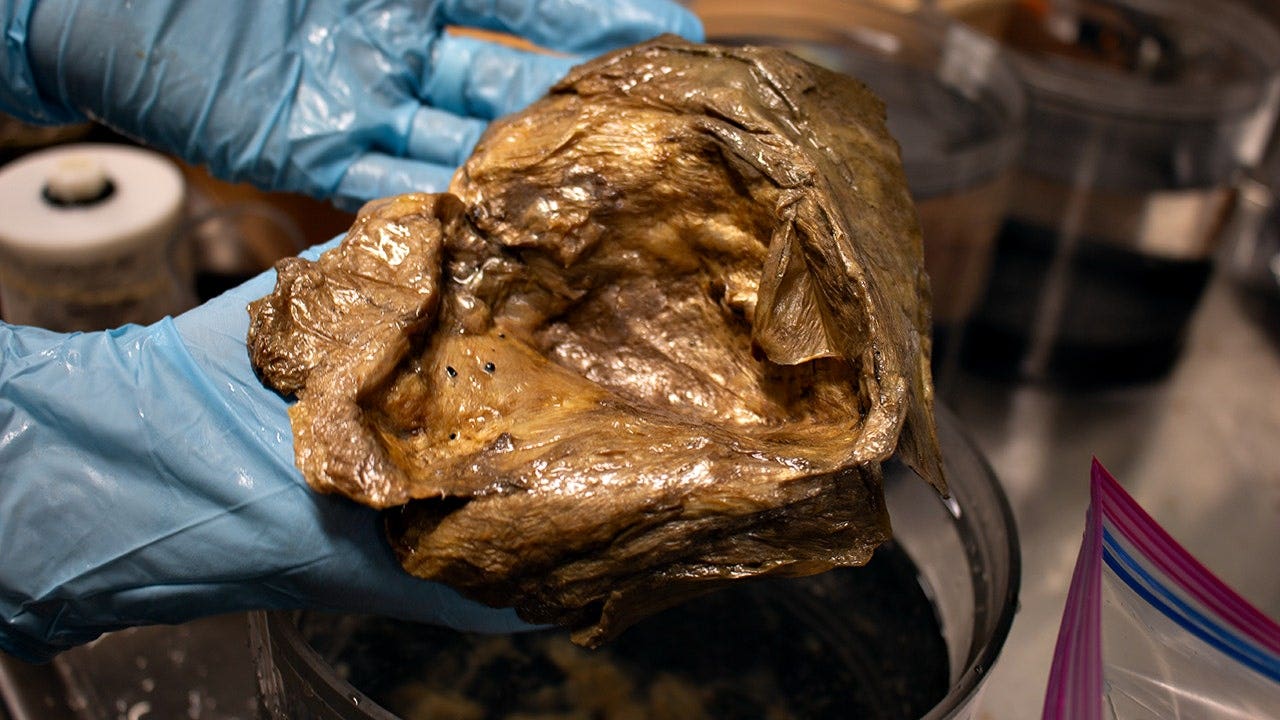
When the team brought it up for closer inspection, the mystery deepened. The orb had a soft texture and a tiny hole, almost like something had burrowed inside or hatched out. Scientists initially floated theories ranging from a new species to some kind of egg casing.

Fast forward to now. After detailed lab analysis, researchers say the orb is likely an egg case or biological structure linked to a marine organism—though not a typical one. The exact species is still unclear, which is where things get interesting.
Here’s the thing: deep-sea environments are notoriously hard to study. Pressure, darkness, and distance make every discovery feel like opening a new chapter. And this orb? It’s one of those chapters scientists didn’t expect.
Why This Matters
This isn’t just about a weird object on the ocean floor. It’s about the bigger picture. The deep sea covers more than 80% of Earth’s ocean, yet most of it remains unexplored. Discoveries like this remind us that entire ecosystems—and possibly species—are still waiting to be understood.
For people in the U.S., especially along coastal states like Alaska, this kind of research has real implications. Marine ecosystems directly impact fisheries, climate patterns, and even global food supply chains. What scientists learn down there can ripple up here.
And there’s another angle. As industries eye the ocean floor for resources—like minerals and energy—understanding these fragile ecosystems becomes critical. You don’t want to disrupt something you barely understand. It’s like walking into a dark room and moving furniture around.
What Comes Next
Scientists aren’t done yet. The orb’s exact origin is still under investigation, and researchers are continuing genetic and structural analysis to pinpoint the species behind it. Future deep-sea missions are expected to focus more on similar anomalies.
If anything, this discovery is pushing agencies like NOAA to double down on ocean exploration. Because if one golden orb can raise this many questions, imagine what else is out there.
FAQ
What is the golden orb found in Alaska?
Scientists believe it is a biological structure, possibly an egg case from a marine organism, though the exact species is still unknown.
How deep was the orb discovered?
It was found nearly 2 miles beneath the ocean surface during a NOAA expedition in the Gulf of Alaska.
Why is the discovery important?
It highlights how little we know about deep-sea ecosystems and could help scientists better understand marine biodiversity.
Was the orb alive?
The orb itself is not considered a living organism but may have been created by or housed one.
Could there be more objects like this?
Yes, scientists believe many unknown structures and species exist in the deep ocean, waiting to be discovered.